📱 Smart QR Code
Scan to view & share this memorial biography directly.
🌹 Prayers
Click to send your sincere respect and prayers for this hero
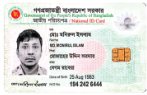
Md. Monirul Islam
📅 Date of Birth
25 August, 1983
🕊️ Date of Martyrdom
19 July, 2024
🗺️ Division
Dhaka_City
📍 District
Dhaka
👤 Short Biography
Profession: Businessman
Place of Martyrdom: Around Road No. 22, Mirpur
Incident Details & Martyrdom Narrative
ID: Dhaka City 128
Serial: 765
The Man Who Whispered "No" to Injustice Until His Last Breath
Biographical Sketch
Behind the name Md. Monirul Islam lies a quiet but unyielding voice of resistance. Born on August 25, 1983, he was the son of Mozaher Uddin Sardar and Begum Rabea—a child of the soil who never sought the spotlight of political stages or the glare of protest banners. Instead, his identity was rooted in modesty, conscience, and an unwavering sense of right and wrong.
In 2006, Monirul set foot on Italian soil with dreams of a better future abroad. However, after an accident in 2011, he returned home. His wife—his fiercest protector—pleaded with him not to go back. Thus began their life in a modest rented house, with days marked by financial hardship but hearts full of hope.
Though he never held a megaphone or stood at the frontlines of rallies, Monirul was an active soul in the movement for justice. He believed martyrdom didn’t require political affiliation—only a conscience. That conscience made him a silent guardian of the people, and it was that same spirit that eventually placed him in the path of bullets.
The July Revolution and His Final Battle
July 2024—Dhaka was not merely covered in dust and smoke, but also in defiant hope and the cries of a humiliated nation. The student-led protest against the reinstatement of a controversial quota policy had spilled beyond campuses and into every corner of the city—from tea stalls to middle-class drawing rooms.
Monirul wasn’t a student leader. He wasn’t a loud voice on a protest poster. But he was a man awake in conscience.
On July 18, when gunshots echoed across Dhaka, Monirul was there. Students needed a printer for banners, and Monirul silently showed up with one. To some, it may have seemed trivial—but for the movement, his gesture was vital.
His son later said, “Abbu used to say, I may not be a leader, but as a human being, this fight is mine too.â€
That evening, after wrapping up some land paperwork, he didn’t go home. He had heard there was firing in Mirpur. “Let’s go see which way the movement turns,†he said—as if something within him refused to stay behind.
The Martyrdom: A Silent Revolution Etched in Blood
July 19, 2024. Around 5 PM.
Mirpur had turned into a battlefield—though no war had been declared. On Road 22 and its surrounding areas, gunfire erupted. Police were already stationed. Then came Border Guard vehicles. What followed was indiscriminate, chaotic shooting.
Was it the police? The BGB? Or masked ruling party operatives under police cover? The truth remains unclear. But what is certain: an innocent man was lost to state-sponsored violence.
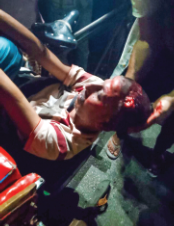
Eyewitnesses say it was police fire. Others believe it was Awami League goons under police protection. Regardless, Monirul—unarmed, peaceful, present only out of moral obligation—was shot.
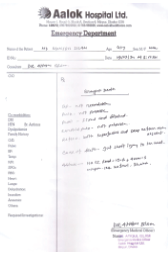
He was rushed to Alok Hospital, but before the Maghrib call to prayer, he was declared dead. Another life lost to silence. Another conscience buried.
Monirul’s death was not just the end of a life. It was the immolation of a dream, a moral stand, a belief in justice. He was no politician, no rallying icon. But his blood screams that he was the voice of a revolution.
He died standing—unflinching. Today, that stance echoes through every awakened heart, whispering: “Even if you’re silent—stand.â€
The Grief at Home: An Unfinished Life Wrapped in Shadows
His death did not end with a bullet. It lives on—in his home, in the cracked voice of his son, in the haunted silence of his wife.
Monirul’s wife has suffered from mental illness since 2012. Doctors say, “Her brain’s vessels have dried.†It’s a short sentence, hiding a lifetime of torment. She tries to cook, care for their children, hold the home together—but it’s a soldier’s war against exhaustion, trauma, and loss.
A maternal aunt supports the family now. But even that kindness is shadowed by deep sorrow.
Monirul’s son doesn’t cry aloud. His grief sits in his throat. “Abbu used to play cricket. Even at his wedding, he went to play with the kids,†he says—words laced with unbearable pain. The man who once ran with a ball now sleeps beneath the earth, felled by bullets of a tyrannical regime.
His house stands quiet, but every brick remembers his laughter. Every doorframe whispers, “Humanity lived here.â€
Legacy & Demands: Let the Nation Rise in His Name
Monirul’s death is not just another political casualty. It is a torn letter from a nation’s soul. He didn’t just die—he woke our conscience.
Now his family doesn’t only carry sorrow. They carry a national burden.
First, his wife must receive lifelong, dignified financial and medical assistance—not as charity, but as the state repaying a moral debt.
Second, his children must be granted full scholarships. Let them learn not just letters, but justice, resilience, and humanity—just as their father lived. If a nation cannot raise the children of its martyrs, whom can it raise?
This is our time. The martyr’s blood has not dried—it flows through our veins, demanding justice, action, and renewal.
Let every fallen hero like Monirul be a cornerstone in building a new Bangladesh—one that no longer shoots at the innocent but stands for them.
Martyr Profile at a Glance
• Name: Md. Monirul Islam
• Date of Birth: 25 August 1983
• Age at Death: 41
• Profession: Small Business Owner
• Father: Mozaher Uddin Sardar
• Mother: Begum Rabea
• Permanent Address: Avenue 1/5, Road-13B, Senpara, Mirpur-2, Dhaka
• Date of Martyrdom: 19 July 2024
• Time of Death: 8:50 PM
• Place of Incident: Vicinity of Road 22, Mirpur
• Cause of Death: Shot in the head during peaceful protest
• Burial: Conducted by family
Quranic Verse
And do not say of those who are killed in the way of Allah, "They are dead." Rather, they are alive, but you perceive it not. (Surah Al-Baqarah 2:154)
Hadith Sharif
Abu Huraira (RA) reported: The Messenger of Allah (SAW) said, "Whoever sincerely asks Allah for martyrdom, Allah will grant him the status of martyrs." (Sahih Muslim 1888)
👥 Shaheeds from the Same Division
Dhaka_City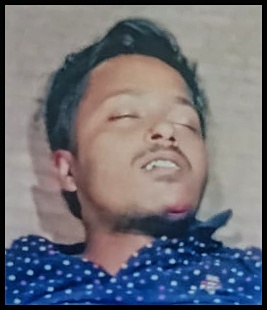

Memorial Photo Gallery