📱 Smart QR Code
Scan to view & share this memorial biography directly.
🌹 Prayers
Click to send your sincere respect and prayers for this hero
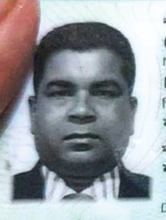
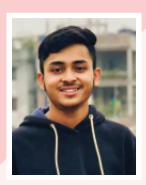
Md. Salauddin Suman
📅 Date of Birth
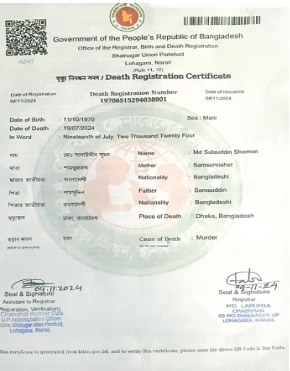
11 October, 1970
🕊️ Date of Martyrdom
19 July, 2024
🗺️ Division
Dhaka_City
📍 District
Dhaka
👤 Short Biography
Profession: Politician, BNP, Ward No. 1, Dhaka South City, Vice President
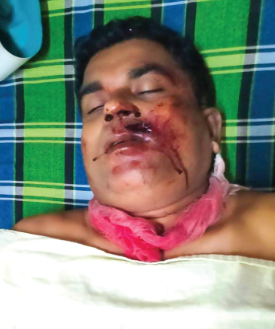
Place of Martyrdom: In front of South Banasree No. 2 Mosque, Dhaka; shot on the left side of the lip
Incident Details & Martyrdom Narrative
Martyr Md. Salauddin Suman
Serial: 767
ID: Dhaka City 129
Identity of the Martyr
Md. Salauddin Suman—a man of quiet strength, with the soul of adolescence still echoing in his heart. Born on 11 October 1970, he was no grand hero; he moved through life silently, steadily. His parents, Shamsuddin Molla and Shamsunnahar, have passed, but their values became living legacies in his character. Among five brothers and one sister, he was the silent guide—neither boastful nor argumentative—everyone trusted, “If Salauddin Bhai says so, it's right.†His life was defined by humility and peace. He spoke little but acted with purpose. His wife, Fatema Akhtar, is a homemaker, and their only child, Adib Rehan, is still a student—rooted like his father, dreaming a quiet fire-lit future.
His family was his sanctuary, his neighbors part of his daily devotion. People saw in him a face of unwavering trust. He never spoke harshly but quietly leapt to help when needed, like an invisible hand setting things right.
Though politically active—serving as vice president of BNP Ward 1, Dhaka South Metropolitan—his politics was not what people remembered him by. His true identity was humanity. He was thoughtful, compassionate, and quietly steadfast. He never loudly proclaimed his title, but those who knew him understood who he was. When he stood beside you, no one felt alone.
During the July 2024 movement, he joined the streets on 18 and 19 July—not as a leader shouting slogans, but as a guardian, guiding without fanfare. His gaze burned with righteous anger, yet held tenderness for youth and kindness for neighbors. His presence was protest without words—an unspoken shield against injustice.
Few people walk such a path—shining light without seeking limelight. Salauddin Suman was that boat against the current, with the sail of trust, the anchor of integrity, and a destination of love. Such men don't just die—they become ideals. Today, martyrdom is his name.
Context of the Movement – Brutal July and Stiff Human Spines
July 2024 was no ordinary month. It was a symphony of struggle, each day written in blood, each night steeped in waiting. Bangladesh witnessed a time when people halted and asked their own reflection: “Are you still human?†In that ruthless July, youth, students, workers, women and elders stood united before batons and bullets—maintaining dignity in defense of quotas and justice.
It was in that fiery atmosphere that Salauddin appeared—not as a political stereotype, but as a conscience-driven citizen. He walked through Banasree, Rampura, Hatirjheel—no mic, no platform. His presence itself was declaration: “I am with you.â€
On 18–19 July, he embodied national awakening. While young people bled for a cause, his calm presence gave meaning to that sacrifice. He didn’t shout slogans—he stood guard, pointing at each bullet and saying with his eyes: “This is wrong.†He quietly declared, “We will win because we are with truth.†No theatrics—just an iron-forged conviction.
To the community, he was more than a leader—he was a refuge. They never wondered if he would be there—they knew he would. He was a living protest without prefix or slogan.
Yet no one expected that the man who had stood for so long would die on the same streets, paying the price for defending dignity. His death was not an end—it was a question mark hurled at the state: “How much more?†His blood demands answers, and forces us who remain to stand upright.
This July taught us that the dead become history and the living inherit responsibility. Salauddin was both. His blood wrote this chapter of resistance: “Fear not—for truth’s blood becomes a river, and rivers find a way even through fire.â€
The Moment He Became a Martyr – A Late Afternoon Poem in Blood
On 19 July 2024, around 5 PM, the sun blazed over South Banasree 2 Mosque. It was a familiar place for Salauddin—where he prayed, checked on neighbors, aided quietly. That day was different though—smoke of revolution hung in the air.
He had gone to check on students—were they safe, injured, in need of medicine? No banner, no flag—just a fatherly presence. And then a bullet tore through that calm. It struck the left corner of his mouth—seeming intent on silencing humanity itself.
Who fired the shot? No one knows. Perhaps a nameless force that fears moral conviction. Witnesses rushed to him, his shirt drenched in blood. From the mosque threshold, we began a heartbreaking race to Mugda Medical College Hospital. Time seemed to stop—only engine roars and footfalls marked the fragile thread of life.
Moments later, doctors declared him gone. “He is no more†signaled the collapse of an ideal, a refuge, a moment of renewal. From mosque to hospital to hearse to grave—all happened so fast that tears had no time to fall. His wife was searching his bag for medicine money; his son didn’t know his father wouldn’t return.
His death was not only of a man—it struck the roots of public hope and dependence. A gentle soul lay on a bloodstained road, reminding us that good people are not safe. That day sparked not only anger—but deep, silent mourning that burns within.
His martyrdom is not the end—it is the start of a vow. Though his voice is silenced, his blood speaks: “If speaking for humanity costs a voice, I would still stand.†His death is etched into the nation’s conscience, never to be erased.
Family & the Quiet Burden of Grief
A family still carries his touch in their blood—but that blood holds pain, shock, and mute silence only known to those who lose too soon, to unseen wars.
His wife, Fatema Akhtar—now an unwarlike soldier. Her tears are few, not for lack but for depth; her grief is so profound tears don’t come easily. She asks silently, “Why do good people leave first?†An unanswerable question.
Adib Rehan, his son, is called a student—but is now a temporary orphan. He never heard his father’s final words, never felt his last embrace.
They lived quietly before; he was their pillar—not only of finance, but of trust, security, and morality. Now that pillar lies beneath the earth; the family drifts in the waves of despair.
They’re not asking for pity. They did not beg, and won’t beg. But they do ask—for recognition, for their father to be remembered as a martyr. For the dignity owed to a martyr’s family. Politics gave Salauddin a platform—but left them with blood-soaked clothes and a terrifying future without a protector.
Standing by this family is not mere charity—it’s a civic and moral duty. Their son must complete his education and carry himself proudly. Their wife must secure daily needs without fear of asking.
If we fail this, what is our civilization worth? If a martyr’s family is neglected, whose words and slogans are worth anything? Revolutions require humanity even after they end. Supporting Salauddin’s family means supporting our conscience—saying, “You’re not alone.â€
May this support be sustained, a long-term vow—not fleeting sentiment.
Proposals & Martyr’s Remembrance
Salauddin’s blood did more than moisten soil—it ignited fire in our spine and raised a moral challenge: do we remember the good, or just lose them?
Let our answer be through four concrete demands—our duty, our shame, and our dream:
1. Permanent government support for his son Adib Rehan, ensuring no obstacle to his education—so he can stand tall, proud as a martyr’s child. If the state fails this, Salauddin’s blood will drown in anonymity.
2. For his wife Fatema—a small business fund or vocational training (sewing, crafts)—not charity, but opportunity to rebuild life with dignity, with hands once held by Salauddin.
These proposals aren’t empty emotion—they are moral policy. Those who speak of martyrs must act, because when a martyr dies, a family collapses into invisibility.
If we remain silent now, tomorrow our children ask, “Whom did you honor?†and we’ll have no answer.
It’s time now—turn the name of Salauddin Suman into responsibility, not fame.
Martyr’s Profile at a Glance
• Name: Md. Salauddin Suman
• Date of Birth: 11 October 1970
• Birthplace: Jessore
• Blood Type: B+
• Address: 452/A, Road 8, Tilpapara, Khilgaon Post Office – 1219, Khilgaon, Dhaka
• Father: Shamsuddin Molla
• Mother: Shamsunnahar
• Siblings: 5 brothers, 1 sister
• Wife: Fatema Akhtar (housewife)
• Son: Adib Rehan (student)
• Political Role: BNP, Ward 1 Vice President, Dhaka South Metropolitan
• Economic Status: Modest income; family supported by rental payments
• Date of Martyrdom: 19 July 2024
• Place of Martyrdom: In front of South Banasree 2 Mosque, Dhaka; shot in the left corner of the mouth
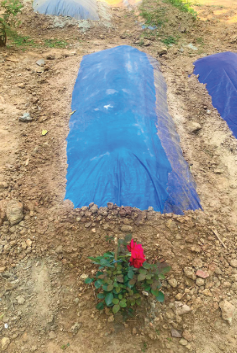
• Burial Site: Sultan Bhuiya Cemetery, South Banasree, Dhaka (as per user)
Quranic Verse
Indeed, Allah has purchased from the believers their lives and their properties for [that] they will have Paradise. They fight in the cause of Allah. (Surah At-Tawbah 9:111)
Hadith Sharif
Abu Huraira (RA) reported: The Messenger of Allah (SAW) said, "Whoever sincerely asks Allah for martyrdom, Allah will grant him the status of martyrs." (Sahih Muslim 1888)
👥 Shaheeds from the Same Division
Dhaka_City

Memorial Photo Gallery