📱 Smart QR Code
Scan to view & share this memorial biography directly.
🌹 Prayers
Click to send your sincere respect and prayers for this hero
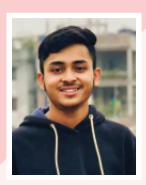
Md. Rana Talukder
📅 Date of Birth
3 May, 1992
🕊️ Date of Martyrdom
5 August, 2024
🗺️ Division
Dhaka_City
📍 District
Dhaka
👤 Short Biography
Profession: Driver and Contractor (Mechanical and Manual)
Place of Martyrdom: Uttara Adhunik Medical College Hospital
Incident Details & Martyrdom Narrative
Martyr’s Profile
A name. A time. A story—Rana Talukder. Born on May 3, 1992, in a modest middle-class family in Azampur, Uttara, Dhaka. His father, Md. Sirajul Islam, and mother, Ruby Talukder, raised him with values rooted in humanity. At the time of his death, he was only 32—a young age for any man, an age of revolution for a nation. Professionally, he was a driver and contractor—an everyday witness to the tired streets of the city. But his identity surpassed that of a profession. He was a kind-hearted man, a dream-filled father, a dependable neighbor, and a courageous footprint of change in a trembling nation.
His life was simple, but a relentless fire burned within. He had a small family—his wife Ranu and their only son, just three years old. That tiny family was his entire world. His heart burned with a dream: "I want my son to become a Hafiz (a memorizer of the Quran)." That vision was his life’s most cherished project. By day, he labored like a worker; by night, he gently comforted his son. Yet, he never bowed his head in surrender.
To his neighbors, Rana was the embodiment of humanity—a word nearly extinct in modern cities. If someone needed medical help, Rana appeared. If a young boy lost his way, Rana advised. If a mother cried for her son, Rana stood beside her. In a society that had forgotten selflessness, Rana stood like a relic of an older, nobler time. To the revolution, he was eternal.
Rana's most profound identity came after death: Shaheed (Martyr). But beyond that word lies his quiet courage, unfinished dreams, and radiant humanity—none of which can be captured in any register. During the July 2024 movement, he was not a listed leader, nor was his face on any poster. But revolutions are built on the sacrifices of such ordinary giants. The blood on the street is often not from men with badges—but from silent warriors like Rana.
He defied the eyes of tyranny. He stood for justice. He risked everything for his child’s future. After prayer, he stepped onto the streets unarmed—but with fire in his eyes. Looking his brother-in-law in the eye, he said, "They’re shooting at our brothers. I’m going to check." That simple sentence became a final, historic march.
Rana Talukder will live on in our memory as a teary-eyed father, a fearless dissenter, and a dreamer of justice. He proved that the golden map of revolution is drawn by those who carry death in their souls and sacrifice their present for their children’s tomorrow. We will not forget his name. We cannot. He is the voice of our time—a silent martyr whose blood stains the path of history.
The July Movement: Fire in the Sky, Footsteps on the Ground
July 2024. The skies over Dhaka were no longer blue—they were gray, heavy, and cracked by daily gunfire. The air reeked not just of tear gas, but of decades of exploitation, deception, and collective grief. The entire city seemed to moan from generations of silence.
Rubber bullets. Tear gas. Fraudulent elections. And yet, onto the streets marched a fearless new generation—no longer begging, no longer afraid. Their eyes, swollen with pain, also burned with resolve. “Who are you? Who am I? Rajakar! Rajakar!â€â€”this chant didn’t just echo—it slammed against the city walls, shattering the stone-hearted indifference of power.
That cry wasn’t just a slogan; it was a soul’s scream—a long-stored rage. Carrying that pain in his chest, Rana stepped into history. A driver, a contractor, a father, a neighbor—but most of all, a silent revolutionary. His face wasn’t in political frames, but his footsteps echoed through the thunder.
He wasn’t called by religion. Nor by party. He went because his heart summoned him. After Maghrib prayer, he stepped out once again—not out of curiosity, but to complete a broken sentence in the book of history.
"I’ve given my blood—I’ll give more." His every step pulsed with this silent oath. He held no weapon, but carried the courage of a volcano. That’s the kind of bravery that rewrites history.
Rana represented those whose names never enter state records but are forever etched into the soil in blood. His sacrifice was not just for a city—but for a nation’s conscience. His blood screamed: "Injustice will drown in this flood of blood."
The soul of the movement was found in men like him—in their eyes, in their quiet resolve. Though absent from political corridors, they claim an unerasable place in the pages of time. Rana’s footsteps blended with the gunshots, but his will thundered louder—he had offered himself for a future rooted in justice and dignity.
This was the July Revolution—not just a date, but a searing season that declared: "We are no longer afraid. We have awakened."
The Martyrdom: A Mother’s Search and a Nation’s Lament
July 5, 2024. The air in Dhaka was soaked with gunpowder and tears. It began as a simple, poverty-stricken day like many others for Rana’s family. That evening, his mother brought rice to the house. His wife suggested they eat together. Their three-year-old son jumped with joy—one quiet moment before the storm.
After dinner, Rana put his son to sleep. The television was showing images of protests—the fire already burning within him. The call for Asr prayer echoed. Calmly, Rana said, “I’ll be back after prayer.†No one knew it would be his last.
He never returned.
Evening turned to night. No sign of Rana. No response to calls. His wife trembled, “Mom, please check—he’s not picking up. I’m scared...â€
His mother and sister-in-law went out in search. Dhaka’s streets had become graveyards. At the back of Azimpur Police Station, gunfire forced them to stop. But a mother’s heart does not stop.
She called her elder son. He came, holding her hand. “You go home. I’ll find Rana.â€
But Rana never came back.
Within minutes, shots rang out—one, two, three. Then a scream: “Mother... Rana is gone.â€
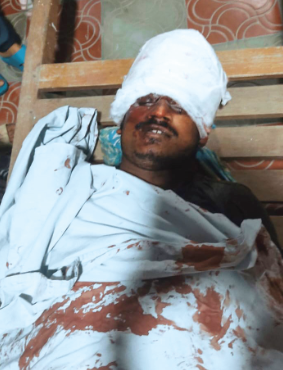
His mother ran. The road was soaked in blood. The back of Rana’s head was gone. No light left in his eyes. She tried to stop the bleeding with a towel—but he was already cold.
That moment, the sky screamed: "Injustice will drown in blood." But how would she return home? How would she face her grandson—the little boy who fell asleep hugging his father’s feet, who would now sleep beside a tombstone of memory?
That night, not just Rana died. A revolutionary love was extinguished. A mother’s life was emptied. A nation’s conscience bled.
This was not just a death. It was a fire carved into the timeline of history.
The Family’s Present: A Broken Dream, A Bleeding Silence
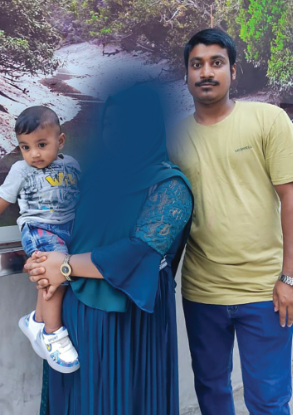
He will never return. Rana Talukder—husband, father, son—is now only a name, a photograph, a bullet-torn memory. The void he left behind cannot be filled by words. He left a devastated mother, a mentally fragile wife, and a child who still doesn’t understand why his father no longer carries him, no longer returns home with treats at dusk.
Rana’s dream was simple: to raise his son as a Hafiz, to let him grow in the light of the Quran. Each morning, before sunrise, he would carry his son to the mosque—a small tasbih in his pocket, love in his eyes, prayer in his soul. Now, that walk is just a bloodied memory.
“Always helped everyone,†his wife still says. The woman he loved beyond all sorrow now crumbles without him. Her mental balance, once slowly stabilizing in his presence, has now completely unraveled.
His mother, Ruby Talukder, cannot sleep. She waits by the window, hoping for a son who will never return. Her soul now holds only one question: "Why? Who will answer for this?" The boy who came home with a smile now lies still beneath the earth.
Poverty is not just a lack of money—it’s an endless curse. There’s no rice in the house. No peace in the mind. No help from anywhere. Once a tidy, hopeful family—they are now like broken boats, drifting in the storm of revolution.
And yet, history does not remain silent.
Rana’s blood, his sacrifice, his unspoken resistance—these are now burning questions placed before the nation. His blood declares: this death was not in vain.
Even if we forget, his three-year-old son will one day ask: “Who killed my father? Where were you all?â€
That question will demand an answer.
Proposal for State Action
Rana Talukder’s name now rings like a thunderclap—a blazing memory still burning in the heart of our nation. His death was not merely the loss of a man—it was a call to action. He was a fearless soul who held the banner of justice, his eyes ablaze with resolve. His family now stands not in darkness alone—but as a righteous demand before the country.
First, the government must immediately provide permanent financial support to Rana’s wife and child. This should not be charity—but a recognition of sacrifice. His martyrdom was not just personal—it was a symbol of national courage.
Second, the government should offer long-term educational scholarships to Rana’s son. Let his child grow up in the light of knowledge and values—carrying forward the legacy of his father’s dreams.
Finally, Rana’s name and life should be formally honored by the state. His family deserves mental, emotional, and social security. Standing with them is not merely sympathy—it is our national responsibility. Their survival is tied to our dignity.
Rana’s family is not just a martyr’s household—they are a living emblem of our collective hope and historical duty.
At a Glance: Martyr Profile
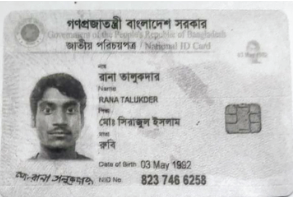
Name: Rana Talukder
Date of Birth: May 3, 1992
Age at Death: 33 years
Marital Status: Married
Father's Name: Md. Sirajul Islam
Mother's Name: Ruby Talukder
Spouse’s Name: Ranu
NID Number: 823 746 6258
Current Address: House 25-B, Road: Moddhyo Azampur, Purbo Koir, PO: Azampur-1230, Dakshinkhan, Uttara Azampur, Kachabazar, Jamtola, Dhaka
Permanent Address: Kachabazar, right side of Jamtola, Azampur, Uttara, Dhaka
Hospital Admitted: Uttara Adhunik Medical College Hospital
Case ID: 2163211/001; 25319
Date of Death: August 5, 2024
Time of Death: 8:10 PM
Cause of Death: Bullet injury; Brought Dead; Irreversible Cardio-Respiratory Failure
Profession: Driver and Mechanical/Manual Contractor
Blood Group: B+
Driving License Number: ঞঘ0052345খ00004
Quranic Verse
They rejoice in what Allah has bestowed upon them of His bounty, and they rejoice for those who have not yet joined them. (Surah Al-Imran 3:170)
Hadith Sharif
The Messenger of Allah (SAW) said, "A martyr will be able to intercede for seventy relatives in Paradise." (Sunan Abu Dawood 2520)
👥 Shaheeds from the Same Division
Dhaka_City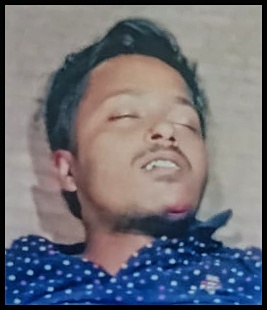

Memorial Photo Gallery