📱 Smart QR Code
Scan to view & share this memorial biography directly.
🌹 Prayers
Click to send your sincere respect and prayers for this hero
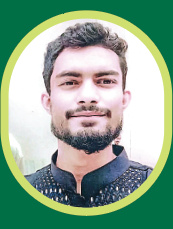
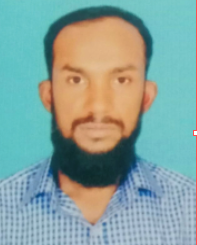
Abdullah Siddique
📅 Date of Birth
1 January, 2003
🕊️ Date of Martyrdom
4 August, 2024
🗺️ Division
Dhaka_City
📍 District
Dhaka
👤 Short Biography
Profession: Student
Place of Martyrdom: Adjacent to Popular Hospital, Jigatola, Dhaka
Incident Details & Martyrdom Narrative
Serial: 769
ID: Dhaka City 131
Profile of the Martyr
The name Abdullah Siddique might at first sound ordinary. But a closer look reveals a face burned into the memory of a generation—fierce, uncompromising, aflame with defiance. He was born in 2003, not in a time of golden dreams, but under skies heavy with despair. Bangladesh then was reeling from political violence, moral bankruptcy, and an economy weighed down by unemployment, corruption, and systemic poverty. In this turbulent era, Abdullah grew up in Dholai Ghat, Dhaka.
A bright student of Marketing at Habibullah Bahar College, Abdullah was more than just a student. By day, he studied; by night, he ran a small auto parts business, maintaining accounts with his own hands, reading the faces of customers—discerning the truly poor from the greedy profiteers. His life was the backbone of his family. His father once said, “I’m retired now, but Abdullah was the one running my life.†This wasn’t merely a story of financial dependence—it was a narrative of a father and son fighting together, balancing books, making ends meet, and dreaming aloud over dinner about a better nation. It was a miniature liberation war inside a modest household, a rebellion against deprivation and deceit.
From a young age, Abdullah showed a competitive spirit—in sports, studies, and enterprise. But at his father's request, he one day turned from contests to contemplation. A new chapter began: dreaming of a country where no retired father would go hungry, where no child would step out of home in fear. He earned nearly BDT 50,000 per month—no small feat for someone his age. But Abdullah was not driven by greed. “There’s no greater wealth than a free country,†was the mantra engraved on his heart. He believed that all wealth, all degrees, all dreams are meaningless without justice and security. For him, success was not measured by bread sold but by the hope carved into the nation’s destiny.
He was a bridge—between duty and dissent, commerce and conviction. Can such a young man be confined to the role of a “son� No—he became the living image of our collective hope, our fearlessness, our July Uprising. He was not just his parents’ child—he was a child of time, a warrior of history, a mirror held up to every conscious youth.
Abdullah is no longer here. Yet those who knew him still carry the storm he left behind in their hearts. For when someone like him is lost, survival itself feels like an unpaid debt.
Context of the Movement: The Firestorm of July
In July 2024, Bangladesh appeared to collapse under the weight of an unspoken question. The sky was not blue. The air lacked peace. Smiles vanished from people’s lips. The nation seemed primed for explosion. Fifteen years of authoritarian rule had hardened into a de facto one-party state. Against this, a generation stood up—not for a mere demand, but as a thunderous cry soaked in blood: reform the quota system! This wasn’t just a policy dispute—it was an anguished roar that carried the grief of the past, the agony of the present, and the hopeless pledges for a stolen future.
Following yet another sham election under Prime Minister Sheikh Hasina, the old discriminatory quota system returned. The student victory of 2018 was mocked—as if their blood, dreams, and sacrifices had been written in sand.
On July 1st, peaceful protests erupted—posters, placards, footfalls. But authoritarian regimes are never halted by paper signs.
On July 15th, the streets turned red. Abu Sayeed’s lifeless body lay on the road. From that blood, a nationwide revolt surged—students, workers, unemployed youth, bystanders—from Dhaka’s concrete to Rangpur’s dust, to Narayanganj’s factories. This was a leaderless movement. No parties. No platforms. Only one united call from the heart of the nation: “End the dictatorship!â€
Abdullah heard that call as if it were a secret message—intimate, urgent, sacred. He was not just a student of Habibullah Bahar College. Not just an auto parts seller. He was the conscience of a generation. While many asked, “What is the purpose of our lives?â€â€”Abdullah responded with action, presence, and sacrifice.
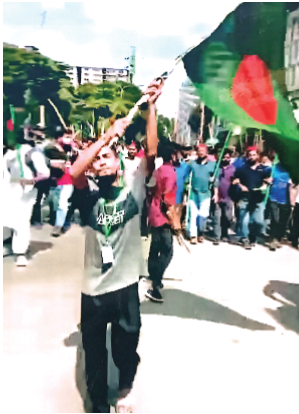
“If the nation is not free, if fascism cannot be stopped, then no income, no degree, no dream has any value.†This was his truth. That belief pulled him from his classroom and business to the protest lines. He held no weapon. No rifle. Only rebellion in his heart and a cry for freedom in his voice. He knew—those who walk with death write history.
He didn’t take to the streets for himself. Not just for his family's pride. He marched for all of us—for me, for you, and for unborn generations. His face may not have adorned the movement’s posters, but his footsteps echoed through the revolution. His martyrdom became the oath of the July Uprising.
This movement will continue. Because someone gave his life to proclaim: “Without freedom, nothing is meaningful.â€
How He Was Martyred: A Symbol Burned Into Fire
Abdullah was martyred on the burning streets of Dhaka—where history has always demanded blood. Gunshots, chants, the smell of tear gas and grief—all fused in the fire where one young man’s dream was consumed. His fall was not accidental. He didn’t stumble. He was targeted—deliberately, like a hunter stalking prey.
This was not a clash. Not a misunderstanding. It was an execution—premeditated, state-backed, and ruthlessly calculated. The ruling party’s violent student wing, Chhatra League, marked him out—for his role as an organizer, for his political awareness, for his voice.
Abdullah bore no arms. He wasn’t a militant fundraiser. He carried banners. A water bottle. A few medicines. A phone through which he shared news of the protest. His father cried, “Hasina took away my heart.â€
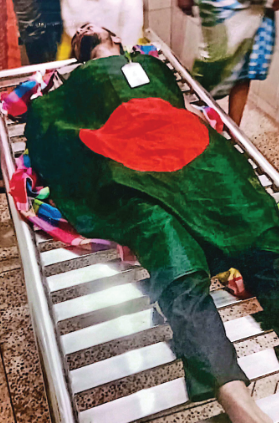
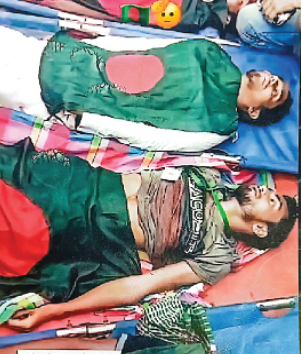
That cry is not just a father’s sorrow. It is a political testimony. A confession that history cannot ignore. It is the collective scream of thousands of fathers who sent their children to school, only to receive corpses—wrapped in cloth, eyes shut, foreheads marked by resistance.
Abdullah was deeply active in the protests around July 19—helping with banners, slogans, food, medicine. He told his friends, “If we don’t stand up, then who will?†That one sentence reveals the depth of his character. He was a student, a businessman, but above all, a conscious citizen—who knew that a nation’s spine is built on moral courage.
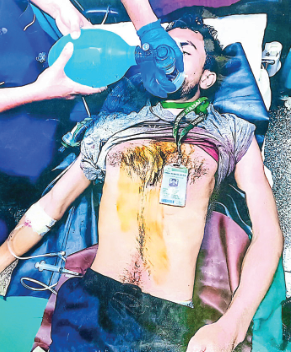
Witnesses say, “They singled him out.†That “singling out†is the cruelest truth in our politics today—where awareness is a crime and idealism is a death sentence. The marks on his body screamed: “Who gave you the right to think?â€
He was taken to the hospital. But he couldn’t be saved. His heart stopped—but not his legacy. He didn’t die—he became eternal. A symbol of a new political consciousness.
His image may not have adorned manifestos. But in his blood, a new line was written:
“To be aware is to prepare for martyrdom.â€
Abdullah—a name the state tried to erase—became the preamble to a revolution.
Now, whenever someone utters “freedom,†his blood stirs beneath that word. And we know:
As long as oppression clouds our skies, martyrs like Abdullah will return as fire.
Testimony of the Family: Grief That Echoes Across a Nation
From the broken doors of a grieving heart, one hears the weeping of a nation.
His father said: “If I were offered the whole world with one hand, and my son with the other—I would choose my son.â€
That sentence halts time. It holds no drama, no performative emotion—only a raw scream of a helpless heart. One the state refuses to hear, and society chooses to ignore.
History will not forget this father. He did not just lose a son—he gifted the nation its future.
Abdullah's death did not orphan one family. It orphaned a generation. His father declares, “He was the pride of the country. He’s gone, but I’m not sad—he gave us freedom.â€
Such sacrifice cannot be measured in slogans. It is the quiet surrender of a father who knows his son will never walk beside him again, never sip tea with him again, never say again, “Abbu, take some rest. I’ve got this.â€
Abdullah was not just an entrepreneur. He was an architect of a dream. He started by selling snacks, then ran a family-sustaining auto parts business. At an age when most are just beginning life, Abdullah was the life force of his household.
Now, he lies still—struck down by a brutal regime.
But his father has not broken. He raises his finger and demands:
“Let Gonobhaban become a Martyrs’ Memorial Museum.â€
This is not just an emotional plea. It is a political truth and a moral obligation. For if youths like Abdullah had not stood up, we wouldn't even have the right to say “Bangladesh is free.â€
All we can say, write, and chant today—is soaked in their blood.
And that blood, which flowed from a humble home in Dholai Ghat to the floors of power, still stains the ground.
His father says: “You did nothing in 17 years. And now you can’t even honor the martyrs.â€
Those words burn like fire. A fierce indictment of political failure and a society complicit in its silence. We failed to save Abdullah. But we all stood silently in the conspiracy to bury his truth.
This family is now isolated. Cameras, lights, questions surround them. But inside—there is a void. At night, his mother still waits at the door. Every footstep sounds like “Abdullah is coming home.†But he never comes.
Only memories return—colorless, scentless, trembling shadows.
And history slowly inscribes his name—into the rolls of martyrs, the autobiography of a patriot, and the heartbreak of a father—blended with the tears of thousands of innocent youths and the broken promise of a lost revolution.
Legacy and Demands
Just as his father withers in quiet agony, the state too now bears an unpayable debt. This is not a sentimental cry—it is an unflinching reality. One young man held up a moral mirror to the nation and then left.
At first glance, saying “Abdullah freed this nation†might sound like emotional exaggeration. But listen closely. The chant “Down with dictatorship!†rang across the country—and in every voice was the echo of youth like him.
Those who carried banners, who braved beatings, who rushed each other to hospitals—leaders among them were dreamers like Abdullah. They walked through the scent of gunpowder to plant flowers of hope.
Now, the state has three urgent responsibilities:
1. Ensure the safety, dignity, and education of Abdullah’s family, especially his younger sister. A family that gave this nation a spark cannot be abandoned.
2. Not compensation—but full rehabilitation. Let his father resume his business. Let their home never fall into darkness.
3. Above all—official recognition of the martyrs and a permanent national memorial. His father’s call to convert Gonobhaban into a museum is not vengeance—it is a symbolic purification. A democratic promise, where the seat of power becomes a sky full of memory.
That museum should house no crowns—only worn shoes, torn banners, and bloodstained cloths—from which the next generation will learn how freedom is won.
Abdullah’s legacy is not just legal—it is cultural, moral, and political.
If our Constitution holds no space for such sacrifice, then it does not belong to us.
His dream was a nation free from fear—with food, with votes, with the right to dream.
The poem written in his blood must now be memorized by the state.
Our duty is not only to protect his memory, but to live it—through our slogans, education, music, and conscience.
For history had always said—Martyrs never die.
Now, it’s time the state proves it.
Quranic Verse
Indeed, Allah has purchased from the believers their lives and their properties for [that] they will have Paradise. They fight in the cause of Allah. (Surah At-Tawbah 9:111)
Hadith Sharif
Abu Huraira (RA) reported: The Messenger of Allah (SAW) said, "Whoever sincerely asks Allah for martyrdom, Allah will grant him the status of martyrs." (Sahih Muslim 1888)
👥 Shaheeds from the Same Division
Dhaka_City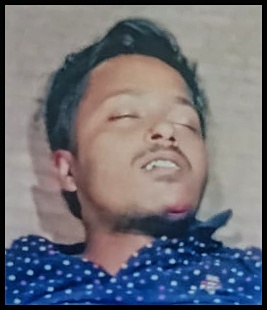

Memorial Photo Gallery