📱 Smart QR Code
Scan to view & share this memorial biography directly.
🌹 Prayers
Click to send your sincere respect and prayers for this hero
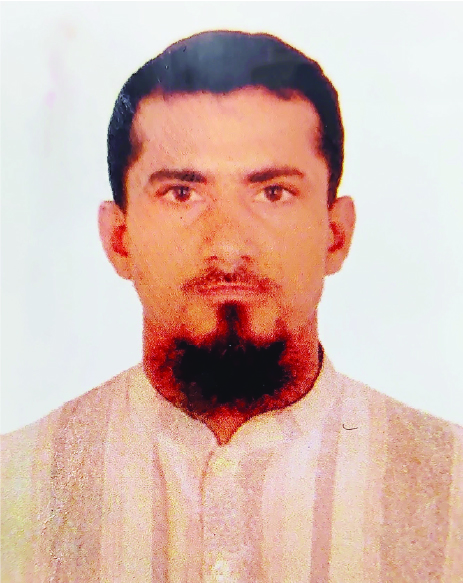
Md. Sajal
📅 Date of Birth
20 October, 1993
🕊️ Date of Martyrdom
4 August, 2024
🗺️ Division
Dhaka
📍 District
Munshiganj
👤 Short Biography
Profession: Day Laborer.
Place of Martyrdom: PTI Mor, Munshiganj Sadar
Incident Details & Martyrdom Narrative
The Days of the Movement (June 5 to August 5, 2024)
June 5: The High Court delivered a verdict declaring the cancellation of the freedom fighter quota illegal. June 6: Students of Dhaka University held a protest march and rally. June 9: Students of Dhaka University again held a protest rally against the reinstatement of the quota system. They gave the government a deadline of June 30 to meet their demands. After the protest, a delegation of the protestors submitted a memorandum to the Attorney General at the Supreme Court. The hearing of the state's application seeking a stay on the High Court's verdict regarding the quota cancellation was scheduled for July 4 in the full bench of the Appellate Division.
July 1: A student rally and protest demanding the cancellation of the quota were held at DU and various universities across the country under the banner of the Anti-Discrimination Student Movement. A call was made to finalize the demands by July 4. A three-day program was announced by the protestors.
July 2: DU students marched and blocked Shahbagh for an hour. JU students also blocked the Dhaka-Aricha highway for 20 minutes.
July 3: DU students blocked Shahbagh intersection for about an hour and a half. Students of Bangladesh Agricultural University protested by blocking trains on the railway line in Mymensingh. Students of Jahangirnagar University blocked the Dhaka-Aricha highway. Students of Chittagong University blocked the Chittagong-Khagrachari highway. Students of Barisal University protested by blocking the Barisal-Kuakata highway. Students of Jagannath University strongly protested by blocking the road at Tantibazar intersection in Old Dhaka.
July 4: The six-member Appellate Division, led by the then Chief Justice Obaidul Hasan, ordered "not today." The Attorney General's office announced that the hearing could be held next week. Students blocked Shahbagh intersection in Dhaka for 5 hours.
July 5: On this Friday, protesting students also held protests and road blockades in Chittagong, Khulna, and Gopalganj.
July 6: Protests and blockades were held in various universities across the country as before. Protesters called for a boycott of classes and exams in all universities and colleges, a strike, and a nationwide blockade of roads and highways. It was named "Bangla Blockade."
July 7: Students announced an indefinite boycott of classes and exams in universities and colleges during the Bangla Blockade.
July 8: Blockades were held in 11 places in Dhaka, protests in 9 universities, railway blockades in 3 places, and 6 highways were blocked. A 65-member coordination team called "Anti-Discrimination Student Movement" was formed with students from all over the country.
July 9: Two students applied for a stay on the High Court's verdict. The "Bangla Blockade" program was held in various places in Dhaka for about 4 hours. The next day, a nationwide morning-evening "Bangla Blockade" was announced.
July 10: The Appellate Division ordered the parties to maintain the status quo for four weeks regarding the quota. The five-member Appellate Division, led by the then Chief Justice Obaidul Hasan, issued this order. The next hearing was scheduled for August 7. The then Chief Justice stated that students had made a mistake. He also said that verdicts cannot be changed by slogans on the streets. This is not the right step.
July 11: Protesters held blockades in various places across the country despite police obstruction. The then Minister of Bridges, Obaidul Quader, said that the anti-quota protesters were showing strength against the highest court. This is undesirable and completely illegal. The then Home Minister Asaduzzaman Khan Kamal said that students were "crossing the limit."
July 12: Protests continued on various university and college campuses across the country even on Friday, a holiday. After a march at Dhaka University, students blocked Shahbagh intersection. Students of Rajshahi University blocked the railway line.
July 13: Arafat said that the government has nothing to do now regarding the matter under trial.
July 14: Protesters submitted a memorandum to the President and gave the government a 24-hour deadline to convene an emergency session of Parliament and demand a logical reform of the quota. Sheikh Hasina, in response to a question at a press conference after her visit to China, declared the protesting students as grandchildren of Razakars. In protest, slogans arose in various halls of DU around nine o'clock at night, "Who are you? Who am I? Razakar! Razakar!" This slogan became so popular that it reached all public universities in the country in no time. This slogan continued in all universities throughout the night. At night, the killer Chhatra League attacked the students' march at CU.
July 15: Obaidul Quader told reporters that the Chhatra League would respond to the protesters' "Razakar" slogans. Chhatra League President Saddam commented, "We will punish those those who are giving the slogan 'I am a Razakar'. Immediate after Quader and Saddam's comments, the Chhatra League cadres launched an armed attack on DU's protesting students. Chhatra League terrorists fired on students. In a horrific attack, 297 students were injured and received treatment at Dhaka Medical. In protest of the attack, both the protesters and the Chhatra League announced rallies.
July 16: Abu Saeed in Rangpur, Wasim, Shanto, Faruk in Chittagong, and Sabuj Ali and Shahjahan in Dhaka were Martyred by police gunfire. Saddam said to the protesters, "We will see how many rice are in how much grains."
July 17: Ordinary students evicted Chhatra League leaders and activists from DU and various universities across the country and declared them "politics-free." The coffin procession of students at Dhaka University was disrupted by police tear gas shells and sound grenades. Student protests, road-highway blockades, funeral in absentia, coffin processions, and repeated clashes and counter-chases occurred in various parts of the country.
At half past seven at night, the Prime Minister addressed the nation. Ordered a judicial inquiry into the deaths of six people. Many students left the campus by evening due to the university administration's announcement of hall closures and police activity. However, many students were still in halls and on campus at night, rejecting the decision to close halls. The government shut down mobile internet.
July 18: According to the students' announcement, the complete shutdown program started. The occupying Awami police forces attacked protest marches in almost all educational institutions across the country. Private university students took the lead in the movement on this day. A total of 40 people, including Mugdha, were Martyred. Clashes were more intense in Dhaka. The autocratic government deployed BGB across the country.
July 19: The students' "complete shutdown" or all-out blockade program sparked widespread clashes, attacks, vandalism, gunfire, arson, and loss of life in the capital Dhaka. Protests, clashes, and violence also occurred in various districts of the country. 119 people were Martyred by brutal police and BGB gunfire. On this day, the movement transformed into a mass movement, with more people from various classes and professions on the streets than students. Notably, the capital Dhaka was the most volatile area. The main hotspots of the movement were Jatrabari, Uttara, Rampura-Badda, Science Lab, Mirpur 1 and 10, Mohakhali, Mohammadpur, and Savar in Dhaka. A nationwide curfew was imposed at night, and the army was deployed. All internet services were completely shut down, plunging the country into an information blackout.
July 20: Nationwide curfew, army deployment, and a general holiday were declared. Clashes, chases, and gunfire occurred in various parts of the capital. Notable places were Jatrabari, Uttara, Badda, Mirpur, and Mohammadpur. A total of 71 people were Martyred by police and BGB gunfire. Chief coordinator Nahid was picked up by the police. Three coordinators of the movement met with three ministers and presented an eight-point demand, while another group of coordinators presented a nine-point demand.
July 21: The court delivered a verdict reforming the quota and retaining a 7% quota. The movement continued in the capital and various parts of the country. 31 people were Martyred by brutal police and BGB gunfire. The coordinators of the Anti-Discrimination Student Movement gave a 48-hour deadline to fulfill four demands, which included restoring internet connectivity, arranging for students to return to halls, ensuring the safety of the coordinators, and lifting the curfew. Four coordinators held a press conference. Nahid was severely tortured and left on the street by the police.
July 22: Preparations were underway for the gazette notification of the quota reform verdict. Protests by the general students and the public continued against the daily killings, although the movement began to subside. 10 people were Martyred on this day, some of whom were previously injured.
July 23: The gazette notification reforming the quota system was issued, and the government began mass arrests with thousands of cases.
July 24: Coordinators of the Anti-Discrimination Student Movement, the platform for the quota movement, Asif Mahmud, Abu Baker Majumdar, and Rifat Rashid, were found. After being missing for five days, Asif and Baker posted on Facebook that they were left blindfolded. Rifat remained in hiding. Mass arrests continued with block raids.
July 25: The protesting students and other stakeholders did not consider the gazette notification on quota reform, issued without discussions, as a final solution. They demanded a gazette notification based on the participation of all parties in the policy-making process, creating an appropriate environment for dialogue.
July 26: "Block raids" were conducted by dividing areas. Operations were carried out across the country, with 555 cases filed. The number of arrests reached to 6,264. DB Harun's men in plain clothes picked up student leaders from hospitals.
July 27: The number of arrests reached 9,121 in 11 days. People were displaced in fear. DB Harun continued to arrest and torture student leaders.
July 28: Mobile internet was restored after 10 days. DB Harun took Nusrat Tabassum, a coordinator of the quota reform movement, into custody. DB Harun forcibly obtained statements from student leaders at gunpoint, retracting the movement. Three coordinators of the movement, Mahin Sarkar, Abdul Kader, and Abdul Hannan Masud, announced from an undisclosed location that they were withdrawing the previous statements and continuing the movement with the nine-point demand.
July 29: In a meeting of the 14-party alliance led by the murderer Hasina, it was decided to ban Jamaat-Shibir for their role in the student movement, and to impose severe punishments on the student protesters with charges of murder and other offenses. Students again protested on various campuses against DB Harun's forced statements. Police attacked students at Chittagong, Cumilla, Jahangirnagar, and Rajshahi universities. Teachers also protested with students on many campuses.
July 30: Students and teachers marched with red cloths tied around their mouths, demanding justice for the killings. The UN Secretary-General called for a transparent investigation. People across the country colored their Facebook profiles with red marks, while the mass murderers used black marks, although in negligible numbers. People associated with drama and cinema protested against the murderer Hasina.
July 31: Students held the "Remembering Our Heroes" program and continued to build public opinion in favor of the nine-point demand. Awami League General Secretary Obaidul Quader faced criticism from former Chhatra League leaders. When DU teachers went to the DB office to release the coordinators, the police harassed them and did not allow them to meet with their families.
August 1: The government issued a gazette notification banning Jamaat-e-Islami and Islami Chhatra Shibir for their role in the student-public movement. The DB released six coordinators.
August 2: Students and the public held mass marches across the country demanding the nine-point demand. Clashes between students and the public and the police occurred in the capital and various other places. 3 people were Martyred by police gunfire. The number of arrests had reached to 15,000.
August 3: Students and the public held a massive protest rally at Shaheed Minar against the continued mass arrests and genocide despite not meeting the nine-point demand. The army chief held a meeting with his army commanders and received the message that the army was no longer willing to fire. In the presence of hundreds of thousands of people, student leaders announced one point demand (Hasina's resignation), dropping the nine-point demand. Hasina offered to discuss with the students, and some ministers announced their willingness to resign if necessary. The students rejected all discussions. The government again shut down the internet. The police suspended and arrested two police officers responsible for the murder of Shaheed Abu Saeed. Hasina gave strict orders to resist the students and the public on the streets.
August 4: Awami terrorists attacked student-public protest marches in the capital Dhaka and across the country. Police and Awami terrorists fired on students, but the students resisted them with bricks and stones. The army also fired in several places. 130 people were killed across the country. The students and the public announced a long march towards Dhaka the next day. Revengeful students and the public set fire to many Awami terrorists' offices and homes.
August 5: The police, BGB, and army took a highly aggressive stance. Fragmented battles began between the students and the public and the security forces across Dhaka city. After 10:30 AM, Hasina fled under the supervision of the army. The on-duty police, unaware of this, continued to fight with the public and killed many people. The army chief announced that he would address the nation at 2 PM. At 12 PM, the police and the army left the streets of Shahbagh. At 1 PM, people came to know that Hasina had fled. People across the country, especially in Dhaka, took to the streets to dance and sing in celebration. Sweets were distributed in the alleys, and people greeted each other with "Eid Mubarak." People prostrated on the streets, thanking Allah. Student-public protesters broke all the statues of the autocrat Mujib at various intersections across the country. The police and Awami terrorists fled and went into hiding. Many were killed by the student-public's wrath. A large section of the people in the capital went to Ganabhaban and vented their anger and frustration on it.
August 6: A new sun rose in Bangladesh. Context of Martyrdom Munshiganj, located near the capital, is one of the oldest settlements in Bangladesh. Due to its proximity to Dhaka District, the waves of any movement and struggle quickly spread to this region. The people of this region participated in the Anti-Discrimination Student Movement alongside students and the public across the country and built strong resistance against Hasina's misrule. To suppress the movement, Hasina's henchmen, along with the terrorists of Awami League, Jubo League, and Chhatra League terrorists, became active. The police, BGB, Ansar, and RAB carried out brutal attacks on unarmed people with deadly weapons. The Anti-Discrimination Student Movement called for a non-cooperation movement across the country on August 4, 2024. Shaheed Sajal participated in this program. At 10:30 AM, Awami Jubo League and Chhatra League terrorists launched indiscriminate attacks with domestic and foreign weapons and fired on the students and the public. The valiant Shaheed Sajal fell to the ground, injured by the gunfire, and breathed his last on the spot. Local people took him to Munshiganj Sadar Hospital, where the on-duty doctor declared him dead.
Special Information Regarding the Shaheed's Family
Shaheed Sajal, who sacrificed his life for his motherland, had no homestead or agricultural land. He lived with his 72-year-old sick father and brother. The two brothers supported the family by working as day laborers. The family consisted of four members. The elder brother lived separately with his wife and family after getting married.
Personal Information of the Shaheed at a Glance
Name : Md. Sajal
Father's Name : Mohammad Ali Akbar Molla
Mother's Name : Late Sahida Begum
Date of Birth : October 20, 1993
Permanent Address : Village: Uttar Islampur, Union: Uttar Islampur, Police Station: Munshiganj Sadar,
District : Munshiganj
Current Address : Same as permanent address
Siblings : Two brothers (married)
Place of Martyrdom : PTI Mor, Munshiganj Sadar
Time of Martyrdom : August 4, 2024, 10:30 AM
Those Responsible
for the Martyrdom : Awami League, Jubo League, and Chhatra League terrorists
Recommendations
1. Arrange proper medical treatment for the Shaheed's elderly father.
2. Build a permanent residence for the Shaheed's family members.
3. Create a regular source of income for this completely impoverished family.
Quranic Verse
Never think of those who have been killed in the cause of Allah as dead. Rather, they are alive with their Lord, receiving provision. (Surah Al-Imran 3:169)
Hadith Sharif
Abu Huraira (RA) reported: The Messenger of Allah (SAW) said, "Whoever sincerely asks Allah for martyrdom, Allah will grant him the status of martyrs." (Sahih Muslim 1888)
👥 Shaheeds from the Same Division
Dhaka
Memorial Photo Gallery


