📱 Smart QR Code
Scan to view & share this memorial biography directly.
🌹 Prayers
Click to send your sincere respect and prayers for this hero
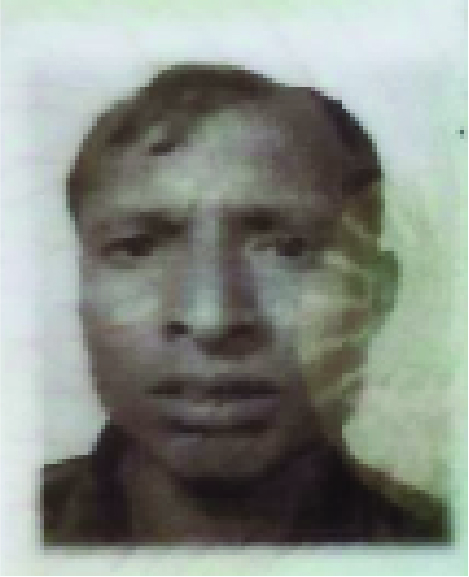
Shahidul Khan
📅 Date of Birth
17 January, 1968
🕊️ Date of Martyrdom
10 August, 2024
🗺️ Division
Dhaka
📍 District
Madaripur
👤 Short Biography
Profession: Farmer.
Place of Martyrdom: ICU, Popular Medical College
Incident Details & Martyrdom Narrative
The Context of Shaheed's Sacrifice
Since coming to power in 2008, the authoritarian government began systematically suppressing all opposition parties and their challengers. Sheikh Hasina and her illegitimate regime are accused of several major scandals and massacres. If proper justice were served for these acts of corruption and killings, even sentencing every Awami League member, including its terrorists, corrupt individuals, and sycophantic supporters, to 100 years in prison would be far too lenient.
In 2006, during the final moments of the coalition government's tenure, Sheikh Hasina publicly instructed her followers to kill the opposition using sticks and oars. Following this order, on October 28, during a rally of Jamaat-e-Islami at the north gate of Baitul Mukarram Mosque, Awami League militants publicly beat to death 7 individuals on the spot. Clashes in different parts of the country resulted in a total of 40 deaths.
After coming to power in 2008 through election engineering, the regime planned to eliminate patriotic army officers. On February 25 and 26, 2009, within the BDR headquarters at Pilkhana, 74 people — including 57 army officers — were killed by agents allegedly linked to Indian operatives. Witnesses to the incident were later systematically eliminated.
On January 28, 2010, the authoritarian and corrupt India-backed regime executed four brave freedom fighters who had played a role in eliminating Sheikh Mujib and his brutal paramilitary force, the Rakkhi Bahini. Another was reportedly slaughtered by Sheikh Hasina herself, as she allegedly pressed him down with her foot and slit his throat.
The 2012 murder of journalists Sagar and Runi was a widely discussed case. The killers were reportedly shielded from justice due to their loyalty to the Awami League.
In 2012, Abdul Quader Molla and several other Jamaat leaders were unjustly executed. They were accused of fabricated and unverified war crimes without proper investigation. Based on these baseless allegations, leaders such as Abdul Quader Molla, Muhammad Kamaruzzaman, Ali Ahsan Mohammad Mujahid, and Motiur Rahman Nizami were arrested and hanged. Additionally, figures like Ghulam Azam, Allama Delwar Hossain Sayeedi, and Salauddin Quader Chowdhury were also sentenced to death.
In 2013, due to the alleged disrespect of Islam, the Hefazat-e-Islam conference was brutally attacked, resulting in the killing of over a hundred people.
In 2017, a secret anti-national agreement was signed with India, leading to widespread criticism.
In 1996 and 2010, two major stock market scams took place in the country’s history. When Sheikh Hasina first came to power in 1996, a massive corruption scandal erupted in the stock market that year, resulting in the looting of between 40,000 to 60,000 crore taka. This took place in November and December. Among those implicated in this scandal and against whom cases were filed were Salman F. Rahman and Asif F. Rahman of the Beximco Group, as well as Mohammad Bhai and Aziz Mohammad Bhai of the Olympic Group, Abu Tayyeb of TK Group, former president and current director of the Dhaka Stock Exchange, Rokibur Rahman, and former DSE director Mustaq Ahmed Sadeq. Many individuals accused in the 1996 case have since passed away.
Several individuals have permanently left the country. On April 2, 1997, a case was filed in the Chief Metropolitan Magistrate's Court of Dhaka regarding this matter. Immediately after the case was filed, the court issued arrest warrants against the accused individuals. Following the case and the arrest warrants, Salman F. Rahman, the current advisor to Sheikh Hasina and owner of Shinepukur Holdings, along with AB Siddiqur Rahman, Salman F. Rahman of Beximco Pharmaceuticals, Sohel F. Rahman, and DH Khan, received interim bail from the High Court. Not only were they granted bail, but the High Court also ruled that no charges could be framed against them. The Securities and Exchange Commission (SEC) appealed this decision, but for unknown reasons, the appeal has yet to be resolved.
On December 8, 2010, from 11:00 AM to 12:23 PM, an estimated amount of money disappeared from the stock market within just over an hour. Some claimed it was 18,000 crore taka, others said 22,000 crore taka, while some estimated it to be 86,000 crore taka. When accounting for the previous 15 days' figures along with December 8, the figure of 86,000 crore taka seems plausible. However, the individuals later accused could not have absorbed the full amount alone. The money was also taken by institutional investors, as well as small investors. The formula was "give and take," "give and take," but by December 8, the giving had stopped. In one go, 22,000 crore taka was taken away.
Thirty million investors did not receive the money; it was taken by only five or six individuals, whose pictures were published in the newspapers. Their names appeared in the investigation report. From small investors to the DSE, CSE, SEC, and even government intelligence agencies, everyone confirmed the involvement of these five to six corrupt individuals. However, it is unfortunate that even after the finance minister received the investigation report, he stated that their names could not be disclosed, citing potential complications. The Awami government has been implicated in several major scandals, including the Hallmark Group loan scam, the Bismillah Group loan scam, and the Padma Bridge consultancy appointment scandal. In one of the country's largest infrastructure projects, the Padma Bridge, a Canadian company, SNC-Lavalin, offered bribes to several influential ministers, politicians, and officials involved in the project, including former Minister of Communications Syed Abul Hossain and the Prime Minister’s economic advisor, Moshiur Rahman. After the allegations were proven, the World Bank refused to provide a loan of $120 million for the $300 million Padma Bridge project. Following this, other donor agencies also canceled their loan agreements for the Padma Bridge.
According to the World Bank report, SNC-Lavalin offered a 10% bribe to secure the consultancy work for the Padma Bridge project. The breakdown of the bribes was as follows: 4% for former Communications Minister Abul Hossain, 2% for former Deputy Minister of Foreign Affairs Abul Hassan Chowdhury, 2% for Mujibur Rahman Nixon, brother of Chief Whip Noor Alam Chowdhury, 1% for the Prime Minister’s economic advisor Moshiur Rahman, and 1% for former Bridge Secretary Mosharraf Hossain Bhuiyan. This information was recorded in the diary of Ramesh Saha, the Vice President of SNC-Lavalin.
During Sheikh Hasina's tenure, several banking scandals were noteworthy. One of the most significant was the Basic Bank loan scam. After coming to power, Sheikh Abdul Hai Bachchu was appointed as the Chairman of Basic Bank on political grounds. This led to widespread corruption in the bank, with an estimated embezzlement of around 3,500 crore taka.
Another major scandal was the Farmers Bank scam. Mahmudul Khan Alamgir and Mahbubul Haque Chishti were involved in loan fraud, corruption, and embezzlement. They did not stop there but also committed serious crimes by transferring money from customer accounts to their own accounts via pay-orders.
There were two incidents of theft through a tunnel in Sonali Bank, executed in the same manner. The first theft amounted to 16.4 crore taka. Later, another theft occurred involving 32 lakh 51 thousand 884 taka.
In 2016, unidentified hackers used fraudulent transfers to steal $101 million from Bangladesh Bank via the SWIFT system from the New York Federal Reserve. Of this amount, $20 million was transferred to Sri Lanka, and $81 million was sent to gambling casinos in the Philippines. This incident is considered one of the largest bank fund thefts in the world at this time. Investigations have indicated that the theft might have been facilitated by negligence in security or even deliberate collusion by bank officials. Despite several years passing, the investigative authorities have yet to determine who inside the bank was involved. At the time of the theft, Bangladesh Bank kept the incident secret for almost a month. Eventually, Dr. Atiur Rahman, the then Governor, had to resign, taking responsibility for the incident. Although an official investigation was conducted, the report was never made public.
Due to widespread corruption, the patriotic people of the country were extremely angered. Though several issues were created for protests, it was difficult to unite and resist the injustices. From the beginning of the Awami regime, every protest movement that took place was brutally suppressed by the Awami League. Despite this, the students and the people remained hopeful for change. To suppress the anti-discrimination movement, Sheikh Hasina, as in the past, issued orders for mass killings. On August 1, Jamaat-e-Islami and Chhatra Shibir were banned. Their intention was to brutally kill common students and citizens, accusing them of being involved with Jamaat-Shibir. Though thousands of innocent people were killed by government forces throughout July, the protests remained peaceful, and the students and people did not become aggressive. However, upon the ban on Jamaat and Shibir on August 1, the people realized that a mass killing was imminent. On August 4, resistance started across the country. Student leaders declared a "March for Dhaka" campaign and urged the people to surround Bangabhaban. On August 5, the people, risking their lives, came out onto the streets, abandoning all fear. Many wrote farewell letters to their parents before leaving home.
Some students and citizens wrote their addresses and mobile numbers on pieces of paper and kept them in their pockets before heading out to the streets, hoping that if they were martyred, everyone would forgive them. The revolutionaries on the streets knew that the bullets from Hasina's murderous forces could strike them at any moment. The fearless people had no one to stop them, as the hated daughter of Mujib, Hasina, lacked the courage to do so. Early in the morning, with the help of Army Chief Walker, Sheikh Hasina fled to India by helicopter, taking her corrupt younger sister Sheikh Rehana with her. Before fleeing, Sheikh Hasina ordered her murderous forces, including the police, RAB, Ansar, and BGB, to carry out mass killings. As a result, on August 5, when the people celebrated the escape of Hasina by marching in victory, those same murderous forces, which had kept the despotic regime in power for 15 years, indiscriminately opened fire. The streets became bloodied, and a portion of the people were killed. The injured people erupted in anger and attacked the hideouts of Hasina's terrorist supporters and sycophants. They set fire to the offices of the Awami League's terrorists.
Shahidul Khan rushed from Madaripur to Dhaka to participate in the March for Dhaka. His family did not know where he had been shot. The Dhaka Medical College called his family, informing them of his condition. Upon learning of his injury, his family rushed to Dhaka. He was transferred from Dhaka Medical College to Popular Medical College for better treatment. On August 10, he passed away while being treated in the ICU.
Economic Condition
They do not own any land other than their house. Their youngest child is unemployed and is trying to go abroad. However, due to their weak financial condition, they are unable to go.
Personal Profile
Name : Shahidul Khan
Date of Birth : January 17, 1968
Profession : Agricultural work
Father : Lalu Khan
Mother : Chahern
Wife : Mahmuda Begum
Children : Suman Khan - Overseas
Abbas Khan - Overseas
Hafiz Khan - Unemployed
Laila Begum - Housewife
Permanent Address & Current Address : Khan Bari, Village: Notun Char Daulat Khan, Post Office: Char Daulat Khan
Upazila: Kalkini, Madaripur
Place of Incident : Dhaka
Attacker : Police
Time of Injury : August 5, 3 PM (approx.)
Type of Injury : Bullet to the chest
Date, Time, and Place of Death : August 10, 2024, ICU, Popular Medical College
Current Location of Martyr's Grave : Khanbari Cemetery
Recommendations
1. Provide monthly and one-time allowances.
2. Assist in finding employment for the younger son.
Quranic Verse
Indeed, Allah has purchased from the believers their lives and their properties for [that] they will have Paradise. They fight in the cause of Allah. (Surah At-Tawbah 9:111)
Hadith Sharif
The Messenger of Allah (SAW) said, "A martyr will be able to intercede for seventy relatives in Paradise." (Sunan Abu Dawood 2520)
👥 Shaheeds from the Same Division
Dhaka



Memorial Photo Gallery


