📱 Smart QR Code
Scan to view & share this memorial biography directly.
🌹 Prayers
Click to send your sincere respect and prayers for this hero
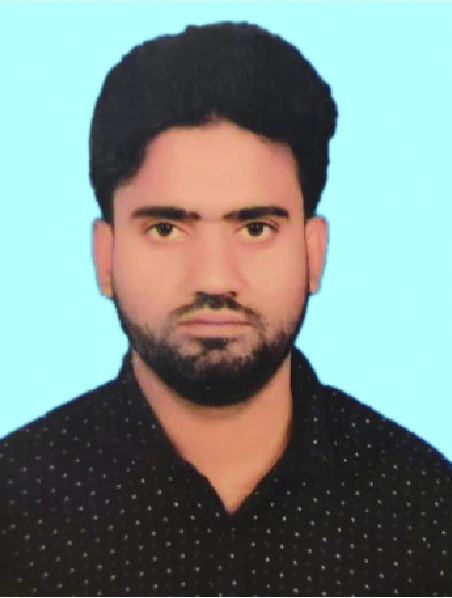
Jewel Rana
📅 Date of Birth
9 July, 1997
🕊️ Date of Martyrdom
5 August, 2024
🗺️ Division
Dhaka
📍 District
Gaibandha
👤 Short Biography
Profession: Garment Worker
Place of Martyrdom: Shaheed Tajuddin Medical Hospital.
Incident Details & Martyrdom Narrative
Economic Condition of the Family
The brave hero Jewel Rana lived with his wife and children in a rented house in Gazipur. In his village, there is a four-bigha plot of land. Currently, the family has a debt of approximately three lakhs. With the loss of the sole earning member, the financial support for the family, including rent and children’s education, has stopped. As a result, the family has decided to leave Gazipur and move back to their village home in Gaibandha.
Context of the Movement (July 5 - August 6, 2024)
July 5: The High Court declares the cancellation of the freedom fighter quota as illegal.
July 6: Students from Dhaka University held protests and rallies.
July 9: Dhaka University students staged another protest against the abolition of the quota system. They gave the government time until June 30 to meet their demands. After the protest, a delegation of demonstrators submitted a memorandum to the Attorney General of Bangladesh. The government's appeal for a suspension of the High Court’s ruling was scheduled for hearing on July 4 by the full bench of the Appellate Division.
July 1: A student rally and protest were organized under the banner of the Anti-Discrimination Student Movement, at Dhaka University and other University of the country. A final resolution for the demands was called by July 4, with a three-day protest program announced by the protesters.
July 2: Dhaka University students blocked Shahbagh for an hour, while Jahangirnagar University students blocked the Dhaka-Aricha Highway for 20 minutes.
July 3: Dhaka University students again blocked Shahbagh for an hour and a half. Bangladesh Agricultural University students staged a protest by blocking a railway line in Mymensingh. Students from Jahangirnagar University blocked the Dhaka-Aricha Highway, and Chittagong University students blocked the Chittagong-Khagrachari Highway. Students from Barisal University protested by blocking the Barisal-Kuakata Highway, and students from Jagannath University blocked the roads at Tantibazar, Old Dhaka.
July 4: The six-member Appellate Division, led by Chief Justice Obaidul Hassan, ordered "Not Today" for the hearing. The Attorney General's office informed that hearings would take place the following week. Students blocked Shahbagh for five hours.
July 5: Even on Friday, students in Chittagong, Khulna, and Gopalganj staged protests and road blockades.
July 6: Protests and road blockades continued at various universities across the country, with a call for class and exam boycotts, strikes, and nationwide blockades. This movement was named "Bangla Blockade."
July 7: The Bangla Blockade movement announced an indefinite boycott of classes and exams in universities and colleges.
July 8: Blockades were held at 11 locations in Dhaka, protests at 9 universities, railway blockades at 3 locations, and road blockades at 6 highways. A 65-member coordinating team named "Anti-Discrimination Student Movement" was formed from students across the country.
July 9: Two students filed a petition seeking a stay of the High Court's ruling. Road blockades continued in Dhaka for about 4 hours under the "Bangla Blockade" campaign.
July 10: The Appellate Division instructed both parties involved in the quota issue to maintain the status quo for four weeks.
July 11: Protesters continued road blockades despite police opposition in various parts of the country.
July 12: On the Friday holiday, protests continued across university and college campuses in the country.
July 13: The then state minister for Information Arafat said the government could not act on a pending case.
July 14: Protesters submitted a memorandum to the President, demanding a special parliamentary session and 24 hours for the government to address the reasonable reform of the quota system. In response to a question during her visit to China, Prime Minister Sheikh Hasina declared the protesting students to be descendants of collaborators, provoking further protests from students at Dhaka University.
July 15: Obaidul Quader, the Transport Minister, told the media that the student movement's "collaborator" slogans would be answered by the Awami League student wing, Chhatra League.
July 16: Police shootings in Rangpur and Chittagong resulted in the deaths of Abu Saeed, Wasim, Shanto, Faruk, and Shah Jahan in Dhaka. Saddam, President of Awami League’s student wing Chhatra League, made a statement threatening the protesters.
July 17: Dhaka University and other universities expelled Chhatra League members, declaring the institutions "politically neutral." Police use of tear gas and sound grenades disrupted student rallies in Dhaka University.
July 18: A complete shutdown program was initiated as declared by the students. Protests were met with attacks by police. Forty students, including Mugdha, lost their lives in the violence.
July 19: The "Complete Shutdown" program triggered massive clashes, attacks, vandalism, shootings, fires, and casualties in Dhaka and other districts.
July 20: A curfew was imposed nationwide, and the army was deployed. General holidays were announced. Police and BGB shootings led to 71 deaths. The main coordinator, Nahid, was arrested by the Detective Branch (DB).
July 21: The court ruled in favor of a 7% quota reform. Protests continued in the capital and other parts of the country.
July 22: Preparations were made for the official gazette publication of the court ruling on quota reforms. Public protests continued, though the movement began to lose momentum. Ten more students died, some of whom had been injured earlier.
July 23: The government issued a notification for the reform of the quota system. Mass arrests began with thousands of cases filed.
July 24: The whereabouts of key leaders of the "Anti-Discrimination Student Movement," such as Asif Mahmud, Abu Bakr Majumdar, and Rifat Rashid, were still unclear.
July 25: The government issued the notification for the reform of the quota system without consulting the protesting students and other stakeholders. The protesters rejected the notification, calling for proper dialogue and inclusive policymaking.
July 26: Nationwide "Block Raids" took place with 555 cases and 6,264 arrests. DB officers in plainclothes abducted student leaders from hospitals.
July 27: 9,121 people arrested in 11 days. People were fleeing their homes in fear. DB Harun continued arresting and torturing student leaders.
July 28: Mobile internet restored after 10 days. Nusrat Tabassum, one of the coordinators of the quota reform movement, is taken into custody by DB Harun. DB Harun forced student leaders to issue a statement withdrawing from the movement at gunpoint.
July 29: In a meeting led by killer Hasina, the 14-party alliance decided to ban Jamaat-e-Islami and Chhatra Shibir for their direct involvement in the student movement.
July 30: Students and teachers marched with red cloths tied to their mouths demanding justice for the killings. The UN Secretary-General issues a statement calling for a transparent investigation. People across the country framed their Facebook profiles in red, while the genocidal forces framed theirs in black, though the latter is insignificant. People involved in drama and film also protested against killer Hasina.
July 31: Students observed the "Remembering Our Heroes" program and started forming public opinion in favor of their 9-point demand.
August 1: The government issued a decree banning Jamaat-e-Islami and Chhatra Shibir for their role in the student movement. DB released six coordinators.
August 2: Students across the country held public rallies demanding their 9-point demands. There were clashes with the police in various places, and three people were Martyred by police gunfire. The situation heated up again, and 15,000 people had already been arrested.
August 3: In protest against the continuation of mass arrests and genocide, students gathered for a massive protest at the Shaheed Minar. The army commander held a meeting, where he received the message that the army w no longer ready to fire. With hundreds of thousands of people presentased, student leaders announced their 1-point demand (the resignation of killer Hasina), leaving out the 9-point demands.
August 4: Attacks on student rallies across the country by Awami terrorist groups. On this day, police and Awami terrorists shoot at students, but thousands of students resisted with bricks and stones. In some places, the army also opened fire. 130 people were Martyred across the country. The next day, students announced a long march towards Dhaka.
August 5: Police, BGB, and army took an aggressive stance, and street battles break out across Dhaka city. After 10:30 AM, Hasina flee with the army's supervision. The working police continue fighting the protesters, killing many. At noon, the police and army vacated the Shahbagh area. By 1 PM, people in the streets begin celebrating with sweets and Eid greetings, thanking Allah. People destroyed all statues of the dictator Mujib at various intersections. Police and Awami terrorists flee and go into hiding, with many killed by student protesters' wrath. A large portion of the capital's population marched to Ganabhaban and vented their anger against Hasina.
August 6: A new sun rises in Bangladesh.
Joining the Movement and Martyrdom of Jewel Rana
On August 5, 2024, Monday, Shaheed Jewel Rana joined the long march of students and the public. The march reached in front of the Shafipur Ansar Academy when the oppressive Sheikh Hasina government’s killing Ansar forces started firing indiscriminately at the peaceful protesters. Jewel Rana was at the front of the procession at that time, around 3:30 PM. Suddenly, a bullet struck his leg, and he collapses. His friends quickly took him to Shaheed Tajuddin Medical Hospital, but due to heavy crowding and excessive blood loss, he succumbed to his injuries at 4:30 PM. He had once saved many lives with his own blood, but he died due to a lack of it. That night, his body was taken to Shakhahat Balua, Gobindganj, Gaibandha, his ancestral village. After the funeral, he was buried with special honors on the morning of August 6.
Mute Parents
When asked about the slain Jewel, his mother broke down in tears. His farmer father remaind almost mute, visiting his son's grave daily to take care of it. However, he demanded justice for his son's murder. The local people demand that the government to provide appropriate compensation and justice for Jewel's death.
Personal Information of the Shaheed
Name : Md. Jewel Rana
Date of Birth : 09/07/1997, Age: 27 years
Place of Birth : Gobindganj, Gaibandha
Profession : Garment Worker
Professional Identity : Employed as a Sewing and Input Man at Interstoff Apparel Limited Garment
Father : Mohammad Montaz Uddin, Profession: Farmer, Age: 51
Mother : Mosammat Jamela Khatun, Profession: Homemaker, Age: 48
Permanent Address : District: Gaibandha, Upazila: Gobindganj, Union: Shalmara, Village: Shakhahati
Assets : 4 percent of residential land
Monthly Income : Currently unavailable
Children's Information : ï‚Ÿ Jabbati Akhter, Age: 8, Occupation: Student,
: Institution: Alhera Salafia Madrasa, Grade: 2nd, Relationship: Daughter
: ï‚Ÿ Jinath Khatun, Age: 5, Occupation: Student,
: Institution: Baro Paika Government Primary School,
: Grade: Pre-school, Relationship: Daughter
Proposals
1. The Shaheed's family is in debt. Assistance could be provided to help repay the debt.
2. Monthly or one-time support could be extended to the Shaheed's family.
3. The Shaheed's two daughters could be included in the orphan care program.
4. Employment could be provided to the Shaheed's wife.
Quranic Verse
Never think of those who have been killed in the cause of Allah as dead. Rather, they are alive with their Lord, receiving provision. (Surah Al-Imran 3:169)
Hadith Sharif
The Messenger of Allah (SAW) said, "A martyr will be able to intercede for seventy relatives in Paradise." (Sunan Abu Dawood 2520)
👥 Shaheeds from the Same Division
Dhaka
Memorial Photo Gallery


