📱 Smart QR Code
Scan to view & share this memorial biography directly.
🌹 Prayers
Click to send your sincere respect and prayers for this hero
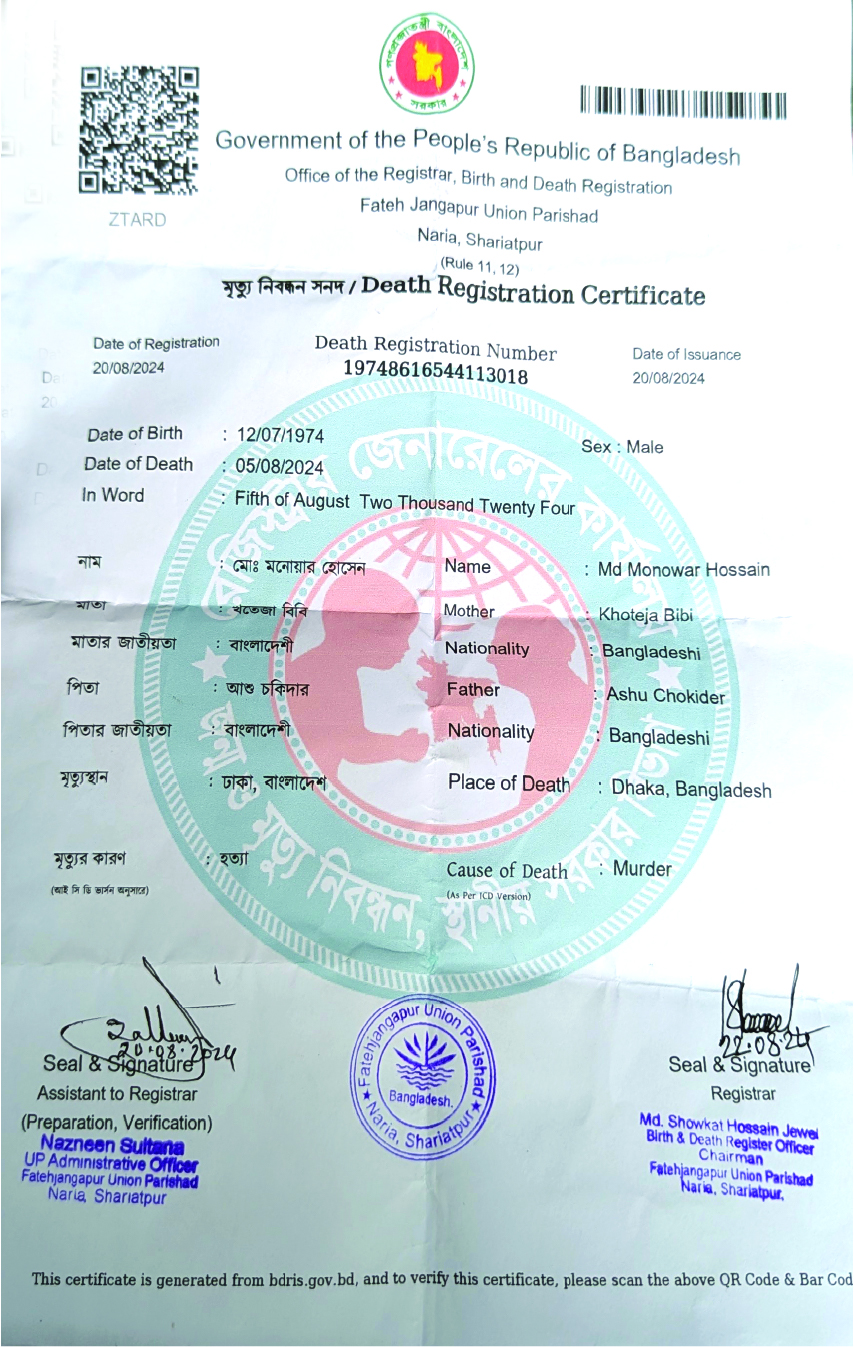
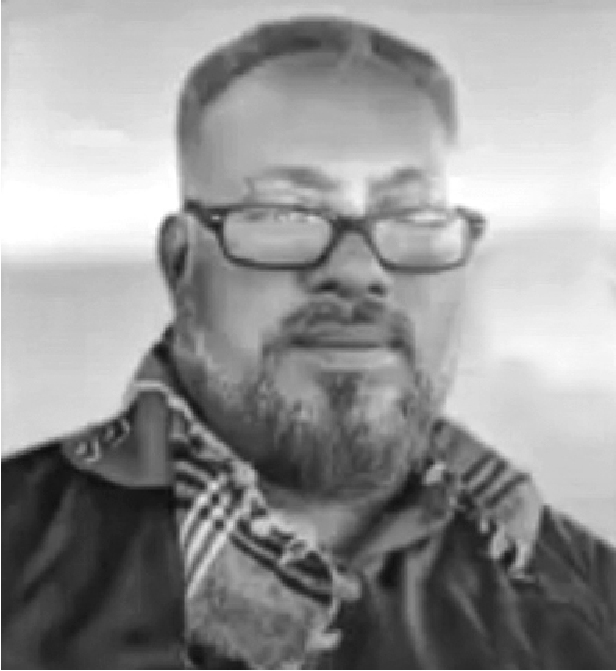
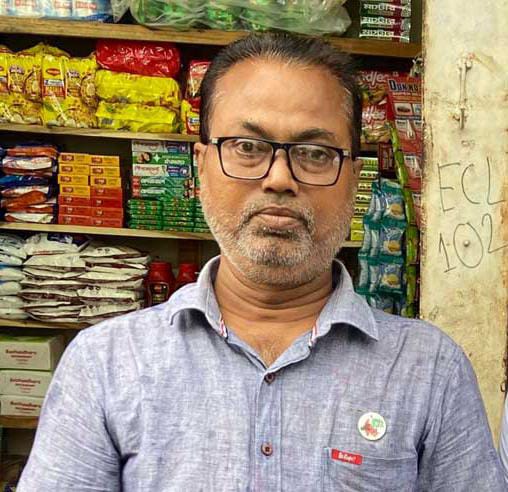
Md. Monowar Hossain
📅 Date of Birth
12 July, 1974
🕊️ Date of Martyrdom
6 August, 2024
🗺️ Division
Dhaka
📍 District
Shariatpur
👤 Short Biography
Profession: Bus Driver
Place of Martyrdom: Dhaka Medical College Hospital
Incident Details & Martyrdom Narrative
Life and Times
Shaheed Md. Monowar Hossain was accustomed to a simple life. He lived with his wife and three children in a rented two-room tin-shed house in his hometown of Shariatpur. He was a driver for Shariatpur Super Deluxe Bus Services. His monthly income was around fifteen to twenty thousand Taka. Even so, he was living happily with his wife and children. The family, which was running on his sole income, has fallen into deep crisis with his departure. His wife does not know how she will face the coming days with her young children. His dream was to educate his children. To have his own place to live. To see smiles on the faces of his wife and children. But while trying to bring smiles to everyone's faces, he gave his own life. He left his young children on the list of orphans and went to the hereafter. In the presence of the Great Lord. Leaving behind thousands of memories. The orphaned children will no longer be able to call anyone father. Losing the breadwinner, the family is living a very difficult life.
Background of the Movement
The anti-discrimination student movement began in July 2024. This movement started with the demand for the evaluation of university students' merit. They want the abolition of discriminatory quotas. Jobs should be given based on merit. The number of unemployed has crossed hundreds of thousands. The only place of hope for the lower and middle classes is a job. Those who study while doing hard labor, with a dream in their hearts, move forward, and that is the expectation of a job. But due to various quotas, most of them cannot even reach that point. So, their only demand is to remove discrimination. But the autocratic government did not show any sympathy for their demand, but rather showed arrogance. Forced, the outline of this movement changed. At one point, university, college, and school students also jumped into the struggle for rights. They come forward with a firm determination to re-liberate the country.
Seeing the examples of sacrifice in the students' movement, Shaheed Md. Monowar Hossain himself joined the movement. His children were also involved in this movement. He, as a father, stood by their side until the last moment of his life. As a person, he had an amiable character. He easily mingled with everyone. He did not study much. But he understood the importance of education. He knew how the country had been running in the past years. Being a driver, he also understood how much irregularity the law enforcement people of this country were doing. There is no evaluation of any logical just demands. Shaheed Monowar also knew, along with the young children, how much struggle and sacrifice is needed to realize their own logical demands.
Time of Martyrdom
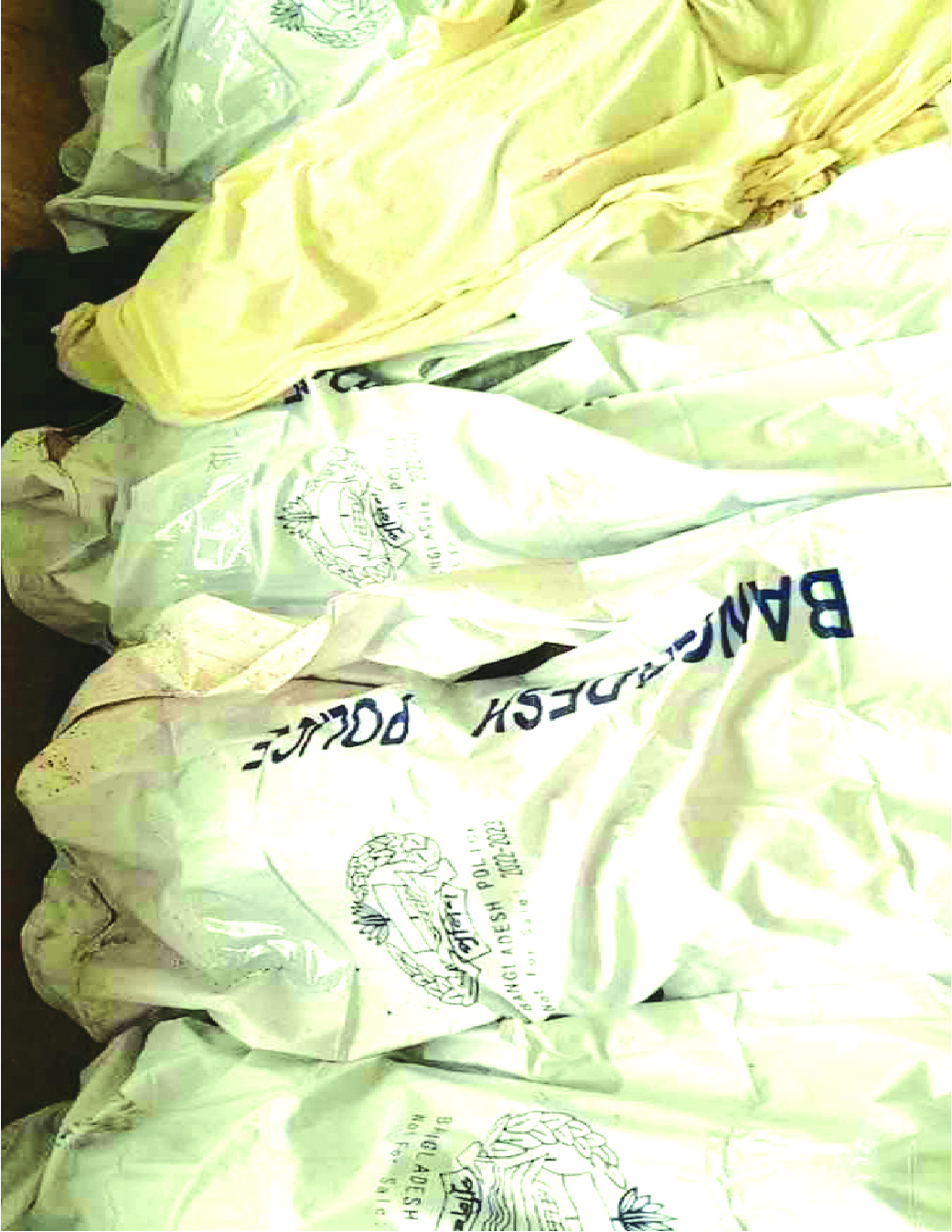
For the sake of livelihood, Shaheed Monowar came to Dhaka from home. The time was the extreme moment of the anti-discrimination movement. He also participated in the movement, encouraging his children and facing the brutal behavior of the police. On August 5th, while he was in the movement in front of the Jatrabari police station, continuous gunfire started. At that time, seeing the severity of the situation, he called his wife at home. On the phone, he described the situation to his wife and asked her to pray. He said to his wife, ‘We are all in great danger. Pray for us. Take care of the children. Police have surrounded us from all sides. They are constantly firing. Pray for the people of the country.’ Saying this, he hung up the phone. Shortly after this incident, someone who was next to Shaheed Md. Monowar Hossain called his wife and said that her husband had been shot in the chest. We are taking him to the hospital. Then he was taken to Dhaka Medical College Hospital. He had been involved in the movement since August 3rd. While undergoing treatment, the doctors declared him dead on August 6th. He was fortunate enough to be martyred.
Financial Condition of the Martyr's Family
Shaheed Md. Monowar Hossain left this world leaving behind three sons. The eldest son, Imon Chowkdar (24), was studying HSC at Shariatpur College. He tried to go abroad, but he could not. The middle son, Rakib, studied up to class 8. Due to lack of money, his education is currently stopped. And the youngest son, Samir, is only 3 years old. He did not get the love of his father in his childhood. Shaheed Monowar Hossain himself got his eldest son married and brought a daughter-in-law into the house. A daughter was also born into their family on September 28th. The dream of the grandfather to see the face of that granddaughter remained unfulfilled. With his martyrdom, the livelihood of a happy family is currently being maintained through the help of relatives. Losing the breadwinner, a prosperous family is living in financial hardship.
Immediately after the incident of martyrdom, they received a donation of two lakh Taka from Bangladesh Jamaat-e-Islami. Which brings a ray of hope in their financial hardship.
Feelings of Close Relatives About the Martyr
Everyone, relatives and neighbors, was impressed by the behavior of Shaheed Md. Monowar Hossain. His neighboring shopkeepers say, ‘Monowar Bhai was a good man. He always spoke with a smile. His transactions were very good. He never spoke to anyone in a hurtful way. We were all satisfied with his behavior.’
His life partner, expressing her feelings about her husband, said, ‘My husband, leaving aside his own happiness and peace, always thought about our happiness. He loved his children very much. Expressing solidarity with the anti-discrimination movement, he played an active role in this movement. He was always by the side of the students. He had no quarrels or disputes with anyone. He was a very sociable person.’
Quranic Verse
And do not say of those who are killed in the way of Allah, "They are dead." Rather, they are alive, but you perceive it not. (Surah Al-Baqarah 2:154)
Hadith Sharif
Abu Huraira (RA) reported: The Messenger of Allah (SAW) said, "Whoever sincerely asks Allah for martyrdom, Allah will grant him the status of martyrs." (Sahih Muslim 1888)
👥 Shaheeds from the Same Division
Dhaka



Memorial Photo Gallery