📱 Smart QR Code
Scan to view & share this memorial biography directly.
🌹 Prayers
Click to send your sincere respect and prayers for this hero
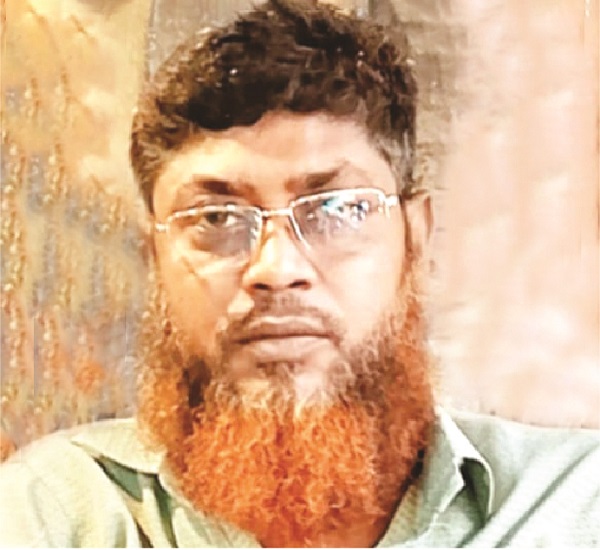
Korman Sheikh
📅 Date of Birth
1 January, 0001
🕊️ Date of Martyrdom
20 July, 2024
🗺️ Division
Dhaka
📍 District
Rajbari
👤 Short Biography
Occupation: Poultry Trader
Place of Martyrdom: Savar, Dhaka.
Incident Details & Martyrdom Narrative
Korman Sheikh – A Fighter Who Kept the Torch of Protest Burning Despite Disabilities
Korman Sheikh's life was a symbol of struggle. Despite being born into poverty in Ratondia village, Kalukhali Thana, Rajbari, he never gave up. From a young age, life forced him into the fight for survival. He ventured into the poultry business to support his family, which consisted of a son and a daughter. Even though he had limited resources and lived in poverty, he carried within him a deep resentment against social inequalities. Despite the challenges, Korman Sheikh remained steadfast in his belief that the fight for a just society must continue.
In 2024, during the anti-discrimination student movement, when young people took to the streets in search of a new dawn for independence, Korman Sheikh, despite his age and physical limitations, joined the protests in Savar. In the face of police violence, he stood strong, holding the torch of resistance. He was shot and fell to the ground, but his death marked the beginning of a new chapter in the movement.
Korman Sheikh’s life was a symbol of perseverance and devotion. Despite the hardships of poverty, he remained a symbol of resistance until his final moments. His sacrifice continues to resonate in the voices of every child in his village, inspiring every heart that yearns for justice and equality. Even in death, Korman Sheikh left behind an eternal message of freedom and equality for us all.
Martyr’s Economic Condition
Korman Sheikh's life was one long struggle against poverty. Though he was born in the serene environment of Ratondia village in Rajbari, that serenity never reached the realities of his life. Nature was calm, but every day of his life was a battle against the swamp of poverty.
Born disabled, Korman Sheikh's physical limitations never stopped him. He began a poultry business to make a living, but meeting the family’s needs with this was nearly impossible. His dilapidated home, cracked walls, and tearful nights were silent witnesses to the story of scarcity. The family lived hand to mouth. Korman Sheikh had two children—one son and one daughter—who were both in university. It was a constant challenge for Korman to manage their educational expenses, but a father's heart never gives up. Despite his frail body and the tight grip of poverty, Korman Sheikh kept fighting for his children’s future. Every day he went to the market to sell poultry, hoping to bring a little joy to his family with whatever he could earn.
His broken house had the sky for a roof and the ground for a bed, yet he dreamed of a day when his children would be illuminated by the light of education. But his dream was cut short. He joined the anti-discrimination student movement, where he wrote the final chapter of his life's story. Korman Sheikh’s life reminds us that poverty is not just a struggle; it is a story of courage, sacrifice, and love. His life and death are like a flame burning in the darkness of poverty, inspiring generations to come.
Family’s Feelings
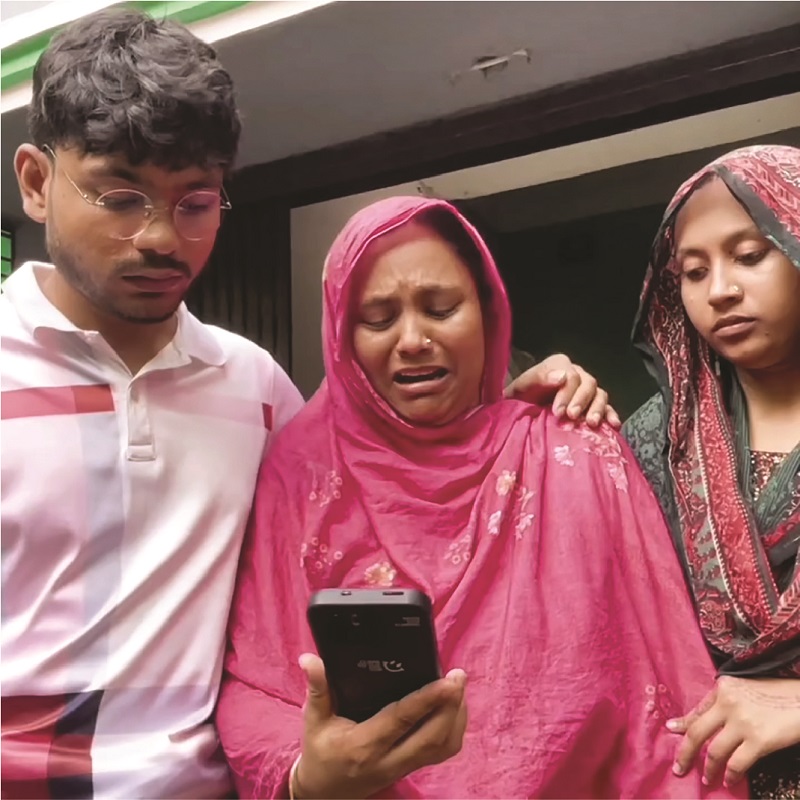
Korman Sheikh's son, Mo Ramzan, shared his feelings, saying, "My father could barely walk straight. He had a problem with his spine. He was receiving a disability allowance. When we heard about the unrest in Savar, my younger sister told me to close the shop and come home around 1 PM. Father had said, 'I’ve closed the shop, I’ll be home soon.' That was the last conversation I had with him. On July 20, in Savar, he was martyred during the violent protests over the quota movement. Ramzan continued, "Around 1 PM, my uncle Motaleb confirmed that my father had been shot. We rushed to Enam Medical College in Savar, but the doctor declared him dead."
Korman Sheikh’s village home was in Ratondia, Kalukhali Thana, Rajbari. He had been living in Savar, Dhaka, near the bus stand for the past six or seven years.
Korman Sheikh’s Struggle for Survival and Sacrifice in the Fight Against Discrimination
Korman Sheikh sustained his family through a poultry business. Prior to this, he ran a vegetable shop. Upon examining his father’s body, his son found gunshot marks on both his chest and legs. His chest had multiple shrapnel wounds, and his right leg had a gunshot wound. On the night of the incident, Korman Sheikh was buried in his village. His family shared that Korman Sheikh was the sole breadwinner of the family. His earnings supported a household consisting of his son, daughter, and himself. His son, Ramzan Ali, was a fourth-year student in the Department of Public Administration at Jagannath University, while his daughter was a first-year BBA student at a private university. They lived in a rented house in Savar.
Ramzan said, "My father was not affiliated with any political party, nor was he involved in any movement. What was his fault, as a physically disabled man?" Korman Sheikh's wife, Shilpi Akhter, said to TCB, "My husband is dead. What was his fault? Our family survived with the income from the poultry shop. What will we do now? Where will we go with our children?" She demanded exemplary punishment for her husband’s killer. Ramzan added, "That morning, my mother told my father he didn’t need to go to the shop. My father replied, ‘There are a few chickens at the shop. I will come back after selling them.’ He went and came back as Martyr Korman Sheikh." The family has an abandoned house in the village, but aside from that, they have no assets.
How Martyrdom Happened
Korman Sheikh’s name is now etched in the history of the anti-discrimination movement. He was a companion of struggle in every moment of life. Despite his disabilities, he never bowed down to life. Operating a small poultry shop in Savar, he worked tirelessly to earn a living. But no one could have imagined that the blood of such an ordinary person would one day ignite the flame of protest against exploitation and discrimination.
It was July 20th. The skies over Savar had darkened with the voices of students. Though Korman Sheikh might not have been directly involved in the anti-discrimination movement, his heart resonated with it. On that day, the streets of Savar were stained with blood due to the police's ruthless firing. Amidst the gunfire, Korman Sheikh ran for his life and sought refuge in a nearby shop. But no walls could shield him from the brutality. The police’s bullets found their target—his chest and legs were struck by the bullets. Korman Sheikh collapsed to the ground. He was a disabled man, an embodiment of struggle, but that very disability could not protect him from the violent hands of the police. His blood soaked the ground of Savar. In an instant, the light of a fighter’s life was extinguished. Today, Korman Sheikh’s sacrifice is not just a name—it is a symbol of the fight against discrimination. His bloody history serves as a reminder of how difficult and precious the struggle for humanity and justice is. Martyr Korman Sheikh, your sacrifice will inspire generations to come.
Proposals:
1. Monthly stipends should be arranged for the family.
2. Financial assistance is needed for the education of the martyr's children.
3. The trial for the murder should be expedited.
At a Glance: Martyr Mohammad Korman Ali
Name: Mohammad Korman Sheikh
Profession: Poultry Businessman
Place of Birth: Village: Ratondia, Thana: Kalukhali, District: Rajbari
Family Members: 3 (One son and one daughter)
Date of Martyrdom: 20th July 2024
Place of Martyrdom: Savar, Dhaka
Grave: Family graveyard in the village
Quranic Verse
And do not say of those who are killed in the way of Allah, "They are dead." Rather, they are alive, but you perceive it not. (Surah Al-Baqarah 2:154)
Hadith Sharif
The Messenger of Allah (SAW) said, "A martyr will be able to intercede for seventy relatives in Paradise." (Sunan Abu Dawood 2520)
👥 Shaheeds from the Same Division
Dhaka
Memorial Photo Gallery