📱 Smart QR Code
Scan to view & share this memorial biography directly.
🌹 Prayers
Click to send your sincere respect and prayers for this hero
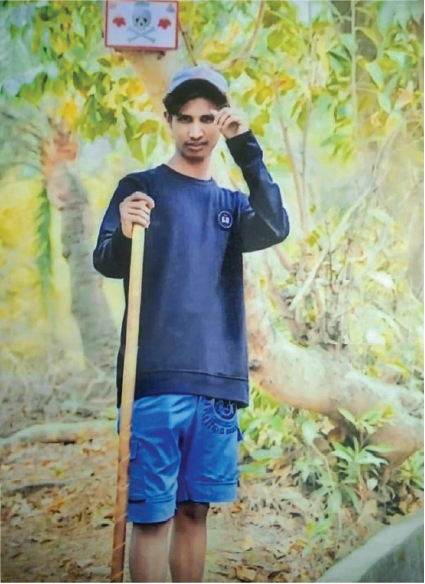
Abdullah Al Roman
📅 Date of Birth
20 July, 2007
🕊️ Date of Martyrdom
5 August, 2024
🗺️ Division
Dhaka
📍 District
Dhaka
👤 Short Biography
Profession: Student, Class: 10th Grade, Nabokisholoy School
Place of Martyrdom: Chanpara, Demra, Dhaka
Incident Details & Martyrdom Narrative
Context of the Martyrdom
5 August 2024, Monday. After several days of suspension, the Hasina government once again imposed an indefinite curfew. On this very day, a mass movement led by students and the general public had planned a program titled "Long March to Dhaka," demanding the resignation of the Hasina government. Hence, from the night before, the streets of the capital were eerily silent and deserted. The morning was overcast and rainy, with streets almost completely devoid of vehicles. An underlying tension filled the air—what was about to unfold?
Unlike previous occasions, there were hardly any police or law enforcement officers visibly present on the streets that morning. Occasionally, police vehicles patrolled in small groups. The military and police established barricades around the Prime Minister’s Office and the Ganabhaban early in the morning. Despite the fear, intimidation, and inclement weather, eager students and members of the public began leaving their homes one by one to join the Long March to Dhaka. The shutdown of mobile internet and broadband services severely disrupted communications.
Meanwhile, students and people assembled on the streets of Uttara, Rampura, Badda, Bonosree, Polashi, Shahbagh, Chankharpul, Jatrabari-Shonir Akhra, Mohammadpur, and Mirpur. Police arrested several individuals in the Shahbagh and Central Shaheed Minar areas. Around Shahbagh, the military and police established strict security at various intersections including Intercontinental Mor, Katabon Mor, Matsyabhaban Mor, Shikkha Bhaban Mor, Chankharpul Mor, Polashi, and Nilkhet. When students tried to enter the university area via Chankharpul, the police obstructed them and opened fire, injuring several. Thousands of students gathered in Uttara and marched towards Shahbagh, where the military cleared the way and welcomed them.
In Rampura, police blocked students attempting to take to the streets near East-West University, resulting in clashes. Later, the military intervened, restoring order and allowing students to gather on the streets. Student crowds occupied the Jatrabari-Shonir Akhra, Mirpur, and Mohammadpur areas and began marching towards Shahbagh on foot.
From all directions of the capital—children, adolescents, young men and women, elders, everyone moved towards Shahbagh. By around 12:30 PM, ignoring all police barricades, students began entering Shahbagh and assembling there. Around 12:45 PM, news broke that Army Chief General Waker Uz Zaman would address the public. Upon hearing this, the protesting students understood that victory was near. Around 2:30 PM, it was reported that Sheikh Hasina had fled the country. Upon hearing this, jubilation erupted from Shahbagh to Mohammadpur, Mirpur, Uttara, Rampura, Jatrabari, and across all districts and sub-districts nationwide.
On the ground at Shahbagh, people of all ages—children, youths, men, and women—had gathered, some carrying sticks, others holding the national flag, some wearing the flag as a turban. Slogans rang out: “The killer Hasina has fled!â€, “The student-public movement has triumphed!â€, “The tyrant regime has fallen!†Simultaneously, false slogans naming Awami League leaders including Sheikh Hasina and Obaidul Quader were chanted.
The day before, a “March to Dhaka†program demanding the resignation of the autocratic Prime Minister Sheikh Hasina had been announced. To suppress the anti-discrimination student movement, curfew was imposed overnight and the military deployed. On 5 August, despite the curfew, students and the public gathered in the capital’s alleyways, prevented from reaching main roads by law enforcement.
At 2 PM, media reported that Prime Minister Sheikh Hasina had resigned and fled the country. Upon hearing this, millions of students and citizens took to the streets across Dhaka and the entire country, embracing each other in celebration. The streets echoed with slogans, and people from all walks of life assembled in Shahbagh. From there, millions marched towards the Prime Minister’s residence at Ganabhaban and also occupied the National Parliament building. Over 800 people lost their lives and thousands were injured in the course of this movement.
Following Sheikh Hasina’s resignation, many Awami League ministers, MPs, and party workers went into hiding. The 12th National Parliament was declared dissolved. What had begun as a peaceful student movement demanding quota reform, supported by a Supreme Court ruling, escalated due to repression by Awami League affiliates and law enforcement into a movement to topple the government. Law enforcement opened indiscriminate fire on students and civilians, killing many. Yet, the student-public movement could not be suppressed.
The 5 August 2024 mass uprising marks a milestone in the history of Bangladesh’s independence. The populace endured the greatest persecution under the oppressive Hasina regime. Among political parties, the Bangladesh Jamaat-e-Islami and its student wing, Islami Chhatra Shibir, suffered the most. This fascist government instigated enforced disappearances, extrajudicial killings, torture, and violations of human rights, creating a reign of terror. Madrasa students and teachers faced brutal attacks under cover of darkness with electricity shut off. Thousands of intellectuals—including generals, advocates, and barristers—were abducted and imprisoned. Judicial killings were carried out under sham tribunals. Fundamental rights were lost. The judiciary, educational institutions, and cultural heritage were destroyed.
When students initiated their movement demanding quota abolition, they were met with indiscriminate gunfire, including shots from helicopters. Many were killed, dragged off police vehicles, and tortured. The people were never safe under this regime. The air was thick with the cries of bereaved families. Hospitals overflowed with injured and deceased, stirring the conscience of all. Media voices were suppressed. No one could safely speak out, as protests were violently repressed. The Hasina government was notorious for trampling on human rights. Thus, the mass uprising on 5 August was inevitable.
International media widely reported on 5 August. BBC headlined: “Bangladesh’s Prime Minister Sheikh Hasina resigns and flees the country. Protesters seize the Ganabhaban.†Al Jazeera reported: “Sheikh Hasina left the country by military helicopter. Thousands have stormed the official residence.†Citing the Army Chief, the Qatari channel announced, “An interim government will be formed.†AFP reported Sheikh Hasina fled for “safe refuge,†accompanied by her sister. Local sources confirmed to AFP that thousands had entered Ganabhaban.
To preserve the legacy of the 5 August 2024 mass uprising, national unity must be established. Fundamental human rights must be restored. Vigilance is required to prevent new fascism from emerging under murderous, looting, and rogue elements. The history of the July movement’s martyrs and wounded must be accurately recorded.
On 28 October 2006, the nation lost its way; on 5 August 2024, the nation found its direction again. Hearing the testimonies of the July–August movement’s martyrs’ families soften the hardest hearts and brings tears to the eyes. This mass uprising is credited solely to the student-public movement, by the grace of God. Sheikh Hasina had arrogantly claimed she would never flee—but to save her life, she fled like a thief. Similarly, in 1971, Sheikh Mujib fled to Pakistan without any instructions to his party workers.
Surrounded by secure and thick walls, the “Ganabhaban†became the prison from which the Prime Minister had to resign and leave the country, without any place left for her in Bangladesh. The future of the oppressive Hasina regime remains to be seen. During her 15-year tenure, enforced disappearances, murders, and widespread sexual violence plagued the nation. On 5 August, the people eradicated dictatorship root and branch. Now, to fully establish democracy and freedom in the country based on Islamic ideals, another revolution is necessary—one that will shape the nation’s future.
On 7 November, the people rose together against autocracy, exploitation, and oppression, and on 5 August, the student-public united against all forms of dominance. When the Hasina government fell on 5 August, students joyfully took to the streets.
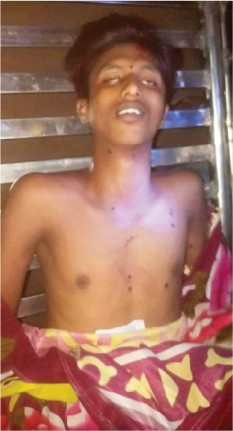
On that evening, Roman left his home to join the victory procession. Despite the Awami police brutally shooting and killing people across the country during the day, Roman believed the killers would either flee or surrender by evening. This did not happen. Suddenly, he was shot in the chest, forehead, and head by Awami League militants and died.
Exhumation of the Body
Roman, a 10th-grade student, was killed by militants’ bullets on 5 August during the victory procession. After the situation normalized, his family filed a case, and under the magistrate’s supervision, his body was exhumed for postmortem examination.
Family’s Legal Action
Following the filing of a case by Roman’s family, the District Detective Branch (DB) police have taken former Minister of Textiles and Jute and Awami League leader Golam Dastagir Gazi into three days’ remand for questioning. On Thursday (January 9) at noon, Senior Judicial Magistrate Haider Ali’s court granted three days’ remand despite the police’s request for seven days. This was confirmed by Inspector Kaiyum Khan of the court police. Previously, on August 25 last year, Golam Dastagir Gazi was taken into remand by Rupganj police in connection with the same case. When the police applied for a ten-day remand for interrogation, Narayanganj Senior Judicial Magistrate Kazi Mohammad Mohsin granted six days’ remand. Advocate Sakhawat Hossain, the plaintiff’s lawyer, stated that Roman, a tenth-grade student, was fatally shot in an armed attack on August 5. In connection with the incident, a murder case was filed at Rupganj police station on August 21 by the victim’s maternal aunt, Rina Begum. Golam Dastagir Gazi is also an accused in the case. He was arrested from a residence in the capital on August 25. He was a Member of Parliament for Narayanganj-1 constituency representing the Awami League. Previously, the police had taken him into remand several times for questioning in various cases. In the murder case of Roman Mia, who was shot on August 5, a total of 45 individuals, including former Prime Minister Sheikh Hasina and Golam Dastagir Gazi, have been named as accused. The case was filed by Roman’s maternal aunt, Rina, at Rupganj police station.
Economic Situation
Roman’s father drives a vehicle for Polar Ice Cream Company officials. The family lives with their children in a government khas land house in Sonpara Ward No. 8. They do not own any property.
Family’s Statement
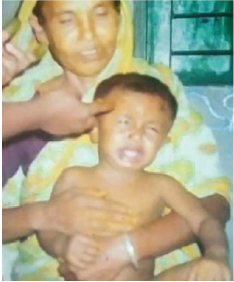
Roman’s mother, Rozina, said, “Roman was my first child. To ensure that his education was not interrupted, I delayed having more children. Roman was not just my son; he was my friend. He used to spend time with his brothers. Since Roman is no longer here, his brothers feel helpless. They often go to the graveyard. His youngest brother, who is only three years old, asks, ‘Mom, why didn’t you put a gate? Why did you let brother go to the rally?’ He asks his father, ‘Why weren’t you home? Why did someone shoot and kill brother Roman?’ Roman’s five-year-old brother searches for the murderer. When we try to discipline them, they go to the graveyard. If we cannot find them anywhere else, we find them at the graveyard. They miss Roman very much.â€
News Link:
https://www.facebook.com/61561074656660/videos/577619417976921
https://www.facebook.com/hathazaridarpan24/videos/1884585658617741
Summary of Information Related to the Martyr
Name: Abdullah Al Roman
Date of Birth: July 20, 2007
Occupation: Student, Grade Ten, Nabkisholoy School
Father: Md. Anwar Hossain
Mother: Rozina
Names of Brothers: Abdullah (6), Ahmed (5), Mohammad (3)
Permanent and Current Address: Sonpara, Demra, Dhaka
Place of Incident: Sonpara, Demra, in front of Holud Morich Mill
Attacker: Awami League’s militant faction
Time of Injury: August 5, evening
Nature of Injuries: Gunshot wounds to chest, forehead, and head
Date, Time, and Place of Death: August 5, 2024, Sonpara, Demra, in front of Holud Morich Mill
Location of Martyr’s Grave: Ward No. 3, Sonpara Graveyard
Proposals:
1. Provision of monthly and one-time financial assistance.
2. Government employment may be granted to Roman’s father.
Quranic Verse
And do not say of those who are killed in the way of Allah, "They are dead." Rather, they are alive, but you perceive it not. (Surah Al-Baqarah 2:154)
Hadith Sharif
Abdullah ibn Masud (RA) reported: The Messenger of Allah (SAW) said, "The souls of the martyrs are in the bodies of green birds." (Sahih Muslim 1887)
👥 Shaheeds from the Same Division
Dhaka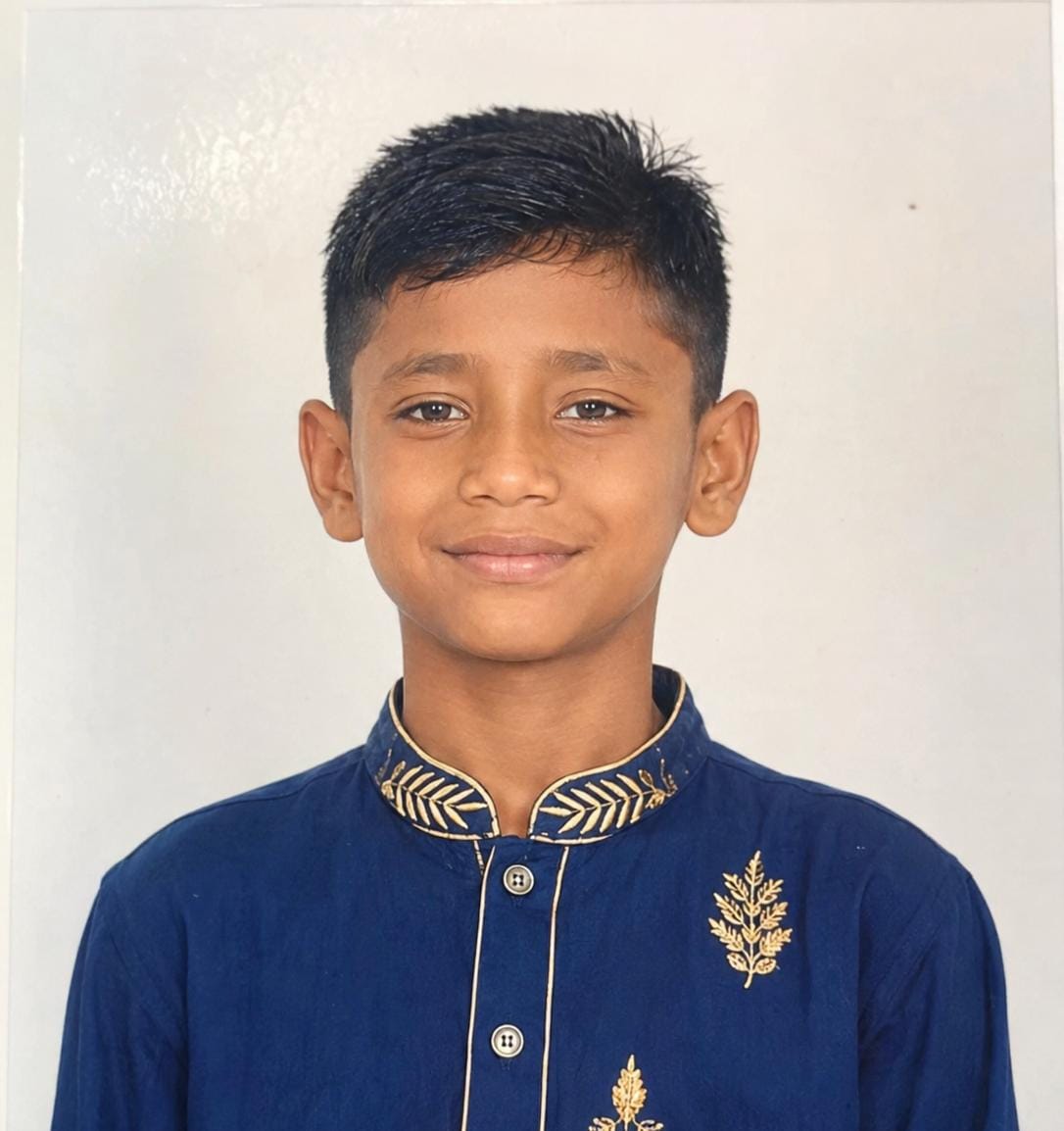


Memorial Photo Gallery