📱 Smart QR Code
Scan to view & share this memorial biography directly.
🌹 Prayers
Click to send your sincere respect and prayers for this hero
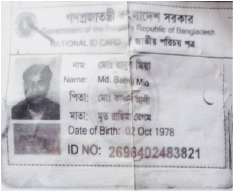
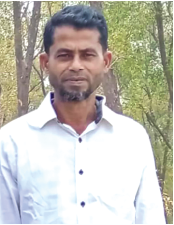
Babul Mia
📅 Date of Birth
2 October, 1978
🕊️ Date of Martyrdom
18 July, 2024
🗺️ Division
Dhaka
📍 District
Barguna
👤 Short Biography
Profession: Worker, Sand Loader
Place of Martyrdom: Dhaka Medical College Hospital
Incident Details & Martyrdom Narrative
When I think of such a martyr, a scene vividly appears before my eyes—one never to be forgotten. A martyr of the July 2024 movement, whose name may remain unknown to many of us, yet his life will eternally reside in our hearts. He was an ordinary man, the sole breadwinner of a poor family, who bore the weight of his household on his shoulders every day. He had a broken leg—a profound suffering in his life—but he worked through that pain to sustain his family. His wife and children awaited him at the end of each day. Within him resided an indomitable strength—not only for himself but for his family, society, and country. Those days were a continuous struggle. The harsh realities of daily life had taught him resilience. Even when his strength began to wane, he did not stop. He ignored the agony in his broken leg, as if nothing should obstruct his duty to provide for his family. His dream was to one day lift his family out of sorrow and poverty, to bring a smile to his mother’s face. Yet he did not know his story would end here.
This Babul Mia was a pious and upright man. There was a sanctity in all his deeds. He never wronged others, nor sought personal happiness at another’s expense. Every decision he made was honest; honesty was his life's guiding principle. Even during his family’s financial hardship, he regularly devoted part of his earnings to social service and charity. His devout life rooted in religious values earned him respect not only within his family but throughout society. His religious devotion, integrity, and compassion were the finest qualities of his life.
The day he took to the streets to join the movement, his eyes shone with enlightened zeal—a dream for securing people’s rights and transforming the country. He did not know his journey would end there. He did not foresee that the courage in his heart would ultimately be silenced by bullets. He did not imagine that his wounded body, his broken leg, and his dreams would never return. His eyes held dignity and love for his nation and people. But he did not know that at the moment of his martyrdom, his family and children would be lost in an invisible void. His mother would never understand why he would not return. Yet the dream he carried was one of equality, rights, and love for all. Tragically, that dream’s fulfillment was extinguished forever by his sacrifice.
When his blood soaked the ground, only one refrain echoed in his chest: “For my country, my people, my loved ones.†As poor as he was, so vast was the horizon of his dream. This martyr left an invisible message before our eyes: any struggle or movement for truth is never in vain; its pain and sacrifice endure. His heart-wrenching cries, his silent tears still resonate within every human heart today. He has taught us what true courage and genuine love mean.
Economic Background
Babul Mia was born on October 2, 1978, in Zakir Tabuk Para of Choto Boudi village, Talatoli Police Station, Barguna district. His father, Mohammad Kanchan Ali, and mother, Rahima Begum, lived in dire poverty, where the sole hope for survival was hard work. Among eight siblings, Babul was the sixth, bearing the immense responsibility of transforming his family’s fate. There was no prosperity in his locality; no land or property to call their own. His father passed away early, leaving Babul to shoulder the burden of a lone, oppressed family. Amidst deep hardship, he resolved to make his family self-reliant one day. Without self-regard, Babul assumed a parental role for his younger siblings. Despite the grief of losing his father, he remained steadfast, sacrificing daily for his two younger siblings, while elder siblings were occupied with their own households.
Life was a harsh struggle, but Babul never backed down. His sole livelihood was working as a sand dresser, and even that meager income was barely enough to support his family. Yet, he persevered with relentless hard work. Each day was a challenge—balancing his own life with the needs of his family, including securing a good marriage for his sister and caring for his three children. He never belittled his own life but bore others’ hardships without complaint. His days were filled with constant struggle—empty pockets and boundless responsibility. Still, he faced each moment with a smile, protecting his family with honor and love. He considered his family’s happiness above his own. Though he never tasted personal happiness, the smiles of his younger siblings and the bright future of his children were his sole inspiration. After his death, his eldest son is now working in the garment industry.
Incident Description
During the rule of the Awami League government, Bangladesh faced an extremely harsh reality in which the people’s rights, freedoms, and human rights were systematically violated. The government misused state machinery solely to perpetuate its power, while the people continuously suffered, deprived of their fundamental rights. The education system was utterly destroyed. Question leaks, deterioration of exam environments, and exploitation of students by teachers occurred at unimaginable levels. The 2023 SSC exam question leaks and widespread online dissemination of exam papers demonstrated the government’s loss of control over education. Most distressing was the indifference of the Education Minister and senior officials who chose to ignore the crisis. The nation’s future generations returned home frustrated, deprived of the fruits of their efforts.
The healthcare system was in a critical state—governmental neglect paired with hospital corruption. During the 2021 COVID-19 pandemic, hospitals overflowed with patients, yet the government failed to take effective action against corruption. Complaints such as “no treatment, but demand for money†were rampant. In Dhaka city hospitals, cabins cost hundreds of thousands of taka, yet proper medical care was lacking, and patients suffered for beds.
At the same time, student politics at universities had become dangerously oppressive. Leaders of the student and youth wings controlled both national and international university administrations. In January 2024, violent attacks on students by student league activists at Dhaka University were horrifying. Students were publicly beaten for their political views, and assaults occurred at the university’s main gate.
Such chaos, corruption, and injustice permeated every sector of the country. Administrative exploitation intensified daily. Police, tasked with public security, became instruments of government oppression, colluding against the people. Remarkably, top government officials took no action against them. Police torture and extrajudicial killings became routine. In 2023, an innocent man was arbitrarily killed by police in Narsingdi, with subsequent government attempts to cover up the incident through media manipulation. The most egregious event occurred in Kushtia in 2023, when police abducted a peaceful journalist who had campaigned on social media for causes opposed by the government. The journalist was subjected to inhumane torture, revealing the government’s brutal nature—ready to silence dissent at any cost.
Thus, the people of Bangladesh were steadily stripped of their fundamental rights. The government continuously wielded oppression and exploitation as its main tools. Political leaders were either forcibly disappeared or falsely charged to compel exile. Many opposition leaders were unjustly convicted through fabricated cases amid government slander. Opposition figures were publicly insulted, opposition activists were killed by police gunfire, and press freedom was severely restricted. False charges and punishments for exposing truths became government routine. Law and justice lost all meaning; oppression and suppression became the sole political reality.
The quota reform movement that began in March 2018 was a historic student struggle in Bangladesh. Students protested to reform the quota system in government jobs. At that time, 56% of government jobs were quota-based: 30% reserved for freedom fighters’ descendants, 10% for women, 10% for underdeveloped districts, 5% for ethnic minorities, and 1% for persons with disabilities. Students demanded merit-based recruitment and a uniform age limit for all candidates.
On March 21, 2018, the Sheikh Hasina government announced the continuation of the quota system, which triggered intense anger among students of various universities across the country. Shortly thereafter, in April 2018, protests spread nationwide. Thousands of students joined the movement, boycotting classes, organizing processions, and beginning to block major highways. The protesters sought to draw the government’s attention to their demands and called for justice in society. To suppress the movement, the government deployed police and law enforcement agencies, resulting in violent clashes between police and students at Shahbagh intersection in Dhaka during the second week of April. At least 75 individuals were injured. Police repression of students turned into a fierce battlefield. Shahbagh and other areas became scenes of conflict where students demanded justice instead of punishment. Amid these circumstances, on April 11, 2018, then Prime Minister Sheikh Hasina made a startling announcement regarding the quota system. She declared the complete abolition of the quota system and stated that recruitment would henceforth proceed solely on a merit basis. This declaration was considered a major victory for the quota movement and became a fiery test of student struggle in the country’s history.
However, beginning June 5, 2024, a new movement demanding quota reform began in Bangladesh. This movement arose in the wake of an important High Court ruling concerning the families of freedom fighters. The High Court declared the freedom fighter quota in direct recruitment (grades 9 to 13) in government offices, autonomous and semi-autonomous institutions, and various corporations illegal. The government officially deemed this verdict invalid. Following this ruling, the freedom fighter families and students became outraged and took to the streets demanding quota reform. As a reaction to this ruling, students-initiated protests in six universities. In Dhaka, students gathered in front of the Central Library of Dhaka University to hold a protest assembly. They then organized a brief gathering at the Shaheed Minar, where their primary demands were quota reform and reconsideration of the abolition of the freedom fighter quota. This movement became particularly significant as a new generation of students vocally asserted their rightful demands and sought to establish equality in society. Through this movement, they aimed to clearly articulate their demands to the state and draw the government’s attention to the subsequent steps following the abolition of the freedom fighter quota. The July 2024 movement was a bloody and painful chapter, which will forever remain memorable in Bangladesh’s history. Each moment of the protesters was marked by unprecedented pain and struggle. Each day of the movement became a poignant memory deeply etched in the hearts of every family and individual in the country.
July 2, 2024
The movement began with a simple call. Students took to the streets to demand quota reform in government employment. Initially, the protests and peaceful rallies were free of major unrest, but the authorities and law enforcement began to take the issue seriously.
July 5, 2024
On this day, the first police attack on the protesters occurred, escalating the situation. Amidst the students’ shouts, noise, and protests, the police opened fire. Before anyone could comprehend what was happening, hundreds of students were injured. The streets were soaked in blood from gunfire and baton charges; every corner of the city bore the shadow of sorrow.
July 10, 2024
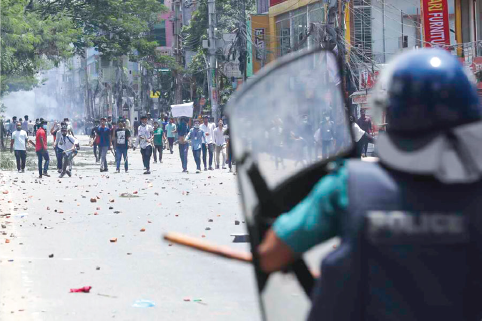
The protests intensified further. Police increased their attacks on demonstrators in various parts of Dhaka, especially Shahbagh, Bailey Road, and Motijheel areas. Violence escalated to baton charges, gunfire, and even vandalism of vehicles. The students, mostly young men and women, risked their lives standing in the streets to raise their voices for their rights. The cries of grieving mothers, the empty eyes of fathers, and the sorrow of brothers painted the bloody moments of the movement.
July 16, 2024
On this day, the movement reached its peak intensity. Abu Saeed, a student of Begum Rokeya University in Rangpur, lost his life due to police gunfire. His death sparked nationwide outrage beyond Rangpur and Dhaka. As news of Abu Saeed’s killing spread through the media, protesters across the country took to the streets in greater numbers. Students organized processions, assemblies, and protest programs, exerting pressure on the government to implement ‘quota reform’.
July 20, 2024
Clashes intensified within Dhaka city. College and university students stood on the streets citywide, protesting for their demands. Anger and discontent against the government grew. Police again employed excessive force on students—baton charges, gunfire, and tear gas. The streets flowed with blood; people were enraged, grieving, and frustrated. That day, the cities seemed enveloped in an invisible void where only death, tears, and the silent cries of helplessness existed.
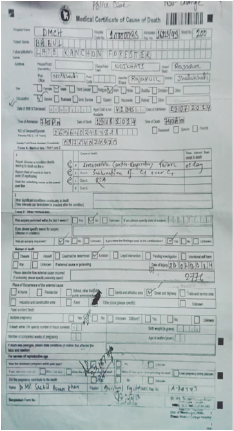
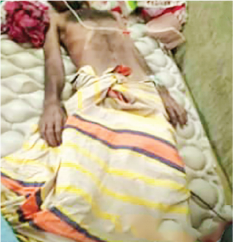
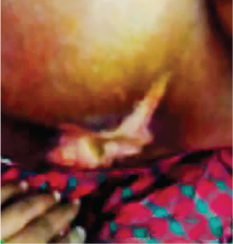
On July 18, Shahid Bablu Mia left his home heading toward Savar. During the ongoing protests, he was shot and injured by police. Protesters promptly rescued him and arranged for his hospitalization. He had suffered a leg injury earlier while working in a sand dresser, which left him disabled. Therefore, after being shot, his physical condition deteriorated rapidly. He was treated at Dhaka Medical College Hospital and succumbed to his injuries on August 23, after one month and three days. However, his death was not the end of his struggle. His life, his ascetic attitude, and his honest and virtuous lifestyle remain a lesson for us today. Bablu Mia was not only a devout man but one who gave everything for others and devoted his life to serving society. He was buried in the cemetery of Talatoli village.
Feelings of the martyr’s close relatives:
• Martyr’s wife: “I have no one left now. He was like a banyan tree. He had no bad habits. He was the soul of the family. He never harmed anyone and always helped others.â€
• Martyr’s eldest son: “I did not realize the hardships my father faced for the family while he was alive. He taught me lifelong lessons of integrity. Now that he is gone, the world seems to weigh heavily on me.â€
• Martyr’s daughter: “My father is no more. No one can bring him back. No one will call me ‘mother’ anymore.â€
• Martyr’s younger sister: “My brother was a simple, pious man. He did not cause trouble for anyone. He was a kind person.â€
• Neighbor: “He was a good man. Though poor, you could blindly trust him and work with him.â€
Summary Information Regarding the Martyr
Name: Martyr Babul Mia
Date of Birth: 02/10/1978
Occupation: Sand Extractor
Monthly Income: 15,000 Taka
Permanent Address:
• District: Barguna
• Police Station: Talatoli
• Union: Chhoto Bogi
• Village: Zakir Tabuk
Current Address:
• District: Barguna
• Police Station: Talatoli
• Union: Chhoto Bogi
• Village: Zakir Tabuk
Father’s Name: Md. Kanchan Ali
Occupation: Deceased
Mother’s Name: Rahima Begum
Occupation: Deceased
Number of Family Members: 3
• Wife: Razia Begum (34 years old) / Housewife
• Son: Md. Hasan (19 years old) / Garment Worker
• Daughter: Mosha Tamanna (14 years old) / Class 8
Place of Attack: Savar
Attacker: Police
Date of Injury: 18 July
Date of Death: 23 August, Dhaka Medical College
Burial Place: Talatoli
Quranic Verse
They rejoice in what Allah has bestowed upon them of His bounty, and they rejoice for those who have not yet joined them. (Surah Al-Imran 3:170)
Hadith Sharif
The Messenger of Allah (SAW) said, "A martyr will be able to intercede for seventy relatives in Paradise." (Sunan Abu Dawood 2520)
👥 Shaheeds from the Same Division
Dhaka
Memorial Photo Gallery