📱 Smart QR Code
Scan to view & share this memorial biography directly.
🌹 Prayers
Click to send your sincere respect and prayers for this hero
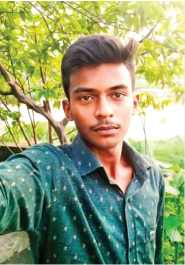
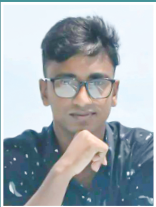
Sanjid Hossain Mridha
📅 Date of Birth
27 January, 2008
🕊️ Date of Martyrdom
5 August, 2024
🗺️ Division
Dhaka
📍 District
Gazipur
👤 Short Biography
Profession: Student
Place of Martyrdom: Rabindra Smarani Road, Uttara, Sector-3, Azampur, Dhaka
Incident Details & Martyrdom Narrative
Context of the Incident
From 2008 to 2024, over a period of 16 years, most constitutional institutions were effectively destroyed by the Awami League. Although these institutions remained under government control, they became completely detached from the people. None of the bases of Awami League’s power were sustainable because they had become fully isolated from the public. As a result, people needed a catalyst or spark, which began with the student movement.
When the anti-government movement gained momentum, it stirred widespread public anger. Thousands of people from various professions took to the streets heading toward the Ganabhaban (People’s House) without any permission from the military, curfew, or police.
Experts note that a buildup of 15 years of resentment, excessive price hikes, mismanagement of public transport, looting, and banking irregularities fueled the public’s anger. They saw the quota movement as an opportunity for change and bravely confronted highly advanced weapons on empty hands in the streets.
A protester named Tahmina said, “I do not need a government job, nor am I old enough to apply for one. But we are subjected to falsehoods, torture, and intimidation. I want an end to that. That is why I have taken to the streets today.â€
Although the Awami League initially came to power through a democratic election, it subsequently transformed into a de facto autocratic government. Since 2008, there have been no truly free and fair elections in Bangladesh. Of the three national elections held during this period, two were largely one-sided.
Although opposition parties including BNP participated in the 2018 election, there were widespread allegations of rigging and malpractice, which many described as a “nighttime election.†Even local elections were dominated by the Awami League, with most being one-sided. Where opposition parties participated, allegations of fraud and irregularities surfaced.
Therefore, over the last 15 years, the people have essentially lost the right to elect representatives or voice opinions through voting. Hundreds of opposition leaders and activists have been disappeared, imprisoned through cases and sentences, or detained for years. In a country that gained independence fighting for voting rights, the right to vote has been violated for 15 long years. This has been accompanied by the suppression of freedom of speech, expression, and press, maintained through various laws and surveillance.
In the political arena, opposition parties including BNP and Jamaat were prevented from holding meetings or rallies over the past 15 years. Imprisonment, disappearances, and killings have been used to eliminate opposition. The government led by Sheikh Hasina and the police created a “mafia state†across the country. Pro-government authorities filed cases and arrested people for posting anti-Sheikh Hasina or anti-Sheikh Mujib content on social media. Opposition voices were imprisoned for months, with bail requests denied. Even union-level Awami League leaders looted state funds and smuggled them abroad. In short, Awami League misrule angered people across all strata. Everyone was waiting for change.
On the other hand, the Awami League planned to enslave the people and exploit the country for generations to come. Despite widespread repression during the quota movement, more students and people joined the streets. Students threw themselves to remove the “Pharaoh of Bengal†and to sacrifice for the country. Subsequently, the oppressed people, who had suffered for 16 years in various ways, joined the movement. The movement was repeatedly disrupted by attacks from police, Border Guards Bangladesh (BGB), Ansar, military, and Awami League militants. Students could not even stay at home safely. Anyone with a mobile phone carrying anti-Hasina images or information was arrested or killed. Curfews and internet shutdowns paralyzed all communication. The nation thought that the ruthless rulers of Bengal could no longer be eliminated!
At this time, the persecuted student organization Islami Chhatra Shibir emerged. They revived the movement with new and innovative programs. Despite internet shutdowns, student coordinators in safe homes continued to broadcast reports of government repression to international media. As a result, the world media was compelled to pay attention to Bangladesh.
Overseas Bangladeshis, angered by the Awami League killings, stopped sending remittances. The United Nations officials issued a warning and notice to the military for killing students and people using UN vehicles and weapons. The world community asked why the Awami League was killing patriotic youth participating in a legitimate popular movement? Why were they refusing reasonable demands and resorting to killing protesters?
Sheikh Hasina, along with her partners in corruption and leftist parties branded as parasites on Bangladesh, banned Jamaat-e-Islami and Islami Chhatra Shibir. They understood that all movements were organized with the help of patriotic intellectuals from Jamaat and Shibir. Sheikh Hasina prepared for a horrific genocide by labeling the students as Shibir militants. Meanwhile, the public became even more enraged. Shibir leaders called on everyone to change their Facebook profiles to red. The nation followed suit in protest. Former army chiefs and ex-servicemen showed solidarity with the movement.
On August 4, Awami League forces came to kill protesters but faced resistance for the first time. The next day, Shibir leaders announced the ‘March for Dhaka’ program. Sanjid Hossain Mridha, a student of Milestone School and College, courageously took part in the protests throughout July, putting aside fear for his life to defend students’ rights.
On August 5, he joined the ‘March for Dhaka’ program. In the afternoon, at Rabindra Sarani in Sector 3, Uttara, Hasina’s killing forces shot him dead. He was taken to Uttara Crescent Hospital, where the duty doctor declared him dead. He was buried the next day following the funeral prayers.
Family’s Case
A case was filed against 231 persons including former Prime Minister and Awami League President Sheikh Hasina, former MP Dhirendra Nath Shambhu of Barguna-1 constituency, and others.
On Sunday, September 15, Sanjid’s father, Kabir Hossain Mridha, filed the case in the Metropolitan Magistrate Farzana Shakila Sumu Chowdhury’s court in Dhaka. The court accepted the complaint and instructed Uttara West Police Station to register it as a formal case.
Other accused include former Home Minister Asaduzzaman Khan Kamal, former MP Md. Khasru Chowdhury, Alhaj Md. Habib Hasan, and Shawkat Hossainur Rahman Rimon.
The case alleges that during the anti-discrimination student movement on August 5, on the orders of Sheikh Hasina, 300 to 400 persons opened fire at Rabindra Sarani in Sector 3, Uttara. Sanjid and several others were shot. When taken to the hospital, the duty doctor declared Sanjid dead.
Summary of Information Related to the Martyr
Name: Sanjid Hossain Mridha
Date of Birth: 27 January 2008
Occupation: Student
Father: Kabir Hossain Mridha
Mother: Raziya Begum
Permanent and Current Address: 106, Barshan Hall Road, North Dattapara, Tekbari, Ershad Nagar, Tongi, Gazipur
Location of Incident: Rabindra Smarani, Sector No. 3 Road, Azampur, Uttara, Dhaka
Attackers: Terrorist faction of the Awami League
Time of Injury: 5:00 PM
Nature of Injury: Gunshot wound to the neck
Date, Time, and Place of Death: 5 August, 5:00 PM
Proposal:
1. Arrangement for monthly and one-time financial assistance.
Quranic Verse
They rejoice in what Allah has bestowed upon them of His bounty, and they rejoice for those who have not yet joined them. (Surah Al-Imran 3:170)
Hadith Sharif
Abu Huraira (RA) reported: The Messenger of Allah (SAW) said, "Whoever sincerely asks Allah for martyrdom, Allah will grant him the status of martyrs." (Sahih Muslim 1888)
👥 Shaheeds from the Same Division
Dhaka


Memorial Photo Gallery


