📱 Smart QR Code
Scan to view & share this memorial biography directly.
🌹 Prayers
Click to send your sincere respect and prayers for this hero
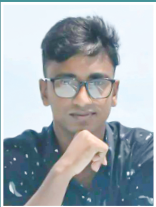
Md. Akash
📅 Date of Birth
1 September, 1988
🕊️ Date of Martyrdom
5 August, 2024
🗺️ Division
Dhaka
📍 District
Dhaka
👤 Short Biography
Occupation: Rickshaw driver,
Place of Martyrdom: Under the overpass in Azampur
Incident Details & Martyrdom Narrative
Context of Martyrdom
In 1971, Sheikh Mujibur Rahman emerged from Pakistani custody to assume leadership of the newly formed Bangladesh. Within a few years, widespread corruption and injustice by Mujib and his party led to a devastating famine. People were forced to sell even their own children to survive. Defeating the authoritarian Mujib and his brutal paramilitary force seemed an impossible feat. However, a group of patriotic army officers rose to the challenge. Once Mujib and his forces were defeated, Sheikh Hasina and her sister Rehana took refuge in India, where they began planning their future return.
Major Ziaur Rahman, a patriotic and capable leader, worked tirelessly to establish Bangladesh on the world map. He facilitated the return of Mujib’s daughters. Shortly thereafter, Ziaur Rahman was assassinated. The true culprits remain unknown to this day.
In 1996 and 2008, the Awami League seized power and turned Bangladesh into a client state of India. They attempted to eliminate Islamist groups and silenced dissenters by labeling them as Jamaat-Shibir members and executing them. Their 16-year rule is considered one of the darkest periods in global history.
Portions of the student body and public continually tried to oust this oppressive and anti-national regime. Hasina allegedly ordered that any movement be suppressed by all means, including lethal force.
In July 2024, a student movement against discrimination began. This movement was led by courageous leaders and activists from Islami Chhatra Shibir. Presenting their demands under the banner of general students, they organized unique programs and called on the public to take to the streets. Despite internet shutdowns and curfews, the coordinators took significant risks to expose Hasina’s and her associates’ misdeeds in global media.
International Attention
World-renowned news channel Al Jazeera's official, Zulkar Nain Sayar, described his experience in four parts on his Facebook profile.
Part 1
Amid ongoing debates regarding the contributions of the "Students Against Discrimination (SAD)" movement and Shibir in the July revolution and fall of the dictatorship, I and my associates decided to reveal the truth. At that time, I was in another continent, immersed in work, and the task of ground-level coordination fell to a trusted friend—a senior journalist at a leading Bangladeshi newspaper.
The events began at 10:10 PM on July 26, when my friend received a message requesting safe shelter for four activists fleeing hospital surveillance. They were stuck in an ambulance near the US Embassy. He immediately called me, and from that moment, I became directly involved in the movement. I advised him to contact a known official at the US Embassy, reminding them of the embassy’s prior sheltering of Imran Ahmed Bhuiyan, who was dismissed as Deputy Attorney General for criticizing the government in September 2023. However, the official explained that providing shelter was not possible due to the absence of an ambassador and fear of retaliation from the Hasina regime. Still, he promised to reach out to his contacts.
Meanwhile, my friend tried other sources, but no shelter could be secured. As a last resort, he was ready to shelter them at his own home. Around 20 minutes later, the embassy official informed him that the activists could take shelter at an international organization's office in Gulshan, where a senior executive would receive them.
Upon receiving the news, I contacted one of the students, Salman, via WhatsApp. I later learned that Salman was Sadik Kayem, former president of the Dhaka University unit of Shibir. After consulting local contacts, I arranged a safe route to Gulshan-2. The four were divided into two rickshaws and safely arrived by 11:00 PM. However, they had to leave by 9:00 AM on July 28 as the office would open then.
On July 27, Shahidul Alam Bhai learned of the students and offered them refuge in the evening. We believed they were safe. Salman then called me to ask whether they could organize an exhibition within the next 2–3 days about the movement. I asked my friend to consult on this, who in turn contacted Shafiqul Alam (then AFP bureau chief) and human rights activist Rezaur Rahman Lenin. They advised against it, explaining that EMK Center required security clearance for all bookings and Drik Gallery wouldn’t reopen before August 10. Consequently, the exhibition plan was dropped.
At 12:09 PM on July 28, Salman sent a message requesting safe shelter for Abdul Kader. I contacted an acquaintance in Dhaka who worked at an embassy. He agreed to shelter Kader in his home in Gulshan, but only after work hours at 4:00 PM. Kader was in Shonir Akhra, so he was advised to travel partway. At this point, BNP Senior Vice Chairman Tarique Rahman began monitoring the movement directly through Mir Helal (BNP’s Chattogram regional co-organizing secretary), who maintained contact with Kader’s host.
That night, we learned that six SAD coordinators—Nahid Islam, Asif Mahmud, Sarjis Alam, Hasnat Abdullah, Abu Bakar Mojumdar, and Nusrat Tabassum—had announced the movement's end from the DB office. We were shocked. However, at 9:50 PM, Salman assured us the movement would continue under new leadership: Kader, Hannan, Rifat, and Mahin.
I advised them to record a video message from their current safe location. Salman drafted the message, which I edited. My friend translated it into English, and the final version was sent to Salman by 11:04 PM. However, it was never published. At 11:35 PM, Salman informed us that their think-tank was still debating whether to demand Hasina’s resignation or stick to the previous nine demands. They chose to uphold the nine demands. At exactly midnight, the final message was released on SAD letterhead.
Kader recorded a bilingual video message, which I shared on social media. The remaining three also released their messages.
On July 29 at 4:50 PM, Salman called again, requesting safe shelter for Hannan, Rifat, Mahin, and Mehedi (later identified as Abdul Gaffar Zisan of Jahangirnagar unit of Chattogram Chhatra Dal). They were at North End Coffee Roasters in Gulshan and had to move quickly before curfew began within an hour. My friend urgently contacted his network, but nothing worked. Finally, two of his friends, Fahim Ahmed and Andalib Chowdhury, agreed to host them in their Banani home. The boys then...
Part 2
On the morning of July 30, Reza arrived at the residence of Fahim and Andalib (located in Banani) to relocate the boys to their next secure shelter (in Old Dhaka). However, upon arrival, Reza discovered that the location (very near the court) was not safe at all. The boys were dissatisfied with the condition of the accommodation and reacted with anger. They expressed a desire to return to Fahim and Andalib’s house, although my relative (confidential name) strongly opposed this decision. Despite this, the boys contacted Andalib, and Andalib encouraged them to return. Nonetheless, my relative took a firm stance on the matter.
He contacted Ohid Alam to inquire whether his offer of shelter was still valid, and Ohid generously agreed. Ohid’s details were sent to Reza, who then escorted the boys to Ohid’s shelter. This flat was the headquarters of Ohid Alam’s buying house. It was highly secure and had facilities that matched the boys’ expectations—unlike the address in Old Dhaka. Reza also downloaded a premium VPN on the boys’ phones using my relative’s international credit card.
Meanwhile, at 2:13 PM, Salman messaged my relative to discuss what program could be announced for the following day. At 3:24 PM, Salman proposed organizing protests nationwide in front of the courts. My relative appreciated the idea and suggested extending the protests to areas outside university campuses, as they were currently under lockdown. At 4:54 PM, Salman instructed Hannaan to announce the program through the student organization’s Facebook page. Hannaan was initially considering distributing leaflets, but after speaking with my relative, he agreed to the plan of protesting in front of the courts. At 5:32 PM, Salman sent the Bengali communication for vetting and requested an English translation. The program was officially announced by evening.
During this time, Hannaan asked my relative to purchase new clothes and lungis for the boys and sent their sizes. My relative handed money to a colleague who lived in Mirpur and instructed him to buy the clothes and deliver them to Mirpur DOHS. However, due to the curfew, all shops were closed. His colleague managed to persuade a shopkeeper to open his store through a friend, and the next morning, Ohid Alam collected the clothes.
On July 31, at 1:31 PM, Salman reported that the day’s program had received a tremendous response. He then proposed a “soft†program for the next day, such as leaflet distribution. My relative opposed this idea, stating that it was environmentally harmful and that Gen-Z individuals should be more aware. He also warned that such an approach would slow the momentum of the movement. Instead, he suggested holding a protest in front of the United Nations office to demand an independent investigation into the killings. However, Salman responded that others supported a softer approach and suggested the UN protest could be held the following day. Since that day would fall on a weekend, it would not be effective. Salman insisted the program be held on Thursday.
At this point, my relative received a phone call from Qader’s shelter provider. He stated that Nahid’s “mentor†had advised transforming the movement into one focused on reopening university halls, thereby slowing its pace. This mentor was Mahfuz Abdullah, now known as Mahfuz Alam. My relative then called Shafiqul Alam to learn more about Mahfuz. Shafiqul stated that he knew Mahfuz well and had helped him secure jobs at two Bengali daily newspapers, but Mahfuz could not retain either position. My relative instructed Shafiqul to warn Mahfuz against becoming an obstacle to the movement. Three hours later, Shafiqul confirmed that Mahfuz had been cautioned.
My relative also questioned Salman about Mahfuz and instructed him not to allow the movement to lose momentum. Salman responded that there were many stakeholders in the movement, making consensus difficult, but assured that the movement would continue as long as he was alive. He added that he personally wrote the nine-point demands of the students and had delivered them to the media during the internet blackout. However, he noted that the boys were exhausted, so a soft program was necessary the next day. He requested a compelling title and hashtag. My relative consulted Fahim, who then provided some suggestions.
Since a soft program had been confirmed for the following day, my relative proposed a nationwide candlelight vigil at 9 PM in remembrance of the martyrs, which would send a powerful message. Salman liked the idea. However, at 8:56 PM, Salman informed him that the next day’s program would be “Remembering the Heroes,†which would include various cultural performances—not a candlelight vigil. A “March for Campus†was scheduled for Saturday, demanding the reopening of schools, colleges, and universities.
My relative contacted Qader’s shelter provider, who was very displeased with the changes. He scolded Salman for slowing down the pace of the movement. He warned that if the movement became solely campus-centric, it would lose momentum. Public support would decline, and Sheikh Hasina would regroup and suppress the activists. He emphasized that his friends were not risking their lives and careers merely to gain quotas. At 11:15 PM, Salman requested him to explain these matters to the student leaders in a Zoom meeting. He agreed, but the meeting never took place.
Part 3
On August 1 at 11:36 AM, Salman sent photos of the protest held on campus to my relative. He also requested Fahim to compile a shortlist of proposed hashtags so they could be shared across student groups. At 4:23 PM, my relative scolded Salman again because the public response to the “Commemorating the Heroes†program had been overwhelmingly negative. He told Salman that bloodshed would continue as long as they refrained from pressing for their self-serving nine-point demands. Additionally, he wrote, “They’re demanding justice from the murderers—how absurd is that?†He further commented, “They’re playing you all like puppets.†At 4:45 PM, Salman called my relative, pleading not to abandon them at this critical time and promising to follow his guidance from that point onward.
Around 5 PM, Hannan called my relative to request transportation and another secure shelter. Why? Because the entire state apparatus was looking for Hannan—not Rifat, Mahin, or Kader—and he no longer felt safe at the DOHS flat in Mirpur. My relative asked whether he had shared his location with anyone. Hannan replied, “No.†My relative assured him, saying, “There is no safer place than this within Bangladesh.â€
Within minutes, Reza called to inform that Hannan had made the same request to him. They were clearly panicked because they had lost the key to the flat and could not reach Wahid Alam. However, Reza called again later to confirm that the situation was under control—the key had been found in their bedside drawer, and Wahid Alam had been reached by phone. It is worth noting that Wahid Alam had been a responsible and generous host. He had stocked up on two weeks’ worth of groceries for the boys, permitted them to use new clothes stored in his office, and instructed the cleaner not to come to avoid compromising their safety.
That evening, six coordinators were released from DB custody, and Hasnat and Sarjees made vague Facebook posts, which irritated my relative. He discussed the matter with a colleague who had arranged clothing for Hannan and his companions. The colleague remarked that now was not the right time to demand Hasina’s resignation. Later, he consulted Shafiqul Alam, who said the student leaders were now free and should make their own decisions. However, he also mentioned that Hasina could fall at any moment—there was no escape left for her. Fahim expressed frustration over the delay in raising the demand for Hasina’s resignation. Kader’s host agreed that it was time to put forward a single-point demand.
At 10:24 PM, Salman sent my relative photos of a candlelight vigil held in front of East West University in Rampura. He then shared a link to news of police violence in Narayanganj and continued sending photos of candlelight vigils held in different parts of the country.
On August 2 at 12:50 PM, my relative messaged Salman: “If they don’t demand Hasina’s resignation, this will be a suicidal mission.†Salman promptly replied that they were currently focused on the nine-point demands but would discuss a single-point demand later in the day. My relative reiterated, “The single-point demand must be raised quickly, because Hasina’s supporters have already begun global propaganda claiming there is no alternative leader in Bangladesh.†Salman replied that he was trying but needed to resolve internal conflicts first—and that Sarjees and Hasnat were “agents.†They had been given a final warning, and if they crossed the line again, they would be expelled from JAOU.
At 2:08 PM, Salman sent a link to a video Hannan had posted, which urged acceptance of the students’ nine-point demand. But my relative responded, “This is a very selfish video.†He further wrote, “Suppose Hasina accepts your nine-point demand—but what about those who aren’t students and were killed? Will you not demand justice for them? Many children and professionals have died or become permanently disabled.†Salman reassured him that he would raise these issues in their upcoming meeting.
At 2:36 PM, Salman informed that Sarjees and Hasnat had canceled JAOU’s event for the day and requested a meeting with Kader and Hannan to discuss a single-point demand. Salman also mentioned that a secure shelter was needed for Asif Mahmud. However, my relative said, “That is only possible if you raise the single-point demand.†But Kader’s host reported that Asif was being tailed by intelligence police, and moving him to a new location would endanger everyone.
Meanwhile, Fahim messaged: “Today marks two critical weeks. After two weeks, things begin to settle. Why haven’t they raised the demand for Hasina’s resignation today?â€
Around 4 PM, my relative visited Kader’s host’s residence, and they called me from there. We decided the single-point demand must be raised today—immediately after Maghrib prayers—because the timing would maximize its impact. Shafiqul Alam also called and said, “Now is the time.†Fahim messaged again, saying, “Now is the time.†They called on Kader, Hannan, Mahin, and Rifat to raise the single-point demand. Salman stated he would provide on-ground support if the demand was raised.
However, Hannan called again with fresh demands. At one point, they said, “Move our families to embassies, and then we’ll raise the demand.†Kader’s host explained, “That’s not possible right now, but once the demand is raised, the embassies will become concerned for your safety.†They agreed. But shortly afterward, they called again to object to the language of the communication. They wanted a roadmap to be included detailing how the country would function post-Hasina.
Eventually, we added the line: “After Hasina’s resignation, the country will be governed through a collaboration of political parties, university faculty, civil society, the armed forces, and students.â€
However, even here, they insisted on placing “students†first in the list. By nearly 11 PM, we all lost patience. I made it clear: “These boys were never forced to do anything. Yet Hannan falsely claims I threatened them. Our only goal was to remove Hasina—there was no greed or personal interest involved.â€
“We remain where we were—our lives haven’t changed—only peace has arrived, knowing Hasina and her terrorist regime are no more.â€
Part 4
Interestingly, the SAD (Student Activist Division) called for a program at the Shaheed Minar the next day, August 3, at 3:00 PM. At 1:05 PM, Hannan called my confidant requesting permission to move to another safe shelter arranged by Nahid. At 3:00 PM at Shaheed Minar, Nahid demanded the resignation of Hasina. Nothing else made sense anymore—streets in Dhaka and other cities were resounding with slogans demanding Hasina’s resignation. Later, we learned from Kader that Nahid, Mahfuz, Asif, and the SAD coordinators initially did not want to make a one-point demand. It was due to the pressure from the previous day that they were compelled to do so.
Nahid wanted to draw all the attention to herself—she did not want Kader, Hannan, Rifat, or Mahin to be recognized as the ones calling for Hasina’s resignation. Kader found it particularly amusing that the day before, Hannan had stopped Kader, Rifat, and Mahin from making the call because he did not want to do anything without his “Nahid Bhai.†Yet the very next day, it was Nahid Bhai who made that call at Shaheed Minar—without Hannan.
SAD also called for a non-cooperation movement the next day, which foreign missions did not respond to positively, as my confidant learned from their contacts.
At 7:56 PM, Salman sent a list of SAD’s demands to my confidant, asking for their opinion. The confidant advised Salman that SAD should merge with the general public and not raise any demand other than Hasina’s resignation. Making separate demands at this point would make them appear self-serving and power-hungry, and the public would begin to doubt their intentions. Their entire lives lie ahead to pursue power; for now, they should return to normal life after Hasina steps down, gain life experience, and only then enter politics.
Salman agreed and assured they would not raise any separate demands. He then asked what the next step should be. The confidant advised him to surround the Ganabhaban (Prime Minister’s residence) and the residences of all ministers. They further explained that Hasina and the Awami League were still receiving international support, as Western countries had not yet demanded her resignation or an independent investigation; they had only stated that the deaths should be investigated and that Hasina must engage in dialogue with the protesters—akin to asking a murderer to investigate their own crime.
Salman asked what could be done to change the attitude of the international community. The confidant emphasized that the only focus should be on removing Hasina. At 9:21 PM, Salman informed that, starting at 10:00 AM the next day, people would gather at 12 points across the city and march toward Ganabhaban. Meanwhile, my sources indicated that the Awami League was planning to deploy nearly 15,000 party activists in Dhaka on August 4. The confidant shared this information with Salman.
The plan to surround Ganabhaban on August 4 could not be implemented, as armed Awami League activists took to the streets and began bloodshed. By noon, Asif and Nahid announced the next two days’ programs, which infuriated the confidant. Sitting at CompTower’s Richard’s café in Gulshan, the confidant called Ohaid Alam at 2:16 PM to report that SAD had no plans to surround Ganabhaban and was pursuing its own agenda. They told Ohaid Alam that opposition political parties must take charge and not leave this movement in SAD’s hands. Ohaid assured that action would be taken—Hasina’s days as Prime Minister were over.
At 3:20 PM, the confidant called Salman to express his displeasure and announced their withdrawal from the movement. Salman requested them not to step back just yet and promised to try something. At exactly 3:25 PM, I sent my confidant a message from a source: the Awami League was regrouping, and SAD needed to advance the Dhaka March by a day—there could be no further delay, the people demanded action the very next day. The confidant forwarded the message to Reza and Ohaid Alam. Reza called to calm him down. However, the confidant confirmed they were stepping away from the movement. Reza asked what they wanted. The confidant stated only one demand: from the next day, surround Ganabhaban and remain there until Hasina resigns. Reza asked him to stay calm, noting that such a major step required careful coordination. At 3:52 PM, Reza messaged him: “Is this really possible?†Through an intermediary, BNP Secretary General Mirza Fakhrul Islam Alamgir was persuaded to speak with Nahid.
At 5:21 PM, Asif announced on his Facebook page that the Dhaka March program had been moved up to August 5. All SAD coordinators began announcing the Dhaka March through video messages. However, we wanted Kader’s video to be distinct—calm, restrained, and principled. My confidant asked his colleague to draft Kader’s speech in Bengali, which was then translated into English. I shared both the Bengali and English versions of Kader’s video message on my social media. At 11:11 PM, I joined a group call with the confidant, Fahim, and Salman to discuss logistics for the next day’s Ganabhaban blockade. Reza and Ohaid Alam went to the flat of Kader’s host for further planning.
On the morning of August 5, the confidant heard from Fahim that police had entered Bashundhara and were firing inside the university campus. Alarming reports started coming in from all directions. At 11:32 AM, Ohaid Alam messaged: “After today, Hasina can no longer remain in power. We are ready for the final battle.†At 1:35 PM, Salman called the confidant to ask for updates. The confidant instructed him to evacuate everyone. At 1:59 PM, Salman messaged again, confirming they were all marching toward Ganabhaban. At exactly 2:30 PM, the confidant received a message from Shafiqul Alam stating that Hasina and Rehana had fled Ganabhaban. Salman later called, crying with joy. In the early hours of the next day, Salman called again to report that “Nobel laureate Muhammad Yunus has agreed to lead the interim government—Salman has spoken to him directly on the phone.â€
Death of Rickshaw-Puller Akash
Following the call of student leaders, as the general public took to the streets, the situation rapidly deteriorated. On August 5th, Sheikh Hasina, daughter of Mujib, allegedly ordered a mass killing and fled the country along with her younger sister. Upon hearing news of her escape around midday, the people of the country erupted in celebration. Sweets were distributed, and the streets resounded with chants of “Nara-e-Takbeer,†as people expressed their joy.
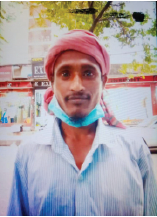
On that very day, Md. Akash, a rickshaw-puller, also joined the victory procession against the autocratic regime. He had also gone to Tongi to purchase parts for his rickshaw, accompanied by his disabled son. On their return in the afternoon, while passing under the Azampur overbridge, they came under indiscriminate gunfire from the police. In an effort to protect his son, Akash hid him in a safe place and sought cover himself. About an hour later, when he returned to check whether the situation had normalized, and as he approached near the RAJUK Commercial Market, he was struck by four bullets. Md. Akash died on the spot.
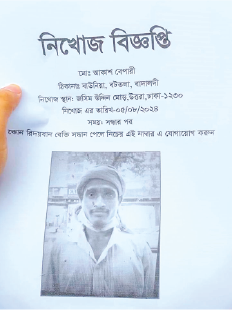
After waiting a long time without seeing his father return, the disabled son began to cry. As the situation worsened, a neighbor eventually took the boy to their home. That night, Akash’s family became increasingly anxious. Due to safety concerns, his wife and daughters were unable to go out to search for him. The search for him continued for several days. The family even printed and distributed missing person notices with his photograph. No one by the name of Akash was found in nearby hospitals around Uttara.
Eventually, student coordinators stepped in to assist. Regarding the matter, coordinator Rayhan said,
“A woman came to us with her two daughters and one disabled son. They had no food in the house and wanted to know what had happened to their family’s sole breadwinner.â€
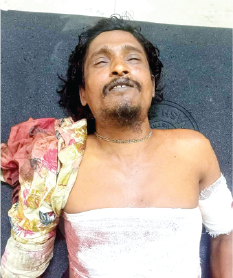
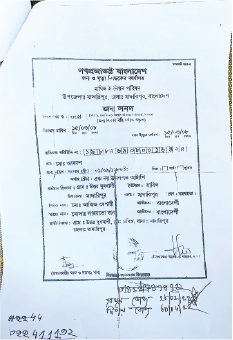
We inquired at several hospitals and learned of some unidentified bodies kept at the morgue of Dhaka Medical College. When we took the family there, they identified one of the bodies as Md. Akash. Finally, on August 10th, the family took possession of the body from the DMCH morgue.
Statement from Kuwait Maitree Hospital:
“The body arrived shortly before evening on August 5th. As there was no identification, the body was later sent to the DMCH morgue late at night. Four bullets had pierced through his body in different areas.â€
Economic Condition
Md. Akash’s wife, Lucky Akhter, works as a domestic help in two households to support her children. They live in a rented apartment in Uttara, Dhaka. Their eldest child is disabled. The two younger daughters are attending school. The family owns no property in the village.
News Link:
https://youtu.be/Afx2cAY5JZc?si=E8WrP8iRlg7YhnWz
At a Glance: Information on the Martyred Individual
Name: Md. Akash
Date of Birth: 01 September 1988
Occupation: Rickshaw-puller
Father: Md. Aziz Bepari
Mother: Mrs. Samrato Ban
Spouse: Lucky Akhter
Children:
1. Bappy (22), physically disabled
2. Sharmin Akhter (15), Grade 9, Science Group, Abdul Jalil High School, Bawnia, Uttara, Dhaka
3. Shahnaz Akhter (14), Grade 8, Abdul Jalil High School, Bawnia, Uttara, Dhaka
Permanent Address: Uttar DudhkhalI, Habing, Madaripur
Present Address: Bawnia, Bottola, Badaldi, Turag, Dhaka
Place of Incident: Underneath the overbridge, Azampur, Uttara, Dhaka
Assailants: Police
Time of Injury: August 5, 6:00 PM
Nature of Injuries: Bullet wounds to the hand, chest, back, and waist
Date, Time & Place of Death: August 5, 6:00 PM, underneath the overbridge, Azampur
Burial Site: Cemetery behind Bawnia Bottola Mosque
Recommendations
1. Provision of a monthly allowance and a one-time financial grant
2. Assistance in covering the educational expenses of the children
Quranic Verse
Indeed, Allah has purchased from the believers their lives and their properties for [that] they will have Paradise. They fight in the cause of Allah. (Surah At-Tawbah 9:111)
Hadith Sharif
The Messenger of Allah (SAW) said, "A martyr will be able to intercede for seventy relatives in Paradise." (Sunan Abu Dawood 2520)
👥 Shaheeds from the Same Division
Dhaka

Memorial Photo Gallery