📱 Smart QR Code
Scan to view & share this memorial biography directly.
🌹 Prayers
Click to send your sincere respect and prayers for this hero
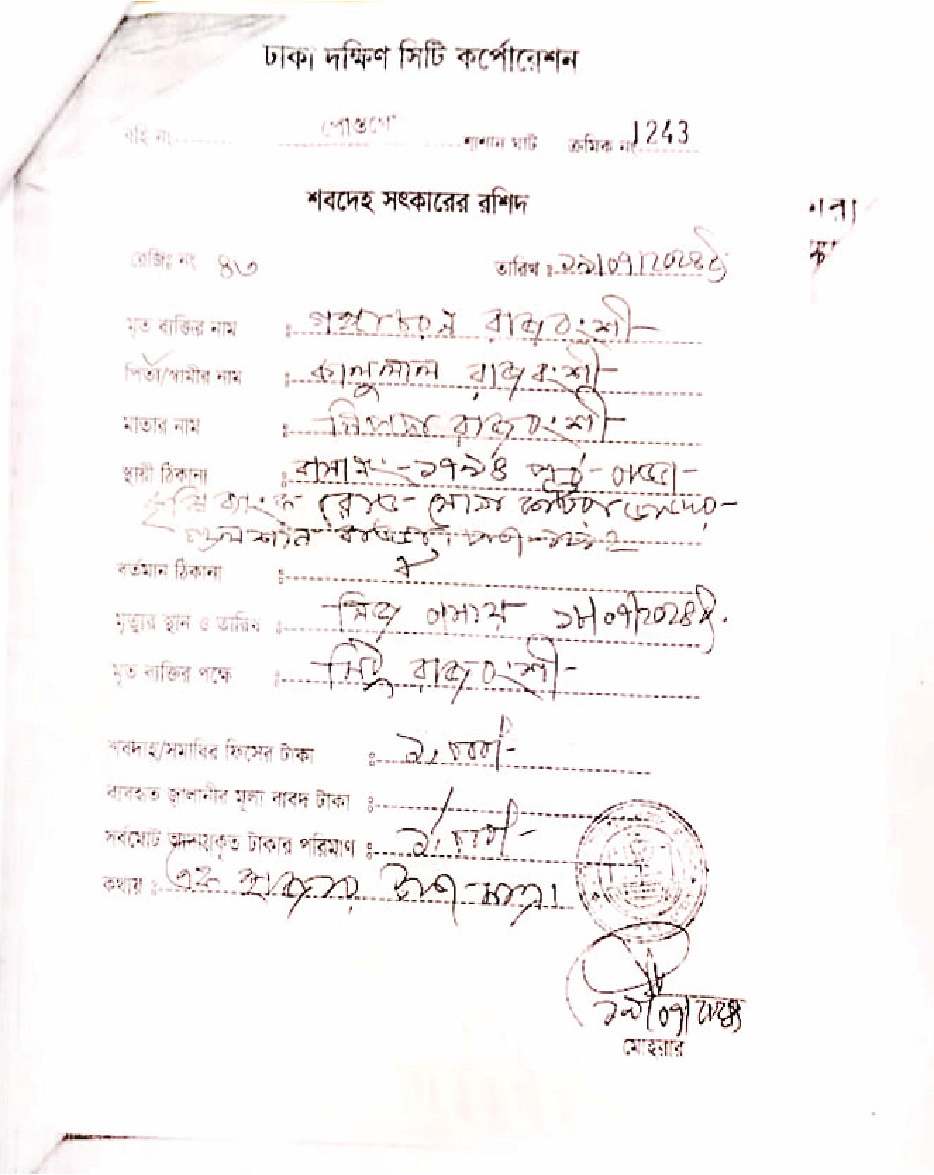
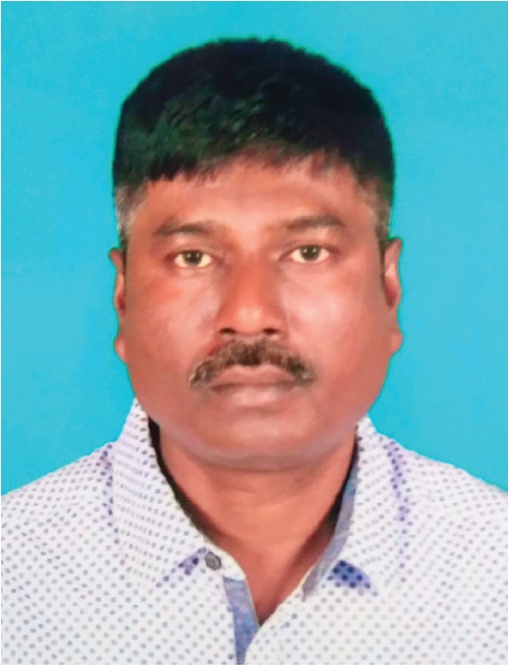
Ganga Charan Rajbongshi
📅 Date of Birth
8 June, 1966
🕊️ Date of Martyrdom
5 August, 2024
🗺️ Division
Dhaka_City
📍 District
Dhaka
👤 Short Biography
Profession: Driver
Place of Death: Rampura Bridge, Rampura, Dhaka
Incident Details & Martyrdom Narrative
Born on June 8, 1966, to father Kalu Lal Rajbongshi and mother Nipoda Rajbongshi, Ganga Charan arrived on this earth without grandeur, and he left it in unspeakable silence. He was a driver by profession — not a title that invites respect in our society. But to him, his family was his pride.
They lived in a dilapidated rented house in Boithakhali, Middle Badda, Dhaka, where leaking tin roofs during monsoons collected drops of hardship. Meals were cooked only when something was earned; otherwise, the darkness of hunger swallowed the light. No one listened to their story. No one heard their cries. Because they were "poor" — and the poor are never stories, only statistics.
His eldest son, Mithu Rajbongshi (32), remains unemployed. The younger son, Bishwajit (25), is studying for a bachelor’s degree at Abujar Gifari College. To support their education, their father often had to drive long into the night — but no document bears record of that exhaustion, no media headline captured that struggle. All that existed was one weary heart working tirelessly to keep smiles on the faces of his loved ones.
And then one day, a gunshot ended it all.
Ganga Charan was martyred.
No recognition.
No investigation.
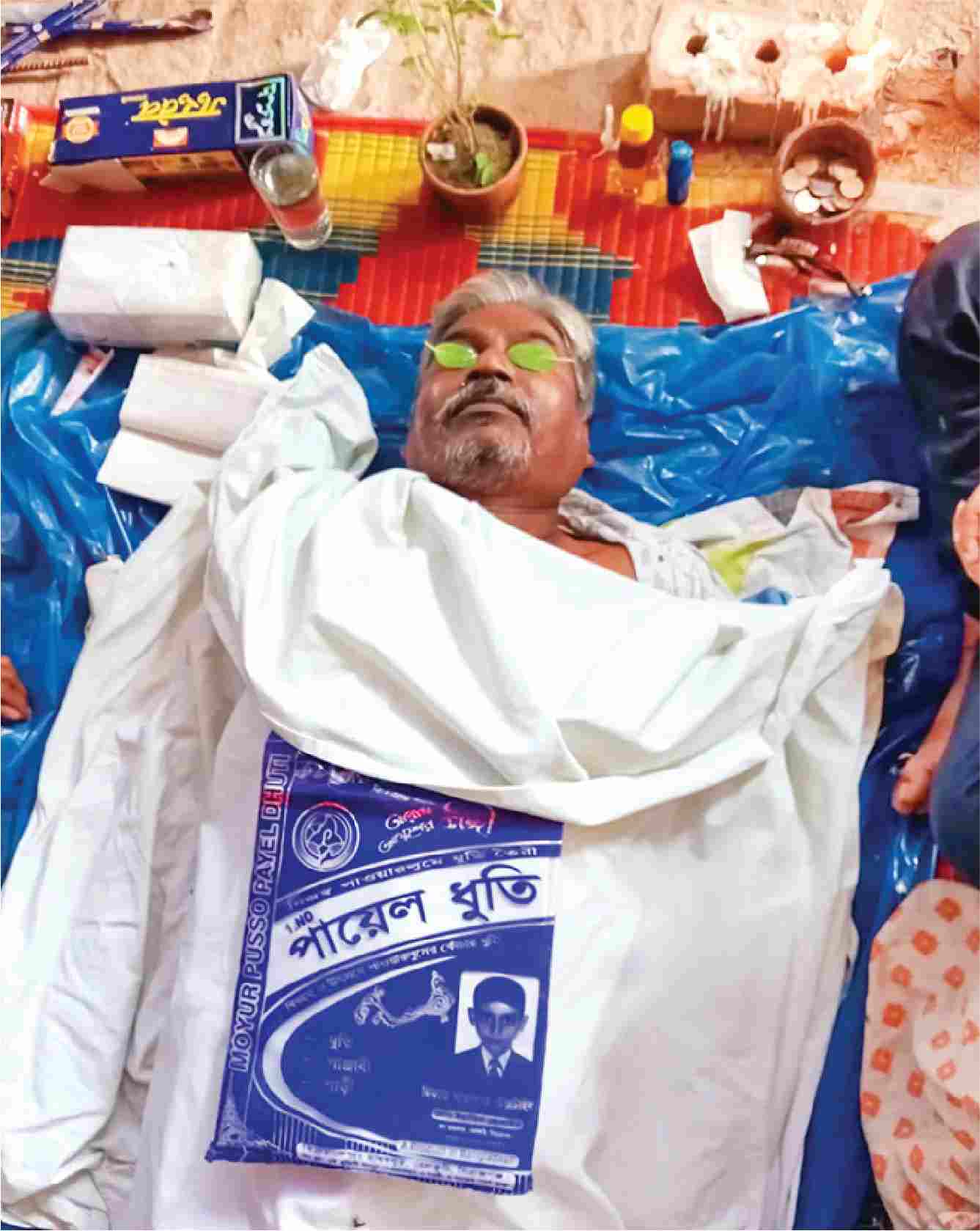
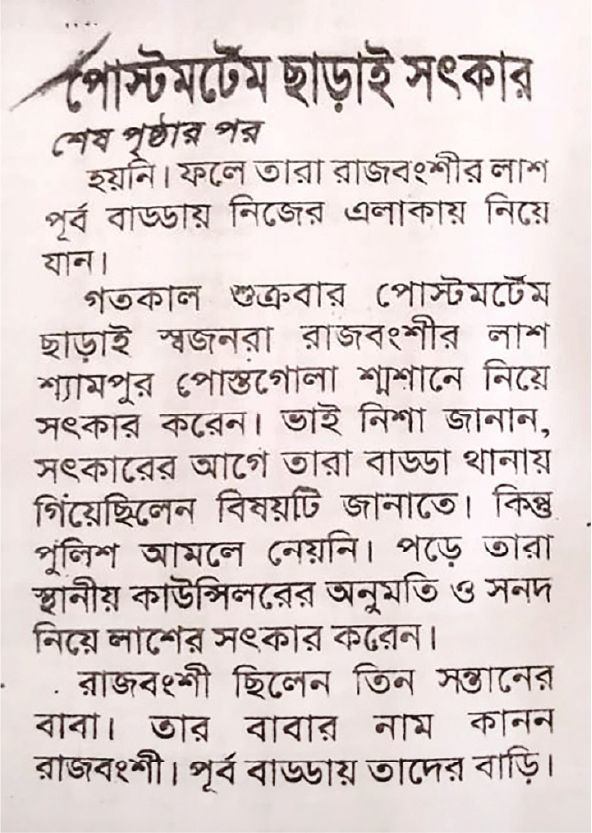
There was no postmortem because he was “just a driver.†When the family brought his body to the police station, they were ignored. Only with a councilor’s written note were they allowed to proceed with cremation. Even in death, he had to be “verified.†Neither the state nor society acknowledged him.
Yet, in his blood, lies the quiet anguish of the middle class, the cries of the working poor. His death did not just silence a man; it interrupted an unwritten history of class struggle — the story of how a man can be neglected in life and dishonored in death.
Today, Ganga Charan Rajbongshi is no longer. But his name remains — a silent entry in the ledger of unnamed martyrs. A name that floats like a forgotten curse through the air, speaking for a vanishing class.
Background of the Movement
Ganga Charan's death was no accident — it was a product of state violence. A cruel example of fascism dressed in soft shoes. July 2024 will be remembered as a blood-soaked chapter in Bangladesh’s history. That month burned with the fire of rebellion and reeked with the long-suppressed weeping of the oppressed.
Under the 15-year rule of the Awami League, corruption had become a regime. Enforced disappearances, vote rigging, and impunity reigned. Courts were silenced. Journalists muzzled. The police, functioning like a private militia of the ruling elite.
In resistance, the Quota Reform Movement erupted — what began as a student demand rapidly transformed into a nationwide outcry. This was no longer just about educational reform. It was a scream against systemic injustice. After the murder of student Abu Sayeed in Rangpur, the movement morphed into a full-scale people's uprising.
Workers, the unemployed, teachers, nurses, retired soldiers, day laborers — even rickshaw pullers — joined in. Ganga Charan, a man of the people, was awakened by this collective roar. He was no leader, no party affiliate — just a silent revolutionary, whose heart broke every time he couldn’t feed his children.
Yet, he knew — this was his fight too. Against inequality, against a system that never counts the poor — except to silence them with bullets.
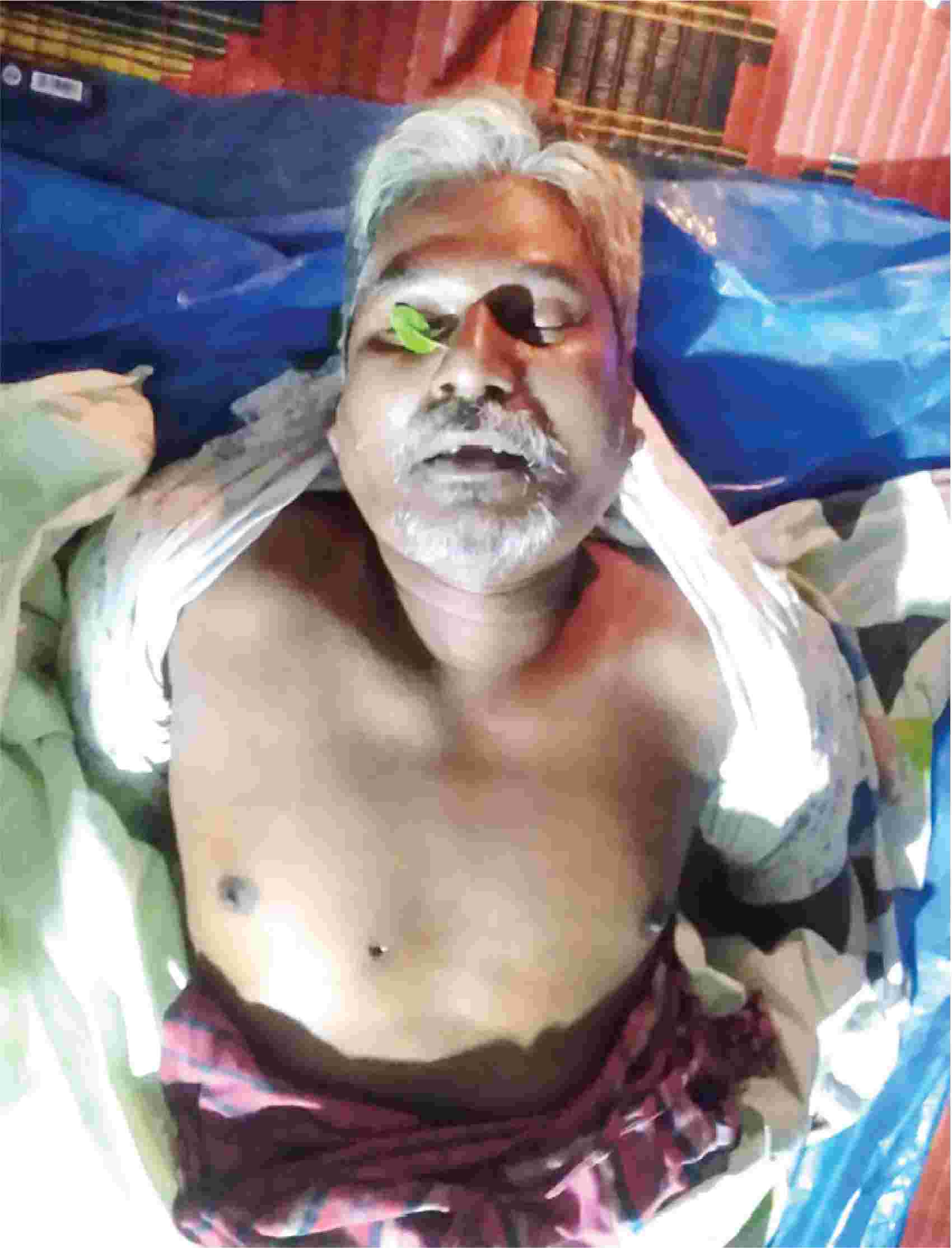
So he stood, perhaps alone, perhaps silently — at the South Banasree intersection, where students clashed with police barricades. Shots were fired. A bullet struck Ganga Charan on the left side of his mouth. No one asked why he was there. The state gave no answer. But the answer was written in blood:
He was there — because it was his fight too.
For bread, dignity, justice, and the right to live.
In this country, standing still gets you shot.
Asking questions gets you shot.
Doing nothing — if you're poor — still gets you shot.
Ganga Charan's death is a mirror to this brutal truth. His body fell in the streets, but history rose in the hearts of the people. July’s uprising was his uprising too — the story of an extraordinary resistance written through the chest of an ordinary man.
History will not forget him, as the wind never forgets the roar of a storm.
How He Was Martyred
July 18, 2024 — the Rampura Bridge in Dhaka was ablaze with the flames of revolution. Police had cordoned off roads, student chants echoed in the air, and the evening sun cast a merciless shadow.
In that volatile divide — on one side, oppression; on the other, protest — stood Ganga Charan Rajbongshi. Perhaps he was on his way home. Perhaps he paused to witness what was happening to his country.
He carried no banner. He shouted no slogan.
Yet, a stray bullet found its way into his body.
He collapsed. Blood soaked the pavement.
Cries rang out. Police boots stomped louder.
But death did not come easily.
Ganga Charan fought — from July 18 to August 5.
Eighteen long days in an ICU.
It was a quiet battleground — between each cell of his body and the indifference of the state. His family cried silently in hospital corridors. His children whispered:
“Abba, please open your eyes — we are here.â€
But he never responded.
They sold his wife’s gold earrings to buy medicine.
Neighbors donated blood.
But the state? Silent.
On August 5, a funeral procession left the hospital — everyone knew no one would be returning alive.
No national mourning.
No banners of protest.
Only a tiny headline buried in a newspaper:
“Driver wounded by police gunfire dies after 18 days.â€
There was no investigation.
The family went from office to office with the body.
The police refused to register the case.
The hospital pressured them not to speak.
Finally, with a local councilor’s letter, his body was cremated at Postagola Crematorium.
His death didn’t just end a life — it tore the mask off our civilization.
When a man is shot on the street, fights for life for 18 days, and all we do is watch — that is when a revolution becomes necessary.
This was no ordinary tragedy.
It was a scream painted on the canvas of state sin.
Ganga Charan was not a leader — yet he became the emblem of a revolution.
Every moment of his death cries out:
“Don’t stay silent. Because tomorrow, that bullet might strike you — the same one that pierced Ganga Charan’s body today.â€
Family & The Painful Reality
“Family and sorrow†— such gentle words fail to touch the depth of despair experienced by Ganga Charan Rajbongshi’s family. Their suffering isn’t just hardship — it is destruction cloaked in silence.
Today, they survive like a fading flame, melting slowly under the weight of poverty and hopelessness.
His sons walk through life with hollow eyes — one wandering for work in a world where lenses replace batons, the other drifting through college classrooms, lost in grief.
Their uncle Nishar’s voice trembles with pain when he recalls the cremation — going to the police station for help, only to be met with paperwork and disregard. No postmortem. No count of the blood spilled. Just a letter from the councilor and a silent farewell.
The message was clear:
“We, the state, do not acknowledge your death.â€
Their family is alone.
They seek no charity.
No favors.
They ask for dignity, for justice — a fundamental human right the state owes them.
Ganga Charan was not a politician. Not a party affiliate.
He was one of us — of the people.
His blood told the story of an entire class.
Today, his children carry the burden of the nation’s conscience. Whether they survive, whether they escape this darkness — depends on us.
Proposal & Martyr’s Legacy
Ganga Charan Rajbongshi’s martyrdom must not fade into the smoke of gunfire. His name must not merely be remembered — it must burn bright as a beacon of resistance.
His sacrifice reminds us every day that the lives of ordinary people are integral to the state. Their dreams, their pain — are state responsibilities.
His children must not vanish into the margins.
Let them be offered government scholarships, a future shaped by compassion and justice.
Let the elder son receive employment opportunities.
Not as charity, but as a debt the nation must repay.
Because a martyr is not merely dead — a martyr is a monument to justice.
Let every school, every public corner, carry the torch of his memory.
Let this flame remind us always — a nation is built on the blood of its people, and if we do not honor them, our foundations will crumble.
This proposal knocks on the heart of society, urging:
“We have not forgotten our martyrs — we never will.â€
Martyr’s Profile (At a Glance)
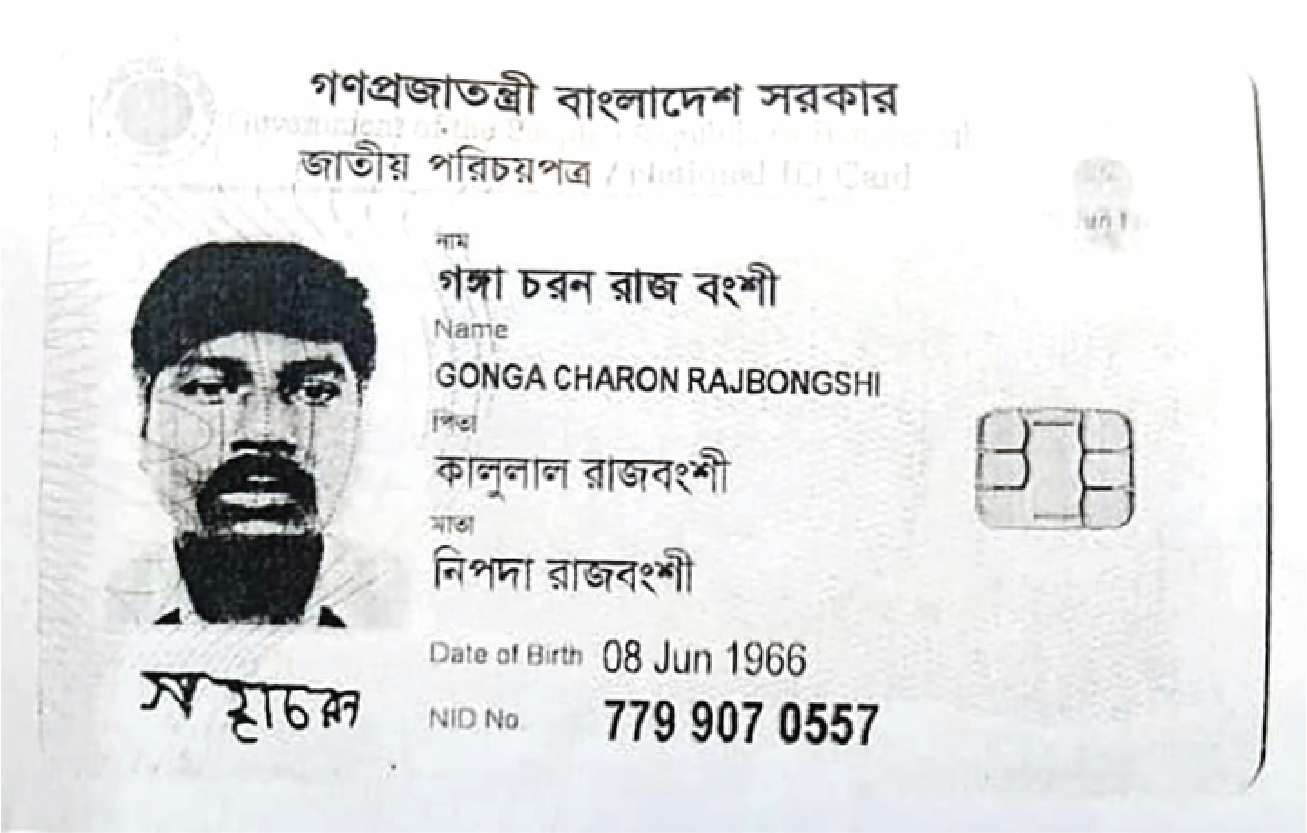
Name: Ganga Charan Rajbongshi
Profession: Driver
Date of Birth: 8 June 1966
Father: Kalu Lal Rajbongshi
Mother: Nipoda Rajbongshi
Family: Wife Nipoda, Sons Mithu and Bishwajit
Address: Post Office Goli, Boithakhali, Middle Badda, Dhaka
Assailant: Police
Injured: 18 July 2024, 7:30 PM
Death: 5 August 2024, 1:30 PM
Place of Death: Rampura Bridge, Dhaka
Cremation Site: Postagola Crematorium
Proposal Summary (At a Glance)
• One-time state support for the martyr's family
• Employment opportunity for the elder son
• Educational scholarship for the younger son
Quranic Verse
Indeed, Allah has purchased from the believers their lives and their properties for [that] they will have Paradise. They fight in the cause of Allah. (Surah At-Tawbah 9:111)
Hadith Sharif
Abdullah ibn Masud (RA) reported: The Messenger of Allah (SAW) said, "The souls of the martyrs are in the bodies of green birds." (Sahih Muslim 1887)
👥 Shaheeds from the Same Division
Dhaka_City

Memorial Photo Gallery