📱 Smart QR Code
Scan to view & share this memorial biography directly.
🌹 Prayers
Click to send your sincere respect and prayers for this hero
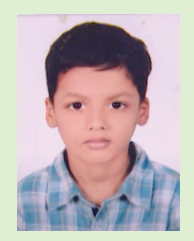
Md. Safakat Samir
📅 Date of Birth
1 January, 2013
🕊️ Date of Martyrdom
19 July, 2024
🗺️ Division
Dhaka_City
📍 District
Dhaka
👤 Short Biography
Profession: Student
Place of Martyrdom: Marks Medical College Hospital
Incident Details & Martyrdom Narrative
‘Mom, I want to become a Hafiz.’"
Shahid Safakat Samir
Serial: 770
ID: Dhaka City: 132
Birth and Early Life
On a peaceful morning, a child was born. His name was given: Safakat Samir—a name imbued with gentleness. He was calm, well-mannered, and emotionally sensitive by nature. From his early days, he grew up surrounded by love and affection in his parents’ modest home in Mirpur-14, Dhaka. Amidst the city’s noise and chaos, Samir flourished not in haste but in the warmth of his mother’s arms, sometimes in the care of his maternal grandparents, sometimes riding on his father’s shoulders on visits to the local market.
Samir was the only child. His father, Sakibur Rahman, held a humble job at a private firm in the capital. Life was difficult, expenses tightly managed—but Samir’s education and small wishes were never compromised. Much of his childhood was spent playing in the courtyard of his maternal grandparents' house in Ashulia.
Samir was a student of Grade 2 in the Nurani section of Jamiaul Ulum Madrasa. Every day he would go with his schoolbag in hand and a prayer on his lips. He spent more time at the study table than on the playground. His small reading corner was right by the window—an innocent space that, one day, would turn into the door to death.
Toy cars, colorful books, and scattered pencils on the floor still whisper stories of a life that once breathed there. He was Safakat Samir. No one knows what he might have grown up to become—but his innocent gaze and silent departure have become eternal questions in our national conscience.
“He didn’t even understand anything about protests,â€
cries his mother.
“He just read his books, played with his toys, and sometimes said, ‘Mom, I want to become a Hafiz.’â€
The Context of His Martyrdom
July 19, 2024—Friday evening.
The clock neared dusk. Inside a modest second-floor flat in Dhaka’s Mirpur-14 area, time seemed to tremble. Outside: the sound of gunfire, tear gas, and helicopters in the sky. A protest was underway—demanding reform of the discriminatory quota system. Citizens and students clashed with law enforcement near the Kafrul Police Station.
Samir was at home. Earlier, he had asked his father if he could go out and play. But fearing the unrest, his father told him to stay indoors. That evening, they had promised to go out and eat chotpoti—his favorite.
“When the gas started to fill our home, Samir went to close the window.
And just then—
a bullet came from outside and pierced his small eye,â€
says his father, Sakibur Rahman, in a single, breathless sentence.
Samir’s uncle, overwhelmed and frantic, rushed the bleeding child to Marks Medical College Hospital, holding him tightly in his arms.
“The doctor didn’t say anything. He just said, ‘He’s gone.’â€
And with that, the voice of the father broke—
like a river whose source had dried.
Another uncle, Moshiur, had also been shot that day. He required 14 stitches.
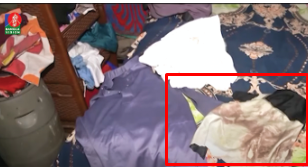
Samir’s blood-stained undershirt still sits in his mother’s hands. She weeps into it as though it were a flag of protest. That cloth is no longer just a garment—it is evidence, a relic of resistance.
That very night, the police demanded the body be released after a written declaration. When the family tried to file a case, they were told, “It’ll delay the burial.â€
A local Awami League leader, Md. Ismail Hossain, personally escorted Samir’s father to the station.
“I didn’t file any complaint,†says Sakibur,
“I just wanted to bury my child.â€
It was not a surrender. It was grief, folded inside silent protest.
The first funeral prayer (janaza) was held in Mirpur, outside their home. The second took place on July 20, in Ashulia—at the home of Samir’s maternal grandparents.
He was laid to rest that morning at Gauripur Graveyard.
A tiny, innocent face now sleeps under the soil.
The Question That Still Haunts
Why must children die from bullets?
Why must a child be shot dead just for closing a window?
That day, the question echoed through ordinary mouths:
“Who will answer for this?â€
There was no answer.
Safakat Samir no longer goes out to play.
He sleeps now in a quiet grave, but the story of his bloodstained window still breathes.
Reflections from Voices of the Movement
Rifat Rashid, Central Coordinator of the uprising, wrote:
“The 11-year-old child who was martyred in Mirpur—his name was Safakat Samir.
He grew up in Gauripur, the very neighborhood I call home in Ashulia.
Samir’s mother is like an elder sister to me.
We speak often, though sometimes I can’t speak at all.
I fear looking into her eyes.
Of all the sacrifices in this uprising, none reminds me more of what we’ve lost than the grave of Samir.
He may be my nephew by location, but in truth—Samir is my leader, my inspiration, my idol.â€
Samir’s death did not end in mourning.
It lit a fire of protest that still burns.
Legal Complaint and Charges
Murder case filed against Sheikh Hasina and 10 others:
On September 2, 2024, Samir’s father, Md. Sakibur Rahman Chowdhury, filed a case in the court of Dhaka Metropolitan Magistrate Ahmed Humayun Kabir, accusing former Prime Minister Sheikh Hasina and 10 others in the murder of his son.
The court accepted the complaint and directed Kafrul Police to register the allegation as a First Information Report (FIR). The court also ordered the merger of this case with an earlier one on the same incident.
Prominent accused include:
• Obaidul Quader (Awami League strongman)
• Asaduzzaman Khan Kamal
• Anisul Haque
• Chowdhury Abdullah Al-Mamun, Habibur Rahman, Mehedi Hasan (Palash), Md. Farukul Alam, among others.
Additionally, 50–60 unidentified persons were listed as accused. The complaint alleges that Samir was killed by gunfire under direct orders during the anti-quota protests of July 19, 2024.
Socioeconomic Proposal
Samir’s family is now struggling with extreme financial hardship. His father’s small salary cannot meet basic living needs. The following urgent actions are recommended:
1. Establish an educational support fund in Samir’s name
2. Provide essential goods and medical support to the family
3. Support his father in launching a small sustainable business
4. Offer permanent housing to the martyr’s family
5. Provide monthly allowance and a one-time compensation
6. Ensure full government-funded treatment for the injured uncle
Shahid Profile at a Glance
• Name: Safakat Samir
• Father: Sakibur Rahman
• Birth Year: 2013
• Age at Death: 11
• Education: Grade 2, Nurani Division, Jamiaul Ulum Madrasa
• Current Residence: Mirpur-14, Dhaka
• Permanent Address: Chatkhil, Noakhali
• Date of Martyrdom: July 19, 2024, evening
• Location: Mirpur-14, Kafrul Police Station area
• Cause of Death: Shot while trying to close the window during tear gas attack
• Perpetrators: Police
• Medical Response: Declared dead at Marks Medical College Hospital
• Janaza (Funeral Prayer):
o First: Mirpur, in front of his home
o Second: July 20, 2024, in Ashulia (maternal home)
• Burial: July 20, 2024, at Gauripur Graveyard, Ashulia (8:30 AM)
Quranic Verse
And do not say of those who are killed in the way of Allah, "They are dead." Rather, they are alive, but you perceive it not. (Surah Al-Baqarah 2:154)
Hadith Sharif
Abu Huraira (RA) reported: The Messenger of Allah (SAW) said, "Whoever sincerely asks Allah for martyrdom, Allah will grant him the status of martyrs." (Sahih Muslim 1888)
👥 Shaheeds from the Same Division
Dhaka_City

Memorial Photo Gallery