📱 Smart QR Code
Scan to view & share this memorial biography directly.
🌹 Prayers
Click to send your sincere respect and prayers for this hero
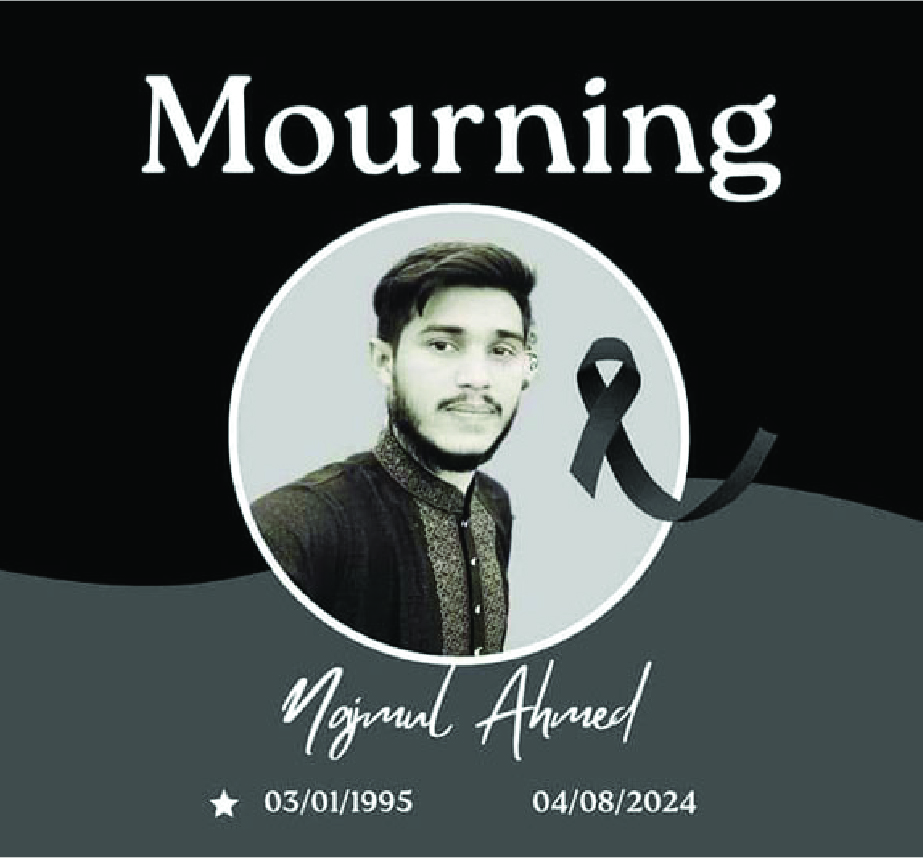
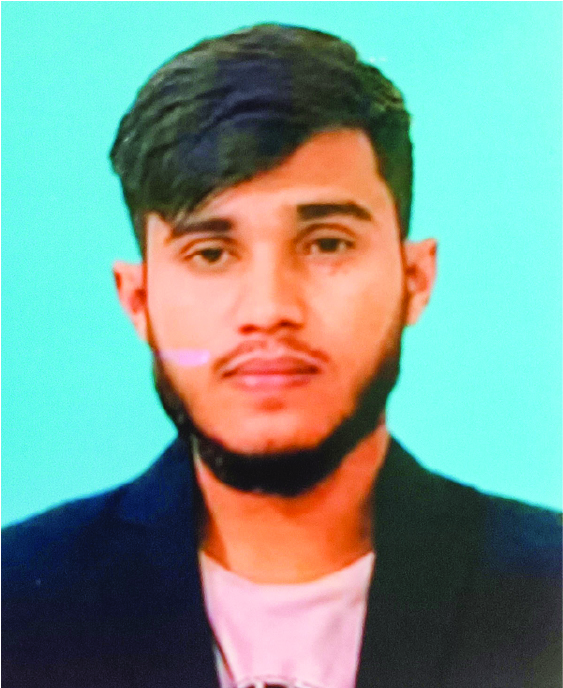
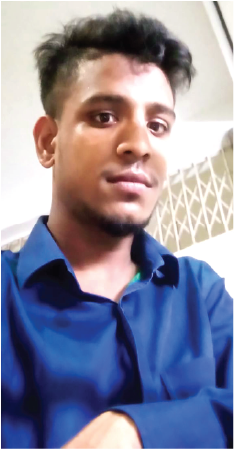
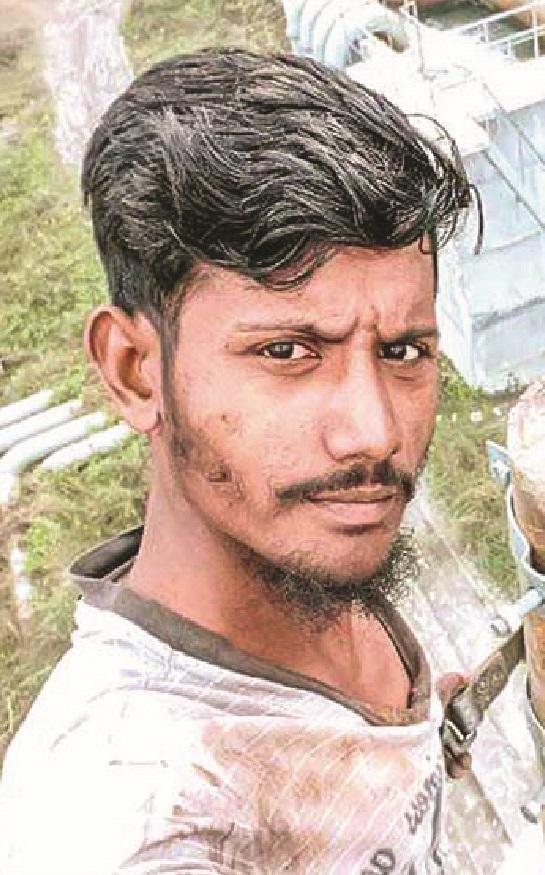
Md. Nazmul Islam
📅 Date of Birth
13 November, 1998
🕊️ Date of Martyrdom
4 August, 2024
🗺️ Division
Sylhet
📍 District
Sylhet
👤 Short Biography
Profession: Businessman.
Place of Martyrdom: Dhaka Medical College and PG Hospital
Incident Details & Martyrdom Narrative
Shaheed Nazmul Islam's father was a farmer. They have a small amount of agricultural land where his elderly father cultivated paddy and managed the family for six months of the year. Due to their poverty, Nazmul did not have much opportunity to study. The responsibility of the elderly father's household fell on Nazmul's shoulders. For 11 years, he worked in other people's shops. Nazmul mainly ran their household with the income from the clothing and shoe shop. The shoe store owner, pleased with him, set up a shop for him. Through hard work and dedication, Nazmul expanded his business and opened another clothing store. He got married just three months ago. His wife, Khadija Begum, is in a state of mental distress and almost insane due to her husband's death. She is currently undergoing treatment at her father's house. His elder brother, Taijul Islam, studied up to the tenth grade at an Alim Madrasa and went to Canada a month ago on a labor visa in search of livelihood. His younger brother, Saidul Islam, is studying in the tenth grade at BNK High School. His sister, Tanjila Begum, is studying in the tenth grade at BNP High School.
How Allah Responded to Save a Child's Life
The 2024 anti-discrimination student-public movement will be recorded in world history not only in Bangladesh but also as a unique example. When anger and frustration are not resolved through systematic means, becoming revolutionary becomes an inevitable destiny. The educated student community, aware of their rights, at one point begins to take a stand against autocracy and authoritarianism, and ultimately, through a great revolution, they seize their rights. Challenging the validity of the 2018 circular, seven children of the Liberation War filed a writ in the High Court on December 6, 2021. On June 5, 2024, the High Court bench of Justice Kamrul Kader and Justice Khizir Hayat ruled this circular invalid. Students of Dhaka University protested against the High Court's verdict.
Then, on July 1, 2024, the students' movement began under the banner of the anti-discrimination student movement. On the same day, a student rally and protest were held demanding the reinstatement of the university quota cancellation circular. At the student rally held on the same day, a call was made for a final resolution on the demands by July 4. At the same time, the anti-discrimination student movement announced a three-day program. Later, on July 3, the activists blocked the Shahbagh intersection in Dhaka, and students from six more universities protested and blockaded roads. On July 4, the Appellate Division upheld the High Court's ruling declaring the decision to abolish the first- and second-class freedom fighter quotas illegal and ordered "Not Today" without hearing. On July 6, the anti-discrimination student movement called for a blockade of roads and highways. It was named 'Bangla Blockade'. On that day, an indefinite boycott of university and college classes and exams was announced.
On July 13, a program was announced to submit a memorandum to the President demanding logical reforms of quotas in all grades, and an emergency session was called to demand reforms in all logical aspects of government jobs. The next day, a memorandum was submitted to the President, and a deadline of 24 hours was given for calling an emergency session of the National Parliament. On that day, in the afternoon, the autocratic Prime Minister Sheikh Hasina, in response to a question at a press conference, said, "The children of the Liberation War will not get the quota, then who will get it, the children of the Razakars?" Such a statement by the head of the government was like adding fuel to the fire. In response to such a statement, students of various universities protested at night, and every university and college was filled with slogans by the students. From that protest march, "Who are you? Who am I? Razakar, Razakar! Who said? Who said? Autocratic government!" the anti-discrimination student movement announced a new program. They said that on July 15, at 12 noon, a protest rally would be held in front of the Raju Bhashkarja (sculpture) to protest against such a statement by the head of the government. The next day, at ten in the morning, the student league, one of the autocratic government's pet forces, held a counter-rally, and at three in the afternoon, they would hold a rally at the same place.
At the call of the anti-discrimination student movement, students from all universities, colleges, and schools in Dhaka began to move towards the Raju Sculpture. But just moments after noon, the students of Vijay Ekattor Hall were confined and prevented from joining the movement. When this news reached the agitating students, they went to rescue them, leading to a massive clash between the general students and the Chhatra League. About three hundred general students were injured and admitted to Dhaka Medical College and PG Hospital. At one point, when the university clashes subsided, the terrorist Chhatra League, Jubo League, and the Awami League's killer activists attacked the injured students admitted to the medical college again in the evening. What a disgraceful event! It makes your hair stand on end. The hospital is an institution for receiving treatment, where everything is safe, but the killer government's pet forces created anarchy in a safe place and emerged as a threat to public safety. The next day, a nationwide protest program was observed against this shameful attack by the Chhatra League. In this protest program, widespread clashes erupted across the country throughout the day. In these clashes, six general students, including the unarmed Abu Saeed, were killed. All universities, colleges, and secondary schools were declared closed indefinitely by the university administration and the government's policy makers. On July 16, additional BGB forces were deployed. On July 17, students from each university held an Absentee funeral prayer in memory of the Shaheeds.
The police attacked this funeral prayer. In retaliation for the blood of the Martyred brothers, students announced a 'Complete Shutdown' across the country. On July 18th, a nationwide blockade program was observed, and BGB was deployed across the country, and the internet was shut down. On July 29th, around the observance of the 'Complete Shutdown' and the all-out blockade program, widespread clashes, attacks, vandalism, shootings, arson, and casualties occurred in Dhaka and across the country. That night, the autocratic government imposed a curfew across the country and deployed the army at night. It was as if a relentless massacre had begun by a bloodthirsty government that had made life unbearable. The autocratic government launched 'Black Raids' across the country to arrest students, and more than two hundred cases were filed against 213,000 people across the country. On July 31st, after the March for Justice program, the anti-discrimination student movement announced the ‘Remembering Our Heroes’ program. On August 1st, programs were held across the country by general students and the public titled 'Remembering Our Heroes' in memory of the deceased.
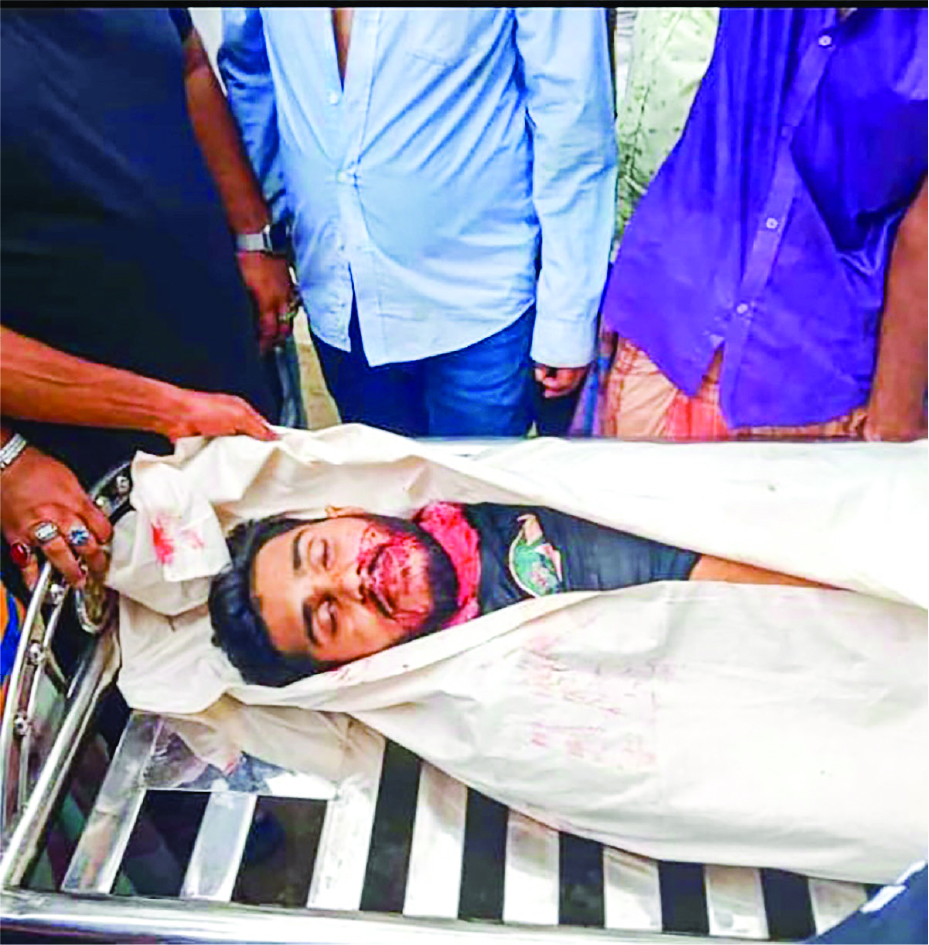
The next day, after Jummah prayers, a prayer and mass procession program of students and the public were held at the call of the student movement, and teachers and civil society members held a march program. The artistic community, in a rare protest, declared solidarity and joined in, and people from all walks of life participated. On August 3rd, hundreds of thousands of people gathered at the Central Shaheed Minar in Dhaka to express solidarity with the demands of the students demanding the resignation of the government with a 'one-point' demand. On that day, when the murderous fascist Hasina government offered discussions to the students, they rejected it. On August 4th, on the first day of the all-out non-cooperation movement program called by the anti-discrimination student-public movement with the one-point demand for the resignation of the government, a massive massacre was carried out across the country by Hasina's pet forces – the police, BGB, and RAB. On the morning of August 4th, Najmul went to bring his younger brother back from the procession. Around 12:30 PM, amidst the chase and counter-chase in the procession, the students and the public put up a strong resistance and took out a procession together. At around 1 PM, when the killer police and BGB started firing, Najmul took position near the British Ideal School during the gunfire. Eyewitnesses say that during the gunfire, when a small child ran, Najmul came forward to save the child. A bullet from the killer police hit Najmul in one side of his neck and exited through the other side. Najmul died on the spot.
Near Relative's Feelings about the Shaheed
Najmul's neighbor says - He worked in other people's shops for 11 years, and the shop owner, pleased with him, gave him a shop. Najmul expanded his business through his hard work and dedication and established another clothing store. A pall of grief has descended on the area due to his death. His newlywed wife has become almost insane due to his death; she is currently undergoing treatment at her father's house.
Personal Information of the Shaheed at a Glance
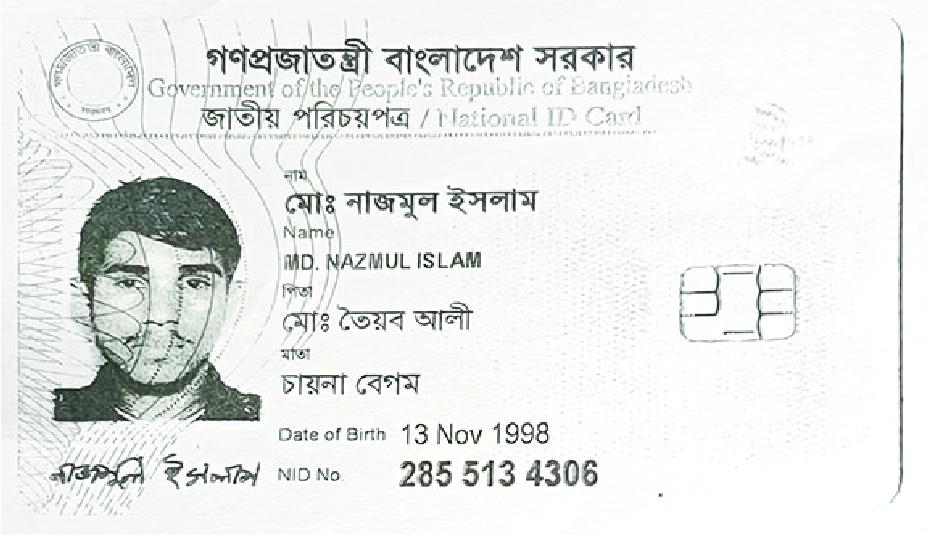
Name : Md. Nazmul Islam
Date of Birth : 13-11-1998
Father's Name : Tayeb Ali
Mother's Name : China Begum
Profession : Housewife
Wife's Name : Khadija Begum, Profession: Housewife
Family Members : 6 people
Monthly Family Income : 40,000 Taka
Profession : Owns two shops selling shoes and clothes
Permanent Address : Village: Nishchinto, Union: Lakshnaband, Thana: Gopalganj, District: Sylhet
Place of Incident : In front of the Upazila Health Complex, beside British Ideal School
Assailant : Killed by bullets of the armed forces
Time of Injury : 4th August '24, Approximately 1:00 PM
Time and Place of Death : 4th August '24, Approximately 1:30 PM
Current Location of
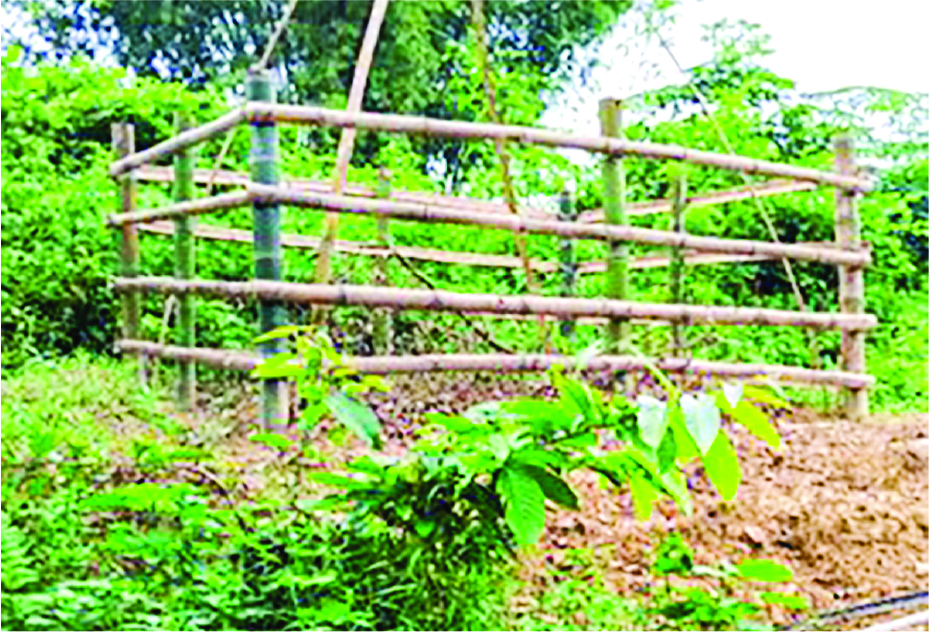
the Shaheed's Grave : Family cemetery, Sylhet
Proposals
1. Provide a one-time financial grant to the Shaheed's family.
2. Arrange for proper care and mental counseling for his ill wife.
3. Arrange for the smooth operation of the Shaheed's business.
Quranic Verse
Indeed, Allah has purchased from the believers their lives and their properties for [that] they will have Paradise. They fight in the cause of Allah. (Surah At-Tawbah 9:111)
Hadith Sharif
Abdullah ibn Masud (RA) reported: The Messenger of Allah (SAW) said, "The souls of the martyrs are in the bodies of green birds." (Sahih Muslim 1887)
👥 Shaheeds from the Same Division
Sylhet
.jpg)
Memorial Photo Gallery