📱 Smart QR Code
Scan to view & share this memorial biography directly.
🌹 Prayers
Click to send your sincere respect and prayers for this hero
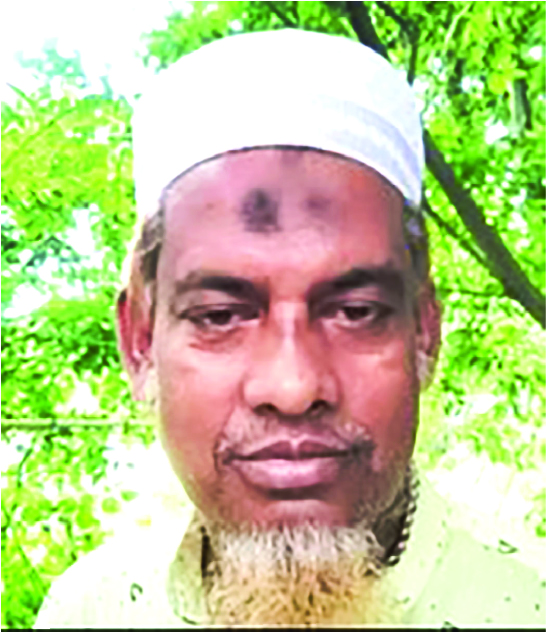
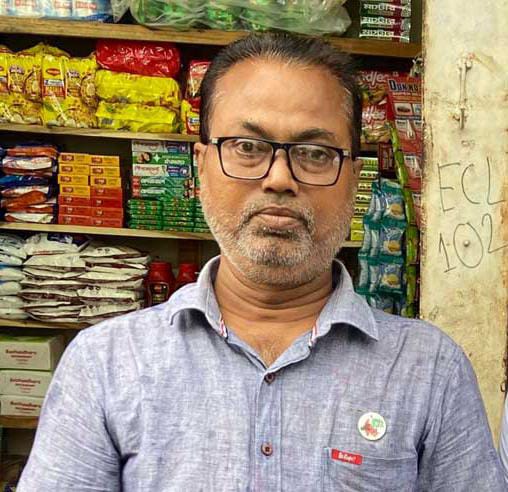
Kazi Md. Abdur Rahman
📅 Date of Birth
3 July, 1980
🕊️ Date of Martyrdom
31 July, 2024
🗺️ Division
Dhaka
📍 District
Narsingdi
👤 Short Biography
Profession: Farmer.
Place of Martyrdom: Dhaka Medical College.
Incident Details & Martyrdom Narrative
The Shaheed’s Ordinary Life
Kazi Md. Abdur Rahman was an extremely simple man. He earned his living through farming. Despite the busy nature of his work and family responsibilities, he placed great importance on practicing Islam in his daily life. Although he worked in the fields as a farmer, he always dressed neatly. His preferred attire included pajamas, a panjabi, and a cap. Despite his busy schedule, he never missed his prayers. He was determined to live a life of both struggle for daily sustenance and devotion to God. He dreamt of educating his children, establishing them, and giving them proper marriages in a bright future.
State, Government, and Political Situation
Just like other farmers in rural Bengal, the common people of Bangladesh, including Shaheed Kazi Md. Abdur Rahman, simply wanted to live peacefully with two meals a day. However, fulfilling this basic need seemed impossible in a society full of inequality. In today's society, just wearing a beard and cap as a Muslim has become the greatest threat. The country's anti-Islamic government has not only oppressed Muslims but also looted the country to create an artificial famine. The shameless fascist Awami government has taken control of the state with fraudulent elections., resembling the ghost of Sindbad. The opposition parties' constant demands for justice, statements from human rights organizations, advice from civil society, international warnings, protests by scholars, social sacrifices from the middle class, and cries from the general public have been disregarded. Instead, the government began mass arrests, enforced disappearances, killings, and torture to suppress opposition. The jails and torture cells in Bangladesh are filled to capacity.
Sudden Heated Streets
The vote-thief Awami government continued its politics of abduction and killing in the 2024 anti-discrimination student movement. At the beginning of July, the government tried various tactics to divert the peaceful student protests. However, the ordinary students continued their struggle on the streets, unaffected by the government’s schemes. The authoritarian government, seeing the resolve of the students, erupted in anger. From July 16 onward, they started unleashing anarchy on ordinary students—abductions, killings, and murders.
On July 17 and 18, universities witnessed a massacre, and hundreds of students, including Abu Saeed and Mughdha, joined the Shaheed's procession. On the night of Thursday, July 18, the dictator Hasina, with blood on her hands, cut off the internet and imposed a curfew across the country. People were forbidden from leaving their homes unless for essential emergencies. Anyone found in groups of 10 or more was shot on sight.
The Incident of Injury
On Friday, July 19, when Kazi Abdur Rahman intended to go to the market for his family, his wife and children stopped him from leaving. But he asked them a few simple questions, “Why can’t I go to the market during the curfew? Will the government bring food to my home? Am I a member of any party? Didn’t the government announce that people can go out for emergency purposes like the market? What is the problem then?†His wife and children comforted him, suggesting that they manage with whatever they had at home and he could go to the market the next day. He easily accepted their request.
Injury and Death
On Saturday, July 20, 2024, at 3:00 PM, Kazi Abdur Rahman left his house for the market, traveling by rickshaw. Upon reaching the market, he got off the rickshaw and was about to enter when, without any warning or announcement, the terrorist forces of the dictator Hasina's government began shooting at the public to terrorize them. Among the indiscriminate bullets fired by the BGB (Border Guard Bangladesh), one shot hit Kazi Abdur Rahman in the back, entered through his abdomen, and exited from the front. He immediately collapsed to the ground. Witnesses reported that the shooting began without any prior warning. As the bullet struck his body, his stomach was ruptured, and he fell to the ground, clutching his abdomen.
Efforts to Rescue the Shaheed
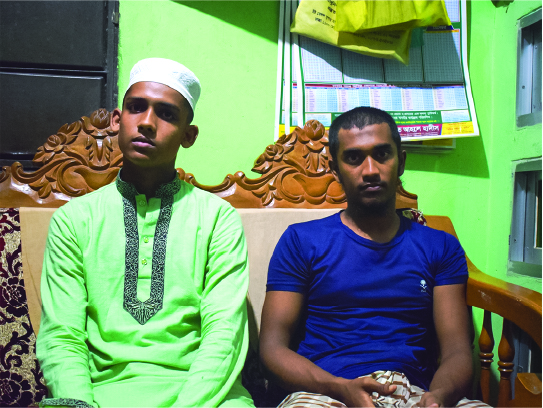
The public present at the scene initially tried to rescue him but could not due to the continuous firing from the BGB. The BGB continued firing at the unarmed, freedom-seeking students and citizens, silencing their voices permanently. Many others also embraced Martyrdom there. A close relative of Abdur Rahman immediately informed his family about the incident. Upon hearing the news, his son and nephew rushed towards the market. As they ran along the village road, they encountered several obstacles along the way.
Upon arriving at the market, Kazi Abdur Rahman was quickly transported to the hospital, where he was admitted. However, there were conditions attached. The hospital authorities, under the government's orders, refused to provide any medical supplies, medicine, or food unless his family bought everything themselves. They were also informed that no crying or mourning would be allowed in the hospital, and talking to the media was prohibited. If these conditions were violated, the patient would be immediately thrown out of the hospital. Left with no other choice, the family of the injured Abdur Rahman reluctantly agreed to these harsh terms imposed by the dictatorship.
Twelve Days at Dhaka Medical
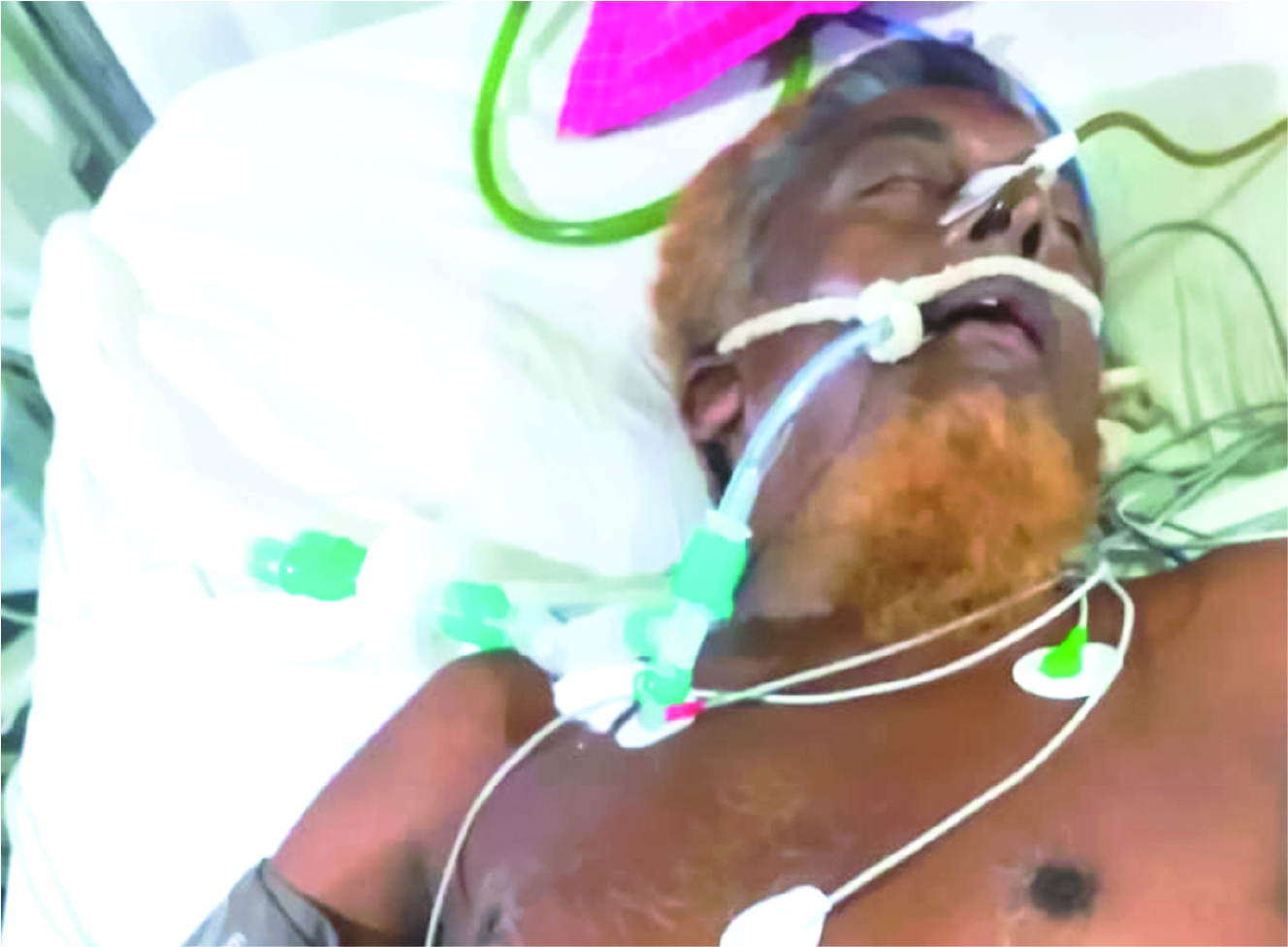
After being admitted, Kazi Abdur Rahman received some initial treatment and was placed on a general bed before being moved to a private bed after a few days. During this period, the Dhaka Medical Hospital was overwhelmed with injured people, the majority of whom were victims of the student movement against inequality. The majority of the patients had been injured during the protests on July 16th, 17th, and 18th. At that time, the government had not yet imposed a direct ban on medical treatment, so many people were admitted to the hospital. Four days after his admission, Kazi Abdur Rahman underwent surgery and required eight bags of blood. Since most of his relatives were in their village and due to the tense political situation, it became incredibly difficult to arrange for blood or blood donors. After many efforts, blood was eventually arranged, and the surgery was completed. Following the surgery, Kazi Abdur Rahman remained in the ICU for six days, fighting bravely against the poisonous bite of the fascist regime. On the morning of July 31st, at 7 AM, he answered the call of the Almighty and received the eternal cup of Martyrdom.
Obstacles to Bringing the Shaheed's Body
After Kazi Abdur Rahman’s Martyrdom, when his family decided to take his body back from the hospital, they were told that the hospital would not release the body. The hospital claimed that it had received orders from the government not to hand over the body. If anyone insisted on taking the body, they were told they would have to negotiate with the police. Upon hearing this, the family rushed to the police. However, the police made it clear that they would not hand over any body that had been killed by government forces or their affiliates. To retrieve the body, the family was told they would need to sign a document stating that the Shaheed, Kazi Abdur Rahman, was a terrorist who had died in a confrontation with the BGB. Only then would the body be handed over. If the family refused, the body would either be disposed of in the morgue or handed over as an unidentified “terrorist†body to a state-run charity, such as Anjuman Mufidul Islam, according to government orders.
The family, shocked by the heartless and monstrous demands of the police, reluctantly agreed to sign the paper, officially labeling their loved one as a terrorist. In a tragic twist, the simple and devout farmer, who had never been involved in politics or any party, became a "terrorist" in the eyes of the fascist regime just moments after his death. The family, devastated by the loss of the only breadwinner, found themselves unable to even mourn openly due to the oppressive environment. Every moment was filled with new acts of tyranny and terror against them.
At 5 PM on July 31st, the body of Kazi Abdur Rahman was finally placed in an ambulance, and the journey to his home in Narsingdi began.
The Shaheed's Dead Body at His Home
After sunset, when the Shaheed's body arrived at his home, the sound of wailing filled the air. Upon hearing about the brutal Martyrdom of such a simple, devout, and upright man, hundreds of people from surrounding villages rushed to his house. That very night, after the Maghrib prayer, a large crowd gathered at the ground of the Choua, Mehrpara Dakhil Madrasa, the Shaheed’s birthplace, where a janaza (funeral prayer) was held. The Shaheed, Kazi Mohammad Abdur Rahman, was then laid to rest in the social graveyard in Mehrpara.
Reminiscences
Regarding the Shaheed, his nephew, Mr. Mohammad Obaidur Rahman, said, "Mohammad Abdur Rahman was a scholar. He was not affiliated with any specific political party. He was an ordinary man."
Family Situation of the Shaheed
The Shaheed, Kazi Mohammad Abdur Rahman, left behind his wife and three children. His wife, Sayema Akhter, is a housewife. The Shaheed's 20-year-old eldest daughter, Toufika Rahman, is currently preparing for her HSC exams. His 16-year-old younger daughter, Touhida Rahman, is an SSC candidate, and his 14-year-old only son, Mohammad Taibur Rahman, is in the 9th grade.
Due to the Martyrdom of Kazi Mohammad Abdur Rahman, the three siblings have been orphaned. They are unable to accept the tragic death of their only guardian, their revered father. The wife and children of the Shaheed seem to have lost words to express their sorrow.
Financial Condition of the Shaheed's Family
Currently, the Shaheed's family is being supported on a very limited scale by the Shaheed's brothers-in-law. The Shaheed had a concrete house on 6 acres of land and 22 acres of agricultural land. With help from the neighbors, the family is currently managing their basic livelihood. However, the family is burdened with a debt of over two lakh taka. The education of the Shaheed’s three children is at risk of being discontinued. Having lost the sole breadwinner, the family is enduring immense financial hardship and sorrow.
Proposal
It is the responsibility of both the government and all of us to clear the debt left behind by the Shaheed, ensure proper education for his children, secure jobs for their future, provide a monthly allowance for the widow's maintenance, and take responsibility for marrying off the two daughters to suitable husbands.
At a Glance – Shaheed Kazi Mohammad Abdur Rahman
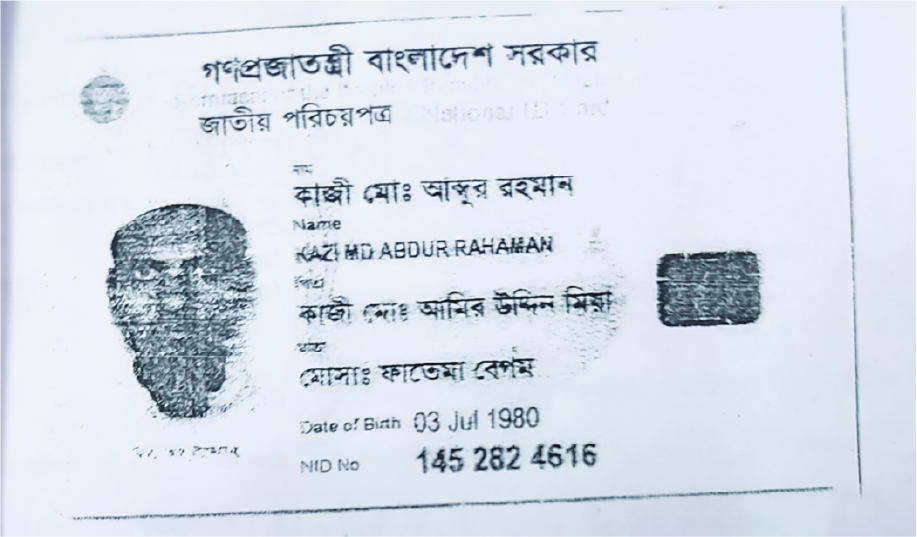
Name : Kazi Md. Abdur Rahman
Date of Birth : July 3, 1980
Place of Birth : Narsingdi
Hometown : Narsingdi
Occupation : Farmer
Current and
Permanent Address : Village: South Choua, Union: Mehrpara, Thana: Madhabdi, District: Narsingdi
Father's Name : Kazi Mohammad Amir Uddin Mia
Mother's Name : Mrs. Fatema Begum
Current Family Members : 04
Monthly Income : 15,000 Taka
Area of Incident : Pahadonar Mor, Madhabdi
Attacker : Sheikh Hasina's killer Border Guard Bangladesh (BGB) force
Time of Injury : July 20, 2024, 3:30 PM
Date, Time, and
Place of Death : July 31, 2024, Dhaka Medical College Hospital
Shaheed's Janaza : After Esha, South Choua Dakhil Madrasa Ground
Current Location of Shaheed’s Grave : Choua Mehrpara, Patharpara Social Graveyard
Quranic Verse
Indeed, Allah has purchased from the believers their lives and their properties for [that] they will have Paradise. They fight in the cause of Allah. (Surah At-Tawbah 9:111)
Hadith Sharif
Abdullah ibn Masud (RA) reported: The Messenger of Allah (SAW) said, "The souls of the martyrs are in the bodies of green birds." (Sahih Muslim 1887)
👥 Shaheeds from the Same Division
Dhaka
Memorial Photo Gallery