📱 Smart QR Code
Scan to view & share this memorial biography directly.
🌹 Prayers
Click to send your sincere respect and prayers for this hero
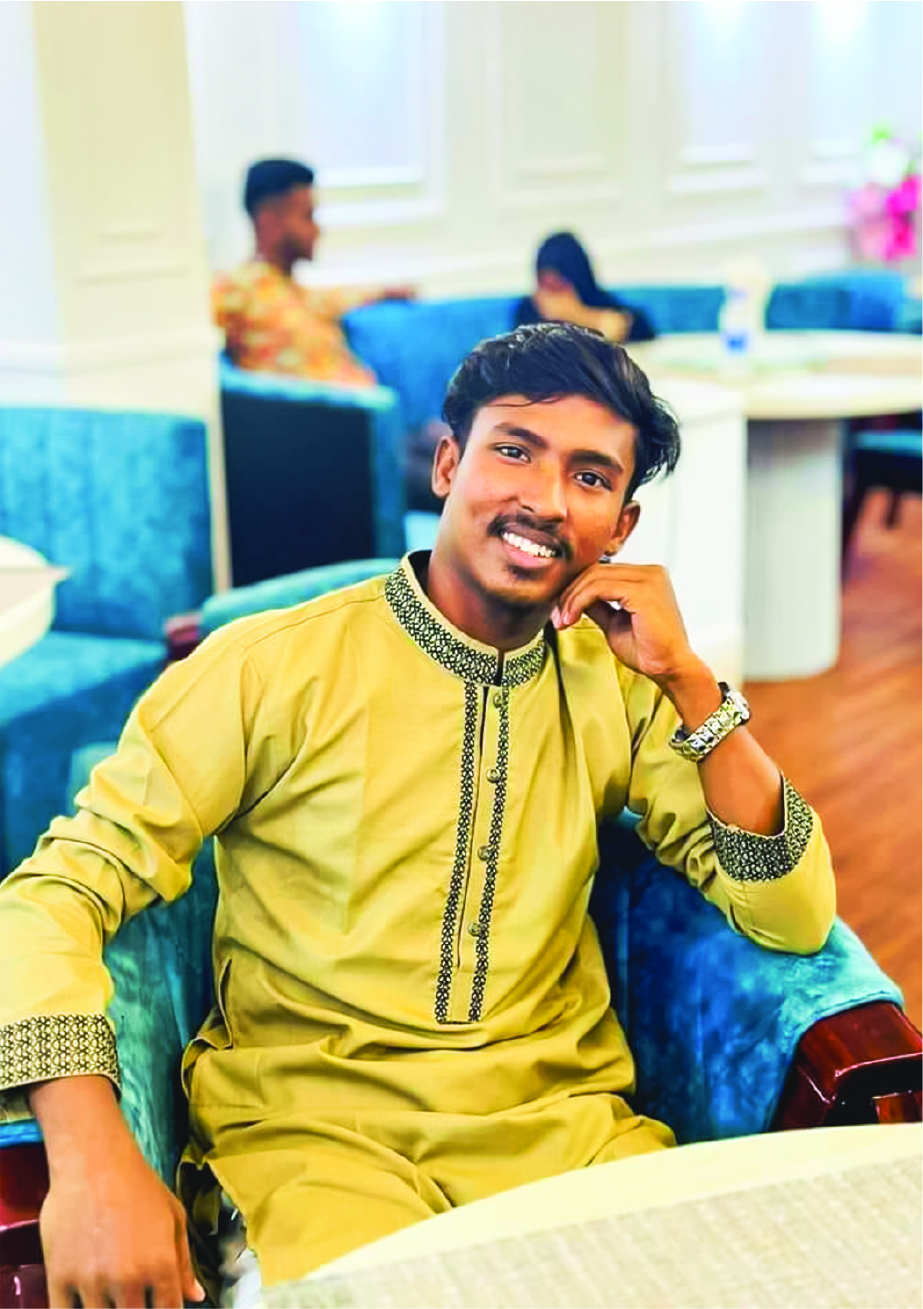
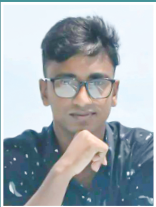
Sumon Mia
📅 Date of Birth
11 September, 2004
🕊️ Date of Martyrdom
23 August, 2024
🗺️ Division
Dhaka
📍 District
Narsingdi
👤 Short Biography
Profession: Madrasa Student and Fresh Vegetable Seller.
Place of Martyrdom: Dhaka PG Hospital.
Incident Details & Martyrdom Narrative
Life of Shaheed Sumon Mia
Having lost his father at a young age, orphaned Sumon Mia had a strong passion for education. However, in a household dependent on his elder brothers' earnings, education seemed more like a dream than a reality. Despite their struggles, his mother and brothers wished for Sumon to continue his education so that at least one member of the family could be educated. Their collective determination ensured that poverty could not stop Sumon from pursuing his studies.
With great enthusiasm and effort, he continued his education. However, at a certain point, he realized that mere determination was not enough—his family was struggling to afford even two meals a day. How could he focus on studies in such dire conditions?
With his mother and elder brothers' permission, Sumon started a small fresh vegetable business. Through this, he managed to cover not only his own educational expenses but also contribute to his mother and family's needs.
Sumon was dearly loved by his family, and he, in turn, deeply understood their unspoken hopes and struggles. He always tried to do something for everyone and never hesitated to work hard.
Every day, after the Fajr prayer, he would buy fresh vegetables from the wholesale market, clean them, and set up his shop, just as the market opened. He worked there until 10 AM, after which he attended madrasa. After returning home at 4 PM, he would rest for a while and then resume selling vegetables from 5 PM until midnight. Returning home late, he would sometimes study, sometimes sleep, and wake up early in the morning to continue his studies and prayers. His life was a well-balanced blend of relentless effort and determination.
On Mondays, the market was closed, giving him some free time. He dedicated most of the day to studying, while also spending time with his family, relatives, and friends. Sumon was a friendly and sociable young man, always getting along easily with others. This was how his struggles and aspirations for a better future continued every day.
Background of the Movement
Although Sumon tried to attend madrasa regularly, he couldn't spend much time with his classmates due to his work. Both students and teachers recognized him as a hardworking and honest individual.
In early July 2024, Sumon learned from his classmates about a nationwide student movement against discrimination. Initially, he did not fully understand the issue, but after his friends explained it to him, he came to know that a student quota reform movement had started in 2018, led by university students. That year, the ruling Awami League government had agreed to the students' demands but later overturned the decision through a court appeal.
The students felt betrayed. After years of preparation, in 2024, they reignited the protest under the banner of the "Anti-Discrimination Student Movement." Sumon remembered the Safe Roads Movement of 2018, in which he had participated as a younger student. Alongside his friends, he had spent days protesting on the streets. Despite being school students, they had fought against the oppressive regime of Sheikh Hasina to demand justice. That year, even school students were falsely charged in lawsuits, but their determination had forced the government to concede.
However, in 2018, he was too young to understand the Quota Reform Movement, and no one had explained it to him. But now, in 2024, he was mature, aware, and ready to stand up for justice. When the movement called, he knew he couldn’t stay home. He vowed to actively participate in the protests.
From July onwards, the government cracked down on protesting students, but the movement did not waver. On July 16, during a peaceful demonstration, police opened fire on students, killing at least six, including Abu Sayeed from Begum Rokeya University. The student community erupted in outrage, as did the people of Bangladesh—including Shaheed Sumon Mia.
Having always longed for martyrdom, Sumon could no longer sit idly by. On July 17, he directly joined the protests. On July 18, the government intensified its violent crackdown, massacring students in several districts.
Sumon, in the frontline of the protests, witnessed his fellow students being injured and killed. The horror weighed heavily on his heart. That night, the Hasina government shut down the internet and imposed a nationwide curfew. On July 19 (Friday), after Jumu'ah prayers, Sumon broke the curfew and joined the protest again, this time with his elder brother, Zulhas Mia. That day, hundreds of students were killed by the brutal Awami League regime. Miraculously, Sumon and his brother returned home unharmed.
Their mother, Amirun Begum, was terrified. She forbade them from joining any further protests. Understanding her fear, Sumon reassured her that he would not go again—at least for that day.
But on July 20, without informing anyone, he returned to the protests.
The Day of the Incident
On Saturday, July 20, at 3 PM, Sumon left home without telling his family and joined the Anti-Discrimination Student Movement with his friends. Breaking the curfew, they protested in Rainoke Market, Madhabdi Bazar area. Hundreds of students and citizens joined them, and the streets echoed with slogans. At 5:30 PM, the Madhabdi police force arrived and opened indiscriminate fire on the demonstrators. Several students collapsed on the street, wounded. A bullet struck Sumon from behind and exited through his abdomen, causing him to fall to the ground. His friends were nearby, but the relentless police gunfire forced them to scatter.
Rescue and Hospitalization
After a while, the police retreated, leaving the wounded behind. Sumon's friends rushed to his aid and took him to Prime Hospital nearby. A known person at the hospital informed his family. Upon receiving the news, Sumon’s mother broke into tears and immediately called Zulhas Mia, his elder brother. Hearing of his brother’s critical condition, Zulhas rushed to the hospital like a madman. After initial treatment, the doctors at Prime Hospital advised transferring Sumon to Kurmitola Hospital for better medical care.
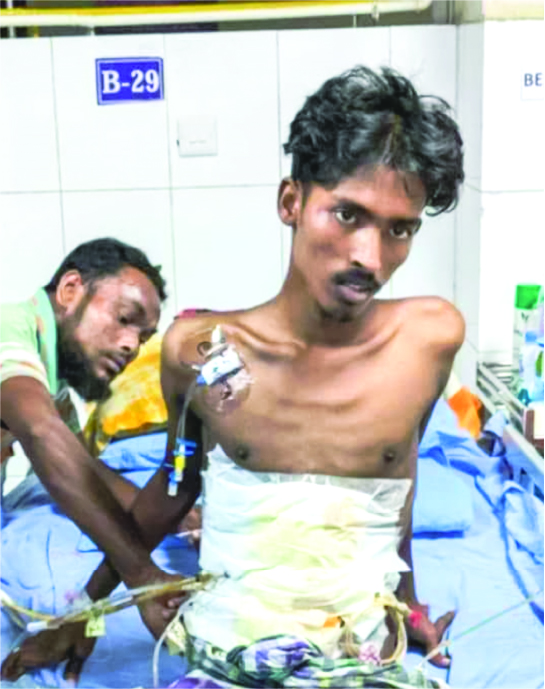
After much difficulty, Sumon underwent a successful surgery at Kurmitola Hospital. He gradually regained strength, spoke with family, ate, and comforted his mother. At one point, he regretted, "If only I had died from the bullet... I could have become a Shaheed." Hearing this, his mother became even more fearful and tried to convince him to stay away from protests. But fate had other plans.
The Final Battle for Life
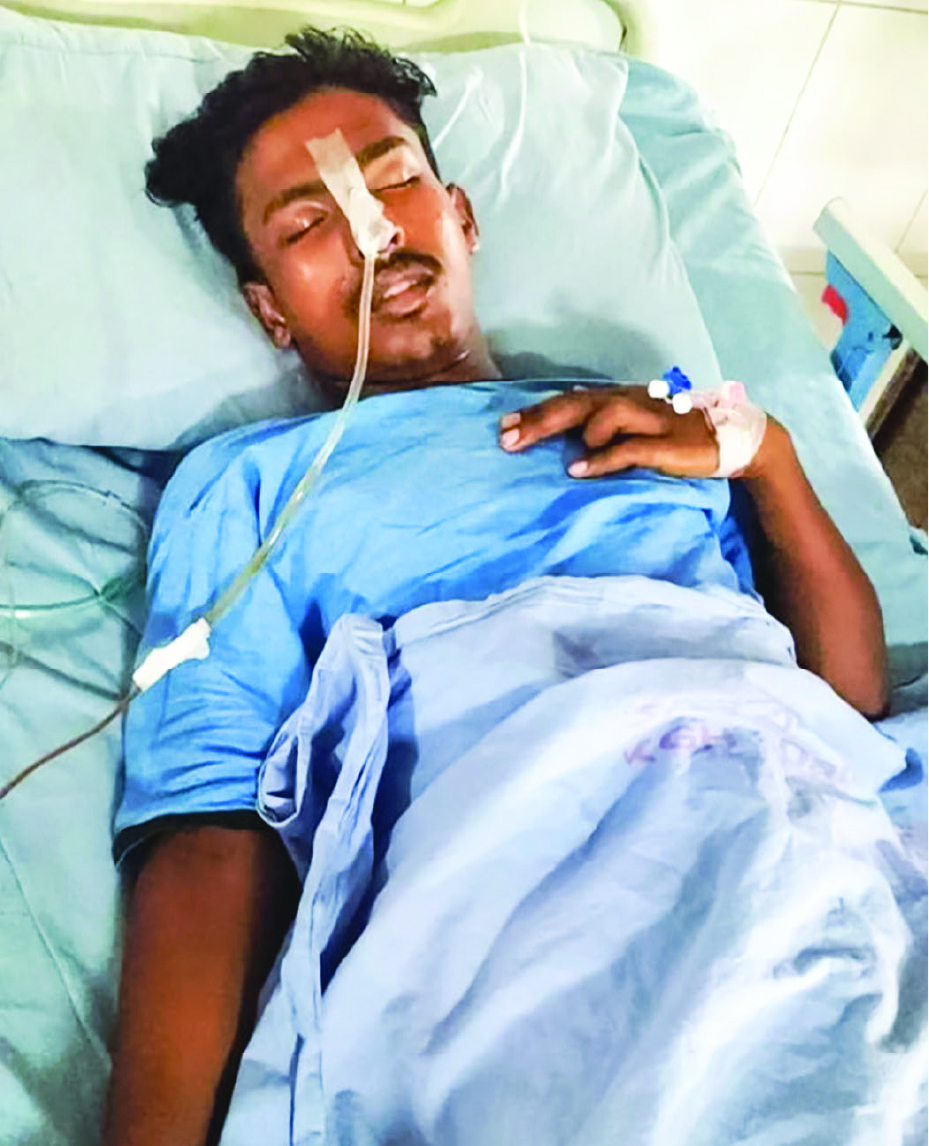
A few days later, Sumon's surgical wound became infected, worsening his condition. He was moved between regular beds and the ICU. As his health deteriorated, he was transferred to PG Hospital on August 21, 2024.
Prayers Answered
After a 34-day struggle between life and death, Sumon succumbed to his injuries on August 23 at 7 AM, embracing martyrdom. He fulfilled his lifelong desire to be Martyred for justice. His death shattered his family's dream of educating at least one member.
Burial of the Shaheed
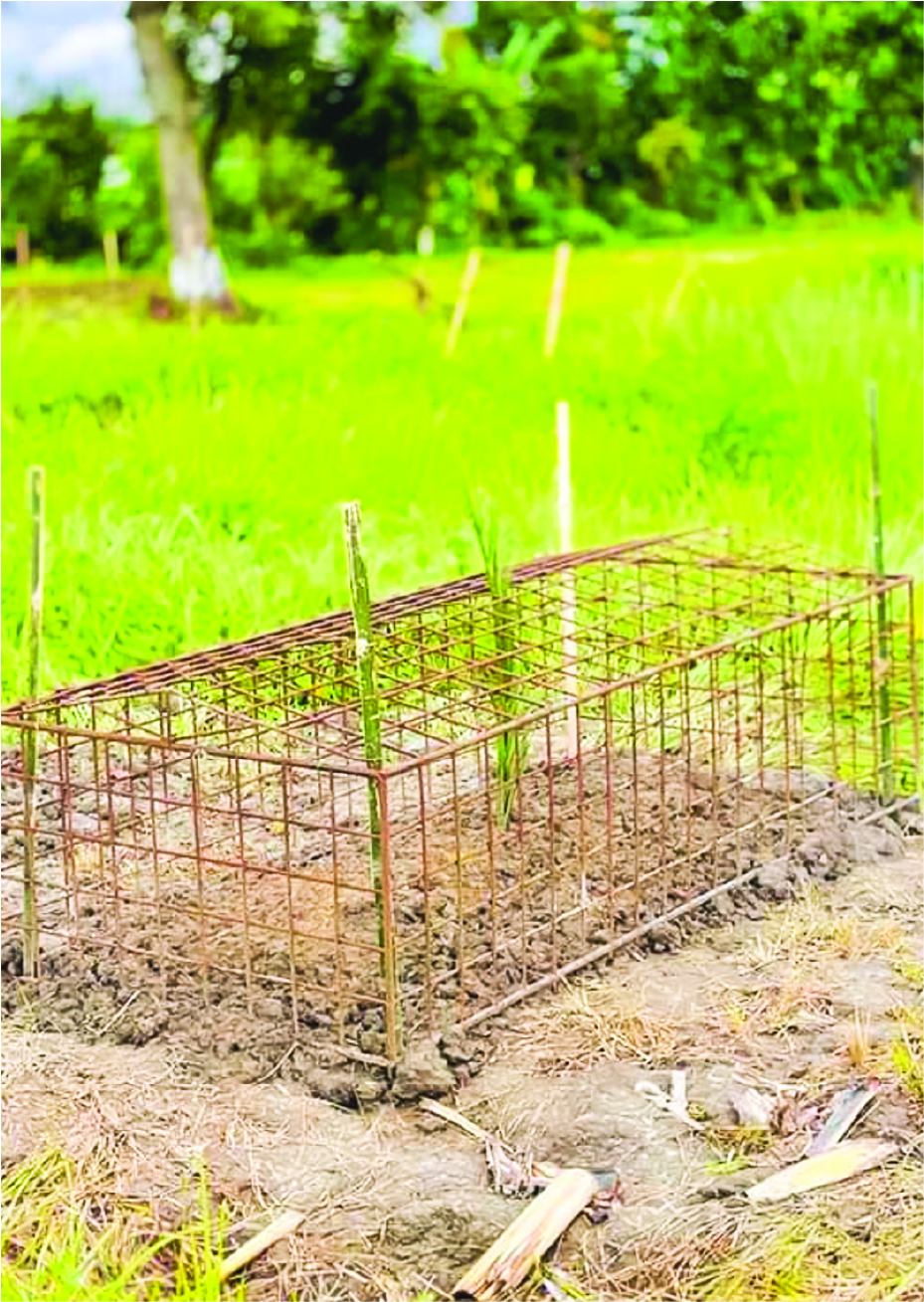
His body was taken from PG Hospital to Siddique Bazar China Mill field, where thousands attended his first funeral prayer after Zuhr. The second funeral prayer took place at 3 PM in Goynargaon Shahi Eidgah. Thousands of grieving relatives and well-wishers mourned his loss. Finally, he was laid to rest in Goynargaon Shahi Eidgah Graveyard, forever remembered as one of the heroes of the July Revolution.
Words from Those Who Knew Him
Friends, neighbors, and acquaintances described Sumon as a kind-hearted and well-mannered individual. He never engaged in conflicts and was known for his cheerful and polite nature. Despite his hard work, he never showed signs of exhaustion. A deeply religious person, he always rushed to help those in need.
Family Condition
Sumon was the youngest of five siblings. His mother, Amirun Begum (55), is a homemaker. His eldest brother, Md. Suleman (35), runs a vegetable business. His second brother, Akhtar Hossain (30), is a migrant worker in Malaysia. The third brother, Manna Mia (28), is a rickshaw puller. The fourth brother, Julhas (25), also sells vegetables.
Proposal for Assistance
Sumon’s family lives in a rented house with no permanent residence. To support his education and business, he took loans amounting to 120,000 BDT. His mother has no source of income, and Sumon used to take care of her.
In light of this, providing a permanent home for Sumon's family, clearing his debts, and establishing a stable business for his brothers should be a matter of collective concern for the state, the government, and all of us.
At a Glance: Shaheed Sumon Mia
Name : Sumon Mia
Date of Birth : September 11, 2004
Date of Martyrdom : August 23, 2024
Place of Birth : Khanomdi, Madhabdi, Narsingdi
Profession : Student (Madrasa Student) & Fresh Vegetable Vendor
Educational Institution : Jamia Emdadia Dakhil Madrasa
Current Address : Boder Kamra, Mashishura, Siddique Bazar, Madhabdi, Narsingdi
Permanent Address : Village - Khanomdi, Ward No. 12, Madhabdi, Narsingdi
Father's Name : Hasen Ali (Deceased)
Mother's Name : Amirun Begum
Current Number of
Family Members : 05
First Participation in Protest : July 17, 2024
Incident Date : July 20, 2024 (Rainoke Market, Madhabdi)
Time & Place of Injury : July 20, 2024, 5:30 PM, Rainoke Market
Attacker : Killer Police Force, Madhabdi Police Station
Time & Place of Martyrdom : August 23, 2024, 7:00 AM, Dhaka PG Hospital
First Funeral Prayer : August 23, 2024, after Zuhr, Siddique Bazar China Mill Field
Second Funeral Prayer : August 23, 2024, 3:00 PM, Goynargaon Shahi Eidgah
Current Grave Location : Goynargaon Shahi Eidgah Graveyard, Madhabdi, Narsingdi
 
The brutal death of Jahangir Alam, a representative of the marginalized people of the world, in the Anti-Discrimination Student Movement—also known as the July Revolution—proves how the autocratic Awami League government of Bangladesh carried out mass killings in its attempt to suppress the one-point movement for the downfall of the regime.
Quranic Verse
And do not say of those who are killed in the way of Allah, "They are dead." Rather, they are alive, but you perceive it not. (Surah Al-Baqarah 2:154)
Hadith Sharif
Abu Huraira (RA) reported: The Messenger of Allah (SAW) said, "Whoever sincerely asks Allah for martyrdom, Allah will grant him the status of martyrs." (Sahih Muslim 1888)
👥 Shaheeds from the Same Division
Dhaka

Memorial Photo Gallery