📱 Smart QR Code
Scan to view & share this memorial biography directly.
🌹 Prayers
Click to send your sincere respect and prayers for this hero
Martyr's Last Words
"নারীরা কোনোদিন অন্যায়ের সামনে পিছু হটেনি, আমরাও অধিকার আদায় না করে ঘরে ফিরব না।"
📌 জুলাই ছাত্র-জনতার গণজাগরণে শেষ বার্তা
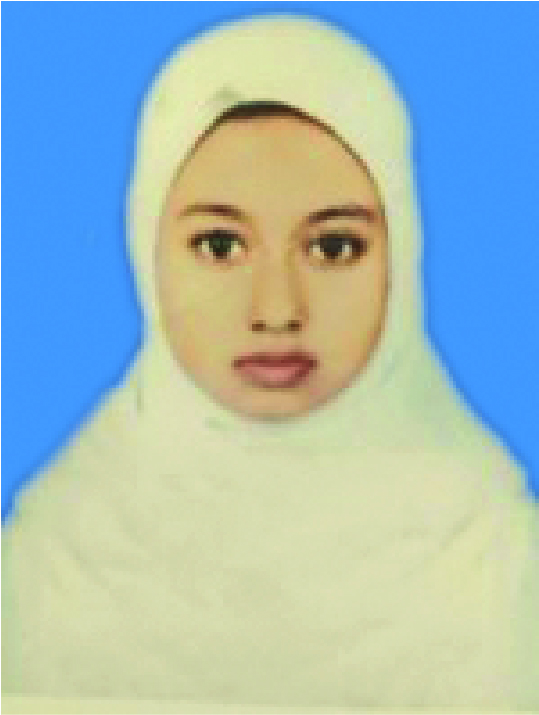
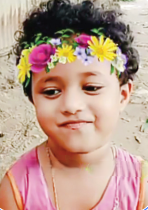
Nafisa Hossain Marwa
📅 Date of Birth
4 May, 2007
🕊️ Date of Martyrdom
5 August, 2024
🗺️ Division
Dhaka
📍 District
Gazipur
👤 Short Biography
Profession: Student
Place of Testimony: Savar Thana Stand
Incident Details & Martyrdom Narrative
University students take position in front of the central minaret of the university. From July 2nd to 6th, students from various institutions across the country conduct protests, human chains, highway blockades, etc. On July 7th, students call for a 'Bangla Blockade' under which students conduct protest rallies, processions, highway blockades, etc. Similar programs are conducted on July 8th and 9th.
Bangla Blockade and Attacks on Students
July 10 - 15
On July 10th, students of Dhaka University gathered in front of the central library and blocked the place by going to Shahbag. Members of the law enforcement agencies took position in front of the students with barricades. In the afternoon, it was learned that the High Court, in its verdict to cancel the quota system, has given a four-week stay.
On July 11th, although the Shahbag blockade was scheduled to start at 3 o'clock, due to rain, the students crossed the police barrier on their way to Shahbag and started at 4:30. Dhaka College students lagged behind due to police obstruction, and Jagannath University students joined the Dhaka University students in Shahbag. In Chittagong, Chittagong University students broke the police barricade and took position at No. 2 Gate and Tiger pass areas with a procession. Many students were attacked by the police at that time. On that day, police attacked the students of Comilla University. At 9 pm, the students ended the movement and announced a protest procession and rally on July 12 in protest of the police attack on them.
On July 12th, at 5 o'clock, the students ignored the administration's warning and gathered in Shahbag and blocked it. When the students of Comilla Victoria College continued the movement, a group of terrorists Chhatra League workers attacked. At around 5 pm, the railway communication of Rajshahi with the whole country was cut off due to the blockade of the Dhaka-Rajshahi railway line near the station market of Rajshahi University.
On July 13th, students protested by blocking the railway in Rajshahi. In Dhaka, the students of Dhaka University held a press conference in the evening, they complained that "attempts are being made to obstruct the student movement by filing cases."
On July 14th, the agitating students held a mass march in Dhaka and submitted a memorandum to the President M. Shahabuddin. In protest of the Prime Minister of Bangladesh's statement at a press conference regarding the quota reform movement, students protested in the Dhaka University campus area at midnight. The government directed the operators to shut down the 4G network in the Dhaka University area. At around 11:30 that night, the killer Chhatra League activists attacked the quota reform movement protesters on the Kata Pahar Road of Chittagong University. Two people, including a female student, were injured in this. Earlier, the protesting students started a protest at the zero point of the campus demanding quota reforms.
On July 15th, in the context of the quota movement, there was a chase and counter-chase between the agitating students and the Chhatra League in Vijay Ekattor Hall, Surya Sen Hall and several places on the campus of Dhaka University. More than a hundred students were injured in this incident. On July 15th afternoon, clashes broke out on the campus due to counter programs. At this time, the infamous leaders of the terrorist Chhatra League were seen with rods, sticks, hockey sticks, iron rods and various weapons. Even after 5:30 pm, the chase and counter-chase continued between the agitating students and the terrorist Chhatra League leaders and activists from in front of Shahidullah Hall to the area in front of Dhaka Medical College. At least 297 people injured in the attack, beating and clash incidents of Chhatra League on the protesters at Dhaka University were treated at Dhaka Medical College Hospital. After 10 pm on Monday, July 15, students were searched and beaten in various halls of Dhaka University.
At 2:30 pm, Chittagong University coordinator Rafi was abducted from the shuttle and detained in the Proctor's office by Chhatra League activists. When a section of the protesters was marching towards the Proctor's office to rescue Rafi, Chhatra League activists attacked the agitating students in front of the Shaheed Minar. Several students were seriously injured in this.
July 16
On July 16, the quota reform activists of Jahangirnagar University took shelter inside the vice-chancellor's residence fearing attacks by the killer Chhatra League. At around 2:15 am, the infamous cadres of the scandalous Chhatra League entered there and beat the agitating students. Earlier, after 12 o'clock at night, the agitating students were attacked. In addition, there was a severe clash between the agitating general students and the campus terror Chhatra League workers at Rajshahi University. Students of Brac University blocked the road and protested in Merul Badda of the capital. In the Bashundhara residential area of the capital, students of North South University, American International University, Independent University, Green University of Bangladesh and State University of Bangladesh blocked the Pragati Sarani and Kuril highways in the Bhatara area and protested. At 11 am, when the procession of quota reform activists reached near the Shaheed Minar in front of Tangail municipality, Chhatra League activists attacked them with sticks and iron rods.
At 1 pm, in Mirpur 10, a huge team of leaders and activists, including the Jubo League, Shramik League, and Shechashebok League, along with sticks and rods, attacked the protesting students of various universities and colleges in Mirpur, including Bangabandhu Sheikh Mujibur Rahman Maritime University, Bangladesh University of Professionals, and Bangladesh University of Business and Technology, who were blocking the road. From 2:30 pm to 3 pm, there were incidents of police violence with the students protesting for quota reforms in front of Begum Rokeya University. The hospital's director, Dr. Md. Yunus Ali, said, "A student was brought to the hospital dead. Besides, 15 more people have come to the hospital in injured condition." At around 4 pm in Chittagong, two people were killed in a clash between the Chhatra League and the protesters, one of whom was a student of Chittagong College and the other a passerby. In the afternoon, a youth was killed in a clash between the protesting students and the leaders and activists of the Jubo League and Chhatra League in front of Dhaka College in the capital. The senior assistant commissioner of police's New Market area, Md. Rifatul Islam, said, "In the afternoon, they saw a group of people beating a person on the road in front of Dhaka College. Later they heard that he had died in Dhaka Medical." As the conflict spread, BGB was deployed in Dhaka, Chittagong, Bogra and Rajshahi cities on this day. Besides, there were reports of problems using Facebook using the internet in different parts of the country.
July 17
On July 17, UGC announced the closure of all educational institutions and asked the students to leave the halls for security reasons. On this day, the government directed all mobile companies, including Grameenphone Company, to keep all types of internet services closed.
Total Blockade
July 18-19
On July 18, in the morning, the Border Guard Bangladesh, the border guard force, said in a circular that 229 platoons of BGB have been deployed across the country, including Dhaka, to maintain the law-and-order situation in the wake of the 'Complete Shutdown' announced by the protesters demanding quota reforms. At around 11 am, Awami League, Chhatra League and Jubo League leaders and activists and police attacked the students of various educational institutions in Mirpur, including Bangladesh University of Business and Technology in Mirpur 10. Sound grenades and tear shells were thrown at the protesters. The whole area turned into a battlefield. At around 11 am, police fired tear gas and sound grenades to disperse the students of Brac University and other educational institutions who were protesting from morning by blocking the road from Rampura Bridge to Merul Badda area.
At the same time, they were attacked by Chhatra League and Awami League workers. At around 12 noon, Awami League, Chhatra League and Jubo League leaders and activists and police attacked the students of Bangabandhu Sheikh Mujibur Rahman Maritime University, Bangladesh University of Professionals and other local educational institutions who were protesting from morning. Sound grenades and tear shells were thrown at the protesters. The whole area turned into a battlefield. At around 2 pm, 2 students of Northern University were killed and more than a hundred students were injured in police firing. The injured students were taken to the hospital. At around 3 pm, a second-year student of the Department of Zoology of Madaripur Government College died after falling under police chase. Besides, a car driver was killed by police bullets in a clash between the police and students of the private Brac University in Rampura. On this day, 4G mobile internet was shut down and internet speed was reduced on the orders of the government. At around 9 pm, the government cut off all types of internet services across the country.
On July 19, to prevent the students' movement, the Dhaka Metropolitan Police announced an indefinite ban on all kinds of meetings, rallies and processions in Dhaka. From the higher level of the government, the Bangladesh Railway authorities were directed to stop train movement with the whole country, In the middle of the night, Nahid Islam, one of the central coordinators of the anti-discrimination student movement, was arrested. Besides, Nurul Haque Nur, the president of the Gana Adhikar Parishad, was also arrested. Around the time when Nahid Islam was arrested, a meeting was held between three representatives of the anti-discrimination student movement and three representatives of the government where they presented 'eight-point demands' to the government. According to various national newspapers of Bangladesh, at least 56-66 people died across the country on Friday, July 19.
Dialogue and Supreme Court Verdict
July 20-22
On July 20, the whole of Bangladesh was without internet for the third day. The army was seen patrolling in different parts of the country as part of the curfew. There was a difference of opinion among the leadership regarding the meeting held on Friday, July 19, between three representatives of the anti-discrimination student movement and three ministers of the government, and the demands raised in the meeting. Even during the curfew, there were clashes between the protesters and the police in different places of Dhaka including Jatrabari, Rampura-Banashree, Badda, Mirpur, Azimpur, Maniknagar. Police fired tear gas, sound grenades. At least 10 people, including two policemen, were killed and at least 91 were injured in these clashes. Nahid Islam, a student of Dhaka University and one of the coordinators of the quota reform movement, was picked up by the law enforcement agencies in the middle of the night.
On July 21st, the whole of Bangladesh was without internet for the fourth day and a curfew was in force across the country. In the morning, one of the coordinators of the movement, Nahid Islam, was found in Purbachal, Dhaka and later taken to the hospital. On July 16th, the hearing of the Appellate Division regarding the quota began in the Bangladesh Supreme Court around 10 am following the leave to appeal filed by the state. After hearing from all parties, the verdict was announced around 1 pm. In the verdict, the High Court's ruling was overturned and it was directed to appoint 93 percent on the basis of merit in government jobs. On this day, RAB, police and BGB conducted operations in different areas of Dhaka to control the protests in Dhaka. There were clashes between the protesters and the police throughout the day in Jatrabari. Five people were killed in violence in different parts of Dhaka. In separate cases of vandalism of the bridge building, setting fire to the BTV building in Rampura and arson in various places, the police took BNP leader Amir Khasru Mahmud Chowdhury, Nipun Roy and Gana Adhikar Parishad leader Nurul Haque Nur on five-day remand. A faction of the anti-discrimination student movement announced to continue the shutdown with '9-point' demands.
On July 22nd, the whole of Bangladesh was without internet for the fifth day and the curfew was in force across the country for the third day. One of the coordinators of the anti-discrimination student movement, Nahid Islam, suspended the 'Complete Shutdown' program, giving a 48-hour ultimatum with four-point demands.
Movement suspended and mass arrest
July 23 - 28
On July 23rd, the whole of Bangladesh was without internet for the sixth day. However, limited broadband internet was allowed to function in Dhaka and Chittagong at night. Besides, the curfew was in force across the country for the fourth day. On July 21st, after the verdict of the Appellate Division of the Supreme Court, the Ministry of Public Administration issued a notification regarding the quota on July 23rd.
On July 24th, although broadband internet was started to a limited extent, mobile internet remained switched off. The curfew was in force across the country for the fifth day, but it was at a relaxed level. A student of Chittagong University died while undergoing treatment and the death toll rose to 197. According to the students, the death toll is many times higher which was not known due to the internet shutdown. Until July 24, the police arrested 1,758 people in various cases. The United Nations expressed concern about the use of vehicles with the UN logo after the army was deployed during the protests. After being missing since July 19, Asif Mahmud, Abu Baker Majumdar and Rifat Rashid, one of the coordinators of the anti-discrimination student movement, were found on July 24. It was reported that a total of 201 people were killed by July 24, including 4 more.
Until July 25, slow internet was available on broadband. The government kept switched off various social media, including Facebook. On this day, eight messages were given to the agitating students on behalf of the anti-discrimination student movement, the platform of the agitators.
On July 26, Nahid Islam and three coordinators of the quota reform movement were picked up from the Gonoshasthya Nagar Hospital in the capital by a group of people in plain clothes. A coordinator's relative and hospital doctors present there said that they introduced themselves as members of the law enforcement agencies.
On July 27, the Detective Branch (DB) acknowledged the abduction of the three coordinators from Dhaka's Gonoshasthya Nagar Hospital. A group of university teachers raised the question of why they were taken to DB custody instead of being handed over to their families if there was any security concern. These teachers went to meet DB chief Mohammad Harun or Rashid to inquire about the three students. Although the DB chief refused to meet the teachers. In the context of the movement, the law enforcement agencies conducted a combing operation across the country in the incidents of protests, clashes, vandalism, clashes and arson. Operations were carried out by dividing different areas of the capital into 'block raids'.
On July 28, in the morning, another coordinator of the quota reform movement, Nusrat, was taken into DB custody. Mobile internet was stopped from 3 pm. However, various services including Facebook, WhatsApp, TikTok were kept switched off. Although the families of some of the coordinators in DB custody went to the Metropolitan Detective Police office, they were not allowed to meet with the families. Around 10 pm, 6 coordinators in police custody announced the withdrawal of the movement. But since such an announcement was made by communicating with the rest of the coordinators while being detained in the police office, this announcement was termed as being given under government and police pressure and the rest announced to continue the movement. Around 11 pm, students of almost all universities and various colleges in Dhaka announced to come to the streets again the next day, July 29, in protest of the coordinators being held hostage and tortured to make statements.
Resumption
July 29 - August 3
On July 29, 74 prominent citizens issued a statement demanding an investigation into each incident under the supervision of the United Nations. An analysis of the Prothom Alo report shows that most of the dead are young and students. Security analyst Brigadier General (retd) M Sakhawat Hossain believes that lethal weapons (bullets or bullets) were used to suppress the protests. In several areas of the capital, including Science Laboratory, Badda, ECB, some students tried to protest again. Students have held protest rallies in many places including Dhaka, Chittagong, Sylhet, Barisal, Chittagong. In Chittagong, the student protest program demanding quota reforms was dispersed by throwing sound grenades and tear gas shells. It is mentioned that the incident of forcibly taking away the coordinators of the movement as a tool to forcibly control the quota reform movement, illegally detaining them in the Detective Branch office and forcing them to read out the announcement of the withdrawal of the program through a video message is sheer falsehood, fraudulent and unconstitutional.
On July 31, the anti-discrimination student movement observed the 'March for Justice' program across the country on Wednesday, July 31, to protest against the killings, mass arrests, attacks, lawsuits and disappearances. In Chittagong, students gathered from around 10 am and held a protest rally. Then, breaking the police barrier, the agitating students also entered the court premises. At 3 pm, Facebook and other social media were opened after being closed for 13 days.
On August 1, the six coordinators of the anti-discrimination student movement who were in the custody of the Detective Police (DB) were released shortly after 1:30 pm. The anti-discrimination student movement observed the 'Remembering Our Heroes' program on Thursday to protest against the killings, mass arrests, attacks-lawsuits, disappearances-murders and attacks on students and teachers across the country and to demand the realization of 9-point demands. The visual media artist community expressed solidarity with the 9-point demands of the students agitating for quota reforms and held a protest and rally.
On August 2, the six coordinators of the anti-discrimination movement who were released from the custody of the Detective Police (DB) said in a statement sent to the media that they did not voluntarily give the video statement of the six coordinators broadcast from the DB office withdrawing the movement. According to the statement givers Md. Nahid Islam, Sarjis Alam, Hasnat Abdullah, Asif Mahmud, Nusrat Tabassum and Abu Baker Majumdar, they were kept detained on the instructions of the Home Minister. On this day, after 12 noon, social media Facebook was again switched off on the mobile network. Later, Facebook-Messenger was started again after 5 hours. On this day, the anti-genocide and anti-repression artist community held a rally and protest procession at the road adjacent to the Abahani ground in Dhanmondi, the capital, demanding the resignation of the government immediately with three demands, admitting the responsibility for the killings.
Besides, doctors, medical and dental students gathered at the central Shaheed Minar and held a protest rally demanding justice for the casualties in the quota movement. Mass rallies and protests were held in Baitul Mukarram, Science Lab, Uttara, Aftabnagar of Dhaka. Besides, mass rallies were held in various places of the country including Chittagong, Sylhet, Bogra, Tangail, Kishoreganj, Noakhali. In Sylhet, at least 20 people were injured when the police fired sound grenades and shotgun bullets at the 'mass procession'. In Uttara, Dhaka, there was a chase and counter-chase between the protesting students and the police and Awami League leaders and activists. At one point, the police fired sound grenades and tear gas shells to disperse the protesters. In Sylhet, as part of the anti-discrimination student movement's announced prayer and mass procession of students and people, students took a position in front of the Board Mosque in the city's Habiganj after Friday prayers. Chhatra League leaders and activists took a position in the East Town Hall area.
Later, there was a clash between the students and the police-Chhatra League. As part of the previously announced program, students held mass processions in at least 25 districts of the country. In Narsingdi, at least 12 people were injured in an attack by Chhatra League-Jubo League on the students' mass procession. In Khulna, the police fired tear shells and baton charged the protesters' procession. Thousands of people joined the protest march called by teachers and civil society. The anti-discrimination student movement called for a protest rally across the country on Saturday (August 3) and an indefinite all-out non-cooperation movement from Sunday (August 4) to protest against the attack and killing in the student-public movement and the previously announced nine-point demands. At night, Prime Minister directed a team consisting of Awami League and 14-party leaders in an emergency meeting at Ganobhaban to discuss with the coordinators of the anti-discrimination student movement. On August 3, protesters in Rangpur Sadar were chanting slogans saying "Shame on Hasina, we can't live in shame".
Prime Minister Sheikh Hasina offered to discuss with the protesters, but in the afternoon, central coordinator Nahid Islam said that they had no plans to sit in discussion with the government. Students held a protest rally in front of East West University in Aftabnagar, the capital. Thousands of students from various educational institutions in Rajshahi took out a procession around 10:30 am on Saturday and gathered in front of Rajshahi University of Engineering and Technology (RUET) and chanted slogans. On this day, the students took to the field with one point, one demand. They demanded the resignation of the Prime Minister. A protest rally of musicians was held at Rabindrasarobar in Dhanmondi, the capital, surrounding the quota reform movement. After four o'clock in the afternoon, the angry people started marching towards the central Shaheed Minar with a huge procession. Students and common people gathered in the central Shaheed Minar area with protest processions from different areas of the capital.
At around 5:30 pm, Md. Nahid Islam, the coordinator of the organization leading the quota reform movement, addressed the assembled students and people at the Shaheed Minar. The anti-discrimination student movement announced a one-point demand for the resignation of Prime Minister Sheikh Hasina and her cabinet. The court granted bail to Arif Sohail, the coordinator of the anti-discrimination student movement. The education minister's house was attacked in Chittagong city. Earlier, around 5:30 pm, the office of MP Md. Mohiuddin Bachchu of Chittagong-10 constituency was also attacked in Lalkhan Bazar, Chittagong city. A person was killed in a clash between protesting students and police in Sreepur, Gazipur. At around 8:15 pm, Sheikh Hasina exchanged views with the vice-chancellors, teachers and college principals of public and private universities. In Rangpur, two policemen were temporarily suspended in the incident of the death of Abu Saeed, a student of Begum Rokeya University, one of the coordinators of the quota reform movement. In Sylhet, there was a clash between students and the public and the police during the anti-discrimination student movement program. After 5 pm, there were protests inside Mohakhali and Mirpur DOHS in response to the anti-discrimination student movement's call for a protest program. The DOHS is mainly inhabited by retired members of the armed forces. Apart from a large number of retired members, their family members also participated in the program.
On August 4, 48 former army officers were present at a press conference at the Retired Armed Forces Officers' Welfare Association (RAWA Club) in Mohakhali DOHS. Among them were former army chiefs M Nur Uddin Khan, Mohammad Azizur Rahman, Kaiser Fazlul Kabir, Jamil D Ahsan, Rezakul Haider, Mujahid Uddin, Abul Kalam Humayun Kabir and others. Iqbal Karim Bhuiyan said, "When the attackers were forced to back down in the face of resistance from the mass uprising, the armed forces of Bangladesh were used in the next stage. Using them as a shield, sometimes in front, sometimes standing behind and beside them, the other forces are continuing their oppression, torture and repression on this mass movement. Under no circumstances should the patriotic armed forces take responsibility for such a situation. The armed forces of Bangladesh have never stood against the countrymen or the common people in the past, they have not aimed their guns at their chests. Finally, the former army chief said, "We, the retired officers of the armed forces, strongly oppose the initiative to militarize a political crisis."
August 5
On August 5, 2024, the autocrat Sheikh Hasina resigned from the post of Prime Minister. At 2:30 pm on August 5, initially a military helicopter and later a plan started towards Pashchimbanga of India. She was accompanied by her younger sister Sheikh Rehana. The plane went to Agartala first and later she was taken to New Delhi. by নিয়ে শেখ হাসিনাকে from Bangabhaban নিয়ে à¦à¦¾à¦°à¦¤à§‡à¦° পশà§à¦šà¦¿à¦®à¦¬à¦™à§à¦—ের উদà§à¦¦à§‡à¦¶à§‡ যাতà§à¦°à¦¾ করে. This helicopter took him and his younger sister, one of the masterminds, Sheikh Rehana, to Agartala first. Later they were taken to Delhi from there.
Joining the movement
The brave martyr Nafisa Hossain Marwa is a flag bearer of the entire student and the public during those crucial days. in a daring expedition. In the quota reform movement that started at the call of the student public, she actively participated. Nafisa joined the movement in Uttara. Her father came to know about the matter and forbade her. But Nafisa with her revolutionary spirit, disregarding her father's repeated obstacles, went to her uncle's house in Baktarpur area of Savar district on August 1st. From there, she again joined the anti-discrimination student movement.
Martyrdom
She led her schoolmates in Savar and participated in the forefront of the movement. On Monday, August 5, when the agitating anti-discrimination students and people gathered in front of the Savar police station stand, the police opened fire indiscriminately. Suddenly a bullet hit her chest or side. Her comrades rescued her from the spot and took her to the nearby Enam Medical. There, the doctor on duty examined her and declared her dead. Later, her father received the news and brought the body from the hospital to Ershadnagar area of Tongi. Earlier, on August 5, at around 2 pm. Nafisa was martyred after a bullet fired by the killer hit her chest.
Funeral and Burial
Later, after the funeral, the martyr was buried at night in the local Graveyard of the area. The dream-thirsty, brave, indomitable warrior martyr Nafisa Hossain Marwa was laid to rest forever.
Family Feelings
After Nafisa's death, her father Abul Hossain is grief-stricken. He sits by the grave from morning till night. He brings Nafisa's favorite Jaba flowers and gathers them beside the grave. Sometimes he cries out loudly.
Father Abul Hossain says, "I have 2 daughters. Nafisa is the elder. I am poor. I used to educate my daughters with difficulty. Their mother has gone abroad. I have no land. My two daughters were my only support. The movement has stopped. But my daughter did not come. After being shot, my mother (Nafisa) told me on the phone - Father, take my body away, I will die."
Quranic Verse
Indeed, Allah has purchased from the believers their lives and their properties for [that] they will have Paradise. They fight in the cause of Allah. (Surah At-Tawbah 9:111)
Hadith Sharif
The Messenger of Allah (SAW) said, "A martyr will be able to intercede for seventy relatives in Paradise." (Sunan Abu Dawood 2520)
👥 Shaheeds from the Same Division
Dhaka
Memorial Photo Gallery


