📱 Smart QR Code
Scan to view & share this memorial biography directly.
🌹 Prayers
Click to send your sincere respect and prayers for this hero
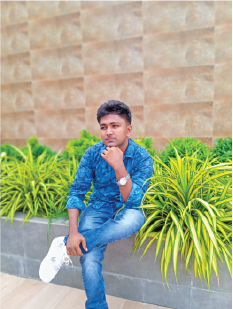
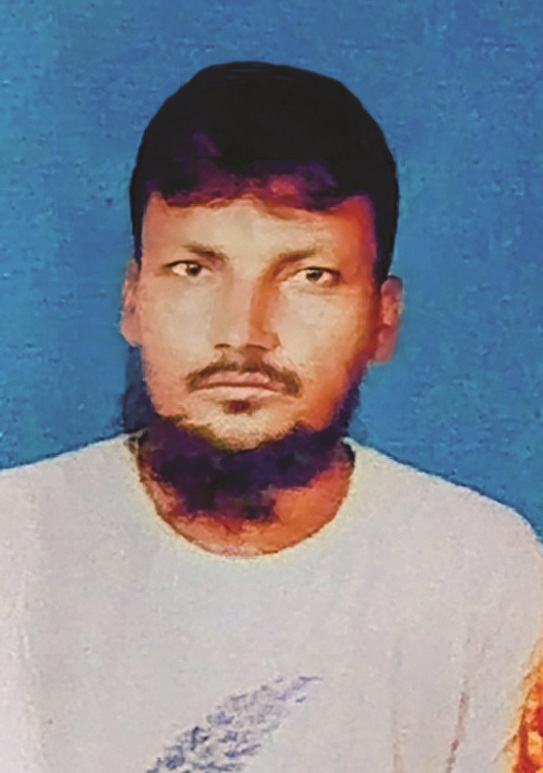
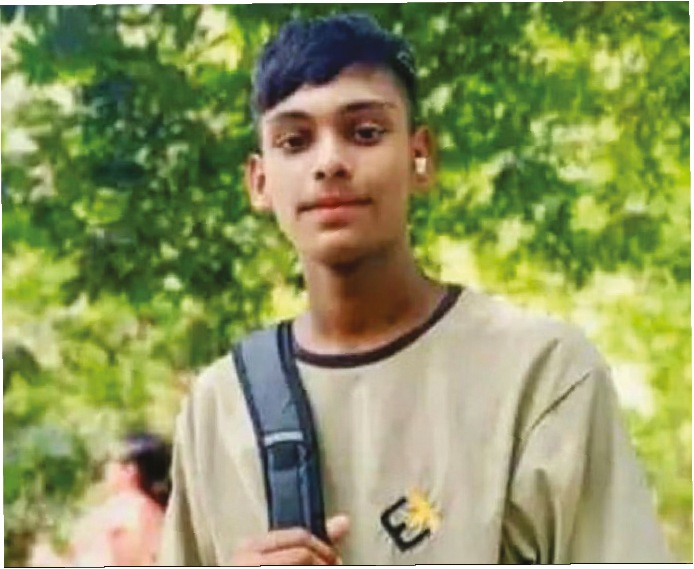
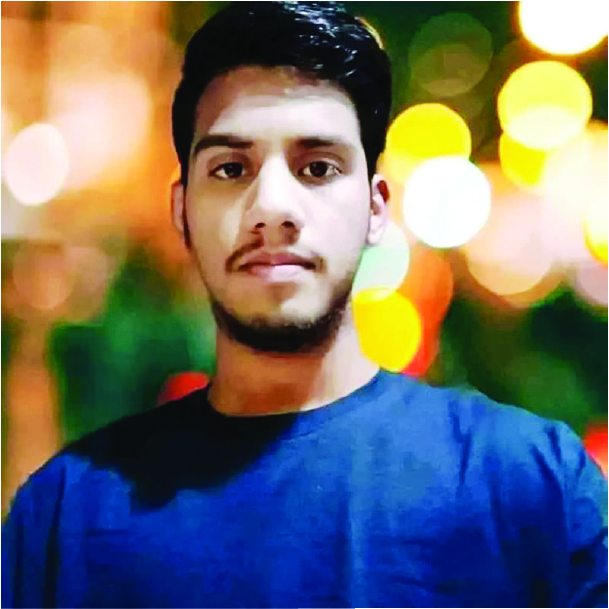
Al Amin Hossain
📅 Date of Birth
1 January, 1998
🕊️ Date of Martyrdom
16 August, 2024
🗺️ Division
Khulna
📍 District
Jessore
👤 Short Biography
Profession: Electrician
Place of Death: Rajlokkhi Complex Mor, Uttara, Dhaka
Incident Details & Martyrdom Narrative
His father's name is Anwar Hossain, who is engaged in agriculture, and his mother, Ashura Begum, is a homemaker. Al Amin was a Master's student at Jessore M.M. College.
Context of Martyrdom
After coming to power in 2008, the authoritarian regime began systematically suppressing all opposition parties and their rivals. Initially, with assistance from India, a massacre was orchestrated at the Pilkhana headquarters, resulting in the killing of 76 army officers and civilians. From among the revolutionary soldiers who had once resisted Sheikh Mujibur Rahman and his brutal security forces, five were executed by hanging under the former corrupt authoritarian government.
The opposition party BNP (Bangladesh Nationalist Party) was rendered inactive through threats of legal action and financial coercion. Begum Khaleda Zia was imprisoned, and her elder son was brutally beaten and injured, ultimately forcing him into exile. Her other son died of a stroke due to alleged government oppression. As a result, BNP became incapable of mounting a strong resistance against the unlawful actions of Sheikh Hasina's government.
Hussain Muhammad Ershad was coerced through the Indian High Commission into compliance, and his party was gradually turned into a submissive opposition under the control of the authoritarian regime. The general public came to view this party as an accomplice to Hasina’s government and despised it accordingly.
The Awami League and its patron India perceived Jamaat-e-Islami and its student wing, Islami Chhatra Shibir, as the primary obstacles to their exploitation of the country's resources. From 2009, a brutal crackdown began on this party. There was no form of oppression that its members were spared—imprisonment, abduction, murder, extrajudicial killings, rape, and public executions. Based on allegedly false charges of war crimes, five leaders of Jamaat-e-Islami were hanged. They were offered the chance to plead for clemency, and Sheikh Hasina had proposed that forgiveness might be granted if they sought mercy. However, the leaders of Jamaat-e-Islami chose martyrdom over submission to tyranny.
After coming to power in 2008 with the support of the Army Chief Moeen U Ahmed, Awami League’s corrupt and immoral advisors claimed that if certain national assets and privileges were granted to India, Bangladesh would surpass Canada and Singapore within four years. But within five years, the people realized they were losing their wealth and national resources, and the country was effectively held hostage by tyrants.
Realizing that it could not return to power through a fair election, the Awami League orchestrated a sham election in 2014. Voters found their ballots had already been cast. Protesters were subjected to arrest, abduction, and even murder, forcing many to flee the country.
The religious scholars (Ulema) came to realize that anti-Islamic activities were becoming widespread and that Islam and Muslims were being marginalized. Immoral and atheist individuals were appointed to influential positions. During this time, a movement for the protection of Islam was initiated by Hefazat-e-Islam in response to government-tolerated writings that insulted the Prophet Muhammad (peace be upon him).
In 2014, Jamaat-e-Islami and Islami Chhatra Shibir supported Hefazat's anti-government movement. Hefazat members staged a sit-in at Shapla Square in Dhaka, demanding punishment for the atheist writers. Rather than responding to the demands, Sheikh Hasina ordered a massacre. Throughout the night, Hefazat protesters were shot and killed—over a hundred people died. As news of this massacre was broadcasted, the government shut down Diganta TV and Islamic TV, along with several other media outlets. Editors and journalists began aligning themselves with the Awami League, and many became complicit in its agenda to eliminate Islamic values and supporters.
In 2018, Sheikh Hasina once again seized power through another rigged election—and even did so again in 2024. Students and citizens hoped for change. When the movement against inequality arose, Sheikh Hasina, true to her past actions, again ordered mass killings.
On August 1st, Jamaat-e-Islami and Islami Chhatra Shibir were banned. The intention was to indiscriminately murder ordinary students and civilians by branding them as Jamaat-Shibir activists. Though thousands of innocent people and hundreds of others were killed by government forces throughout July, the movement remained peaceful. The students and citizens refrained from violent retaliation.
When the public became aware of the impending massacre due to the August 1st ban, resistance erupted across the country on August 4. As a result, on August 5, Sheikh Hasina and her corrupt younger sister fled to India. Before fleeing, Sheikh Hasina ordered her brutal forces—police, RAB, Ansar, BGB, and others—to carry out mass killings.
Following her escape, when students and civilians took to the streets in celebration, the very forces that had kept the authoritarian regime in power for 15 years opened indiscriminate fire, turning the streets into rivers of blood. A section of the protesting public was killed. The enraged survivors retaliated by attacking the hideouts of Hasina’s thugs and sycophants across different districts. These offices had been used for the past 16 years to torture civilians and brutally assault opposition members. Student protesters set fire to various offices of Awami League terrorists.
In Barguna District, enraged citizens also set fire to the residence of Matior Rahman, the Awami League-endorsed mayor of Amtali Municipality. Al Amin Hossain, a salesman at Renata Company, was residing in a rented room in that building. During Awami League rule, student dormitories and bachelor hostels were often raided at night by Awami police. Students with beards or Islamic attire were arrested. As a result, many students sought refuge in buildings owned by Awami League leaders, considering them safer. It is likely that Al Amin Hossain rented the place for similar reasons.
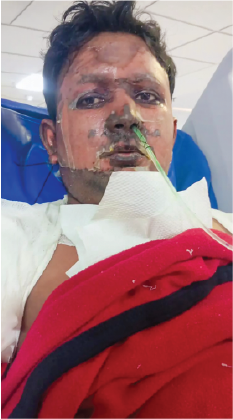
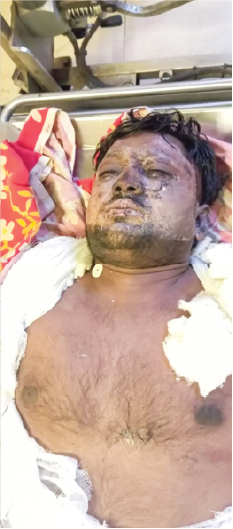
According to his younger brother Md. Rasel Hossain, on August 5, Al Amin had returned from work and was asleep on the second floor of the building. Around 3:30 PM, protesters set fire to the ground floor. The fire quickly spread to the second floor, engulfing Al Amin and a few of his colleagues while they slept. In a desperate attempt to survive, they jumped from the second floor, even while on fire. Locals rescued them and took them to Sher-e-Bangla Medical College in Barisal. The next day, on August 6, Al Amin was transferred to the Sheikh Hasina Burn Institute in Dhaka. With 36% burns, he passed away in the ICU at 5:30 AM on Friday, August 16. On August 17, he was buried at the family cemetery in Chandarpur after his funeral prayers.
Economic Condition
The martyr’s father, Mr. Anwar Hossain Babu, is a farmer. Al Amin’s younger brother, Rasel, works part-time at a shop. The family owns only four decimals of land.
A Glimpse of the Shaheed's Personal Information
Name: Al Amin Hossain (Age: 27)
Occupation: Employee at Renata Pharmaceuticals; Master's student at Jessore M.M. College
Father’s Name: Anwar Hossain
Mother’s Name: Ashura Begum
Family Details:
• Younger Brother 1: Russel (25), Grocery Shop Owner
• Younger Brother 2: Fayez (13), Student of Grade 6
Permanent and Present Address:
Village: Afra (Chandarpur),
Post Office: Solua Bazar,
Police Station: Chowgacha,
District: Jessore
Location of Incident:
Residence of Mayor Motiar Rahman, Amtali Municipality, Barguna
Assailant:
Agitated protesters
Time of Injury:
August 5, around 3:00 PM
Nature of Injury:
Burn injuries due to fire outbreak
Date, Time, and Place of Death:
Sheikh Hasina National Institute of Burn and Plastic Surgery, Dhaka
Current Burial Site of the Martyr:
Chandarpur Cemetery
Recommendations:
1. Arrangement of monthly and one-time financial assistance to the family
2. Educational support for the younger brother
Quranic Verse
They rejoice in what Allah has bestowed upon them of His bounty, and they rejoice for those who have not yet joined them. (Surah Al-Imran 3:170)
Hadith Sharif
Abdullah ibn Masud (RA) reported: The Messenger of Allah (SAW) said, "The souls of the martyrs are in the bodies of green birds." (Sahih Muslim 1887)
👥 Shaheeds from the Same Division
Khulna


Memorial Photo Gallery