📱 Smart QR Code
Scan to view & share this memorial biography directly.
🌹 Prayers
Click to send your sincere respect and prayers for this hero
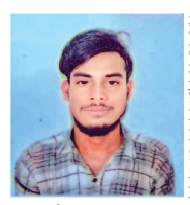
Md. Shahinur Alam
📅 Date of Birth
27 March, 2005
🕊️ Date of Martyrdom
6 August, 2024
🗺️ Division
Rangpur
📍 District
Lalmonirhat
👤 Short Biography
Profession: Rickshaw Driver
Place of Martyrdom: Dhaka Medical College Hospital
Incident Details & Martyrdom Narrative
His siblings include two elder brothers—Md. Majedul Islam (26) and Md. Saidul Islam (21)—and two sisters—Ms. Majeda Begum (23) and Ms. Marufa Khatun (12).
Context of Martyrdom
Following the 2008 elections, the Awami League came to power and abolished the caretaker government system. They went on to win three more consecutive general elections in 2014, 2018, and 2024, all of which were marred by allegations of widespread electoral fraud. Except for the 2018 elections, most political parties boycotted the other two. During this period, the government intensified suppression and crackdowns on opposition parties, imprisoning top opposition leaders through various legal cases, effectively dismantling their leadership.
At the same time, the media came under strict control, and laws like the Digital Security Act of 2018 curtailed freedom of expression. For controlling political and apolitical movements, the government often used law enforcement agencies and affiliated student organizations such as the Chhatra League, which faced allegations of violence and repression across campuses.
Over the last three terms, numerous allegations of corruption and money laundering emerged against ruling party leaders and government officials. Reports claimed that with smuggled money, a neighborhood called "Begum Para" was established in Canada for families of Bangladeshi elites. Inflation reached record levels in the last two years, foreign exchange reserves dropped, and widespread corruption and irregularities in the banking sector led to a dramatic increase in the cost of living, deepening public resentment against the government.
In 2018, a mass movement demanding quota reform in government jobs was launched under the leadership of the “General Student Rights Protection Council.†The primary demand was to reform the quota system in first- and second-class government jobs. Due to continued protests and mounting student pressure, the government eventually announced the cancellation of the quota system after 46 years.
However, in 2021, seven descendants of freedom fighters, including Mr. Ohidul Islam, filed a writ petition challenging the decision. On 5 June 2024, the High Court bench of Justice K.M. Kamrul Kader and Justice Khizir Hayat declared the cancellation illegal. Following the verdict, students across various universities started protesting.
In July, the movement escalated, including blockades such as the "Bangla Blockade." During attempts to suppress the movement, police used excessive force, and in Rangpur, a student named Abu Sayeed was killed by police gunfire. This incident intensified the protests and sparked nationwide outrage.
The movement turned violent in Dhaka and other parts of the country. Multiple injuries and fatalities occurred as law enforcement and affiliated groups like the Chhatra League and Jubo League attacked demonstrators. The government-imposed curfews and suspended internet services across the country.
In July 2024, a student-led anti-discrimination movement erupted against the autocratic regime of Sheikh Hasina. The movement, which originated at Dhaka University, rapidly spread from rural to urban areas across Bangladesh. After the government declared a three-day curfew on 4 August, the first day of curfew commenced on 5 August under heavy police surveillance. However, defying the restrictions, students and general citizens began gathering at Shahbagh around 11:00 AM.
Later, the protesters began a march toward the Prime Minister’s residence. Around 2:00 PM, Sheikh Hasina announced her resignation. The student movement then declared a new program—“Long March to Dhaka,†originally planned for 6 August but later advanced to 5 August. News of Sheikh Hasina fleeing the country spread, prompting spontaneous victory processions nationwide.
Md. Shahinur Alam, a resident of Boro Basuria village under Boro Bari Union of Lalmonirhat Sadar Upazila, was the third among his siblings. He dreamed of buying land and building a house for his parents with his earnings. This dream brought him from the border district of Lalmonirhat to the capital city of Dhaka. There, he pulled a rickshaw to earn a living.
Sadly, his dream was cut short. On the morning of Tuesday, 6 August, around 8:30 AM—just a day after the government's fall—Shahinur stood in front of the Lalbagh Police Station in the Kamrangirchar area of Dhaka. A victory procession of the anti-discrimination student movement was underway. Shahinur joined the procession, but at that moment, police unexpectedly opened fire from inside the station. He was struck by bullets and collapsed on the street.
Locals rushed him to Dhaka Medical College Hospital, where he succumbed to his injuries while undergoing treatment. Later that night, on 6 August, his body was brought home and buried at the central cemetery in Khedabagh, under Boro Bari Union.
Economic Background
Shahinur’s father was a farmer and his mother a homemaker. His father struggled greatly to provide for the family. Due to poverty, the children received limited education. Shahinur was the third among his siblings. Both of his brothers, Majedul and Saidul, are auto-rickshaw drivers. His elder sister, Majeda Begum, is married and a housewife. His youngest sister, Marufa Khatun, studies at Mohammadbag Adarsha Noorani Hafizia Madrasa.
Shahinur himself was a student at Darus Sunnah Hafizia Madrasa. However, because of family hardship, he dropped out and started working as a rickshaw puller while staying at a student dormitory in Kamrangirchar. He would hand over a large portion of his income to his father. His earnings supported his sister's education and ran the household. His parents depended on him for their sustenance. With Shahinur gone, the family is now facing acute financial distress.
Family Statement
Shahinur Alam was known in his village as a polite and well-mannered young man. In honor of his memory, the villagers have named a road after him— “Shahinur Alam Road.†His untimely death has left the village grieving, and many were seen mourning him with tearful eyes.
At a Glance: Information Regarding the Martyred Individual
Name: Md. Shahinur Rahman (Age: 19)
Date of Birth: 27 March 2005
Occupation: Laborer (Rickshaw Puller)
Father's Name: Abdul Jabbar
Mother's Name: Machiron Begum
Marital Status: Unmarried
Siblings: Two brothers and two sisters
o Majedul (26), Shahidul (21), Majeda (23), and Marufa (12)
Permanent Address:
Village: Borobasuria,
Union: Boro Bari,
Post Office: Khedabagh,
Thana + District: Lalmonirhat
Current Address:
Village: Borobasuria,
Union: Boro Bari,
Post Office: Khedabagh,
Thana + District: Lalmonirhat
Place of Incident: Kamrangirchar area (near Lalbagh Police Station)
Assailant: Police
Time of Injury: 06 August 2024, at 8:00 AM
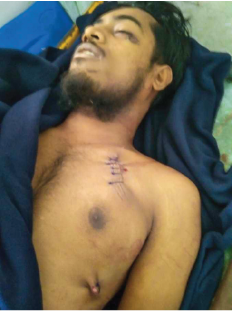
Nature of Injury: Gunshot wound to the shoulder, which exited through the back
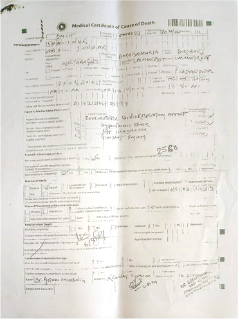
Date, Time, and Place of Death: 06 August 2024, Dhaka Medical College Hospital (DMCH), at 10:30 AM
Burial Site: Borobasuria, Boro Bari, Khedabagh, Lalmonirhat
Recommendations:
1. Employment opportunities to be arranged for the brothers.
2. Support to be provided for the higher education of the youngest sister, Marufa.
Quranic Verse
Indeed, Allah has purchased from the believers their lives and their properties for [that] they will have Paradise. They fight in the cause of Allah. (Surah At-Tawbah 9:111)
Hadith Sharif
The Messenger of Allah (SAW) said, "A martyr will be able to intercede for seventy relatives in Paradise." (Sunan Abu Dawood 2520)
👥 Shaheeds from the Same Division
Rangpur
Memorial Photo Gallery