📱 Smart QR Code
Scan to view & share this memorial biography directly.
🌹 Prayers
Click to send your sincere respect and prayers for this hero
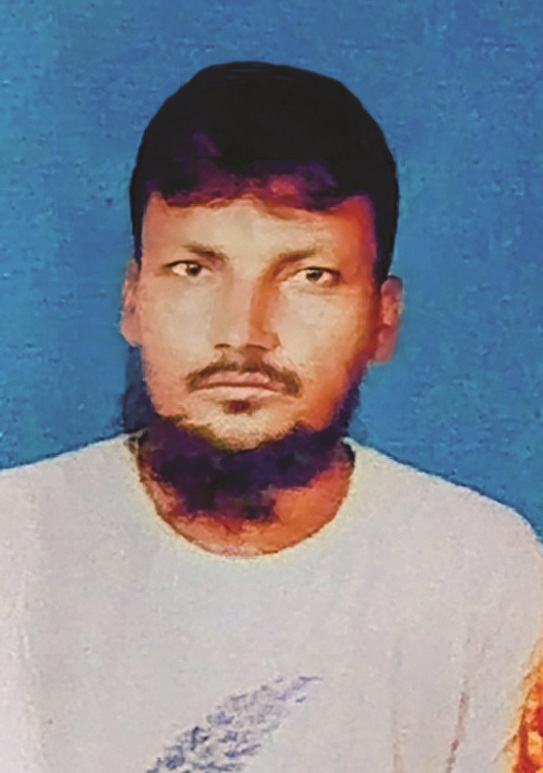
Md. Bablu Faraji
📅 Date of Birth
4 July, 1966
🕊️ Date of Martyrdom
5 August, 2024
🗺️ Division
Khulna
📍 District
Kushtia
👤 Short Biography
Profession: Small Business Owner,
Place of Martyrdom: Sadar Hospital, Kushtia
Incident Details & Martyrdom Narrative
Family Condition
Martyr Bablu Faraji was from a respectable family. After speaking privately with his family members, it is known that the family's financial condition is currently very precarious, due to which he used to sell clothes by peddling/hawking.
Martyr Bablu Faraji's wife suffers from a complex disease, and his son suffers from kidney disease. His 30-year-old son, Sujon Mahmud, is currently unemployed. Proper treatment is not possible due to lack of funds. The family resides in their own home in Hatsh Haripur, Kushtia. His daughter, Mosammat Helena, is married and a homemaker.
Background of the Movement
Since the creation of Bangladesh, the people have been the victims of various injustices, exploitation, oppression, and cruelties. The freedom-loving people of this country have repeatedly stood up against such atrocities in response to the demands of the times. Along with them, the students have expressed solidarity with the struggling masses. Moreover, glorious history is witness to the fact that movements and struggles have always been initiated by students during critical times in the country.
The 15 years of Awami misrule, vote-rigging, corruption, murder, injustice, and oppression had created a negative reaction in the public mind. The Awami government again started conspiring to re-establish the quota system. In 2018, Sheikh Hasina, in the face of strong student protests, accepted all the demands, but in her heart, there was a volcano of hatred. Therefore, after consolidating power in a one-sided election without opposition in 2024, the fascist Hasina government again wanted to bring back the quota system. The continuous movement for the reform of quotas in government jobs had started on July 1. This non-violent movement turned violent on July 15. In the movement, armed assassins of Chhatra League, Jubo League, Shechashebok League, and police, JAI members started attacking the unarmed student public. After the martyrdom of Shaheed Abu Sayeed in Rangpur, the movement turned into a mass movement. The quota reform movement gradually took the form of a public movement.
It spread across the country as a movement of anti-discrimination students and the public. Initially, the non-violent movement of ordinary students gradually moved towards an anti-fascist government uprising. Gradually, this movement was not limited to the students; it became a huge mass uprising of the country's general public. People of all castes, religions, and creeds expressed solidarity with this uprising and took to the streets. Faced with the wrath of the angry masses, the head of the autocratic government, Sheikh Hasina, was forced to resign on August 5. But before resigning, she left behind countless misdeeds of her vile and distorted mind. As part of this, the armed forces were unleashed on the protesters and many innocent people. Unarmed, oppressed people were martyred by their bullets.
Joining the Movement
When the vehicle called Bangladesh failed its brakes in such a way, and the passengers called Bangladeshis became terrified; when there were clear signs of pain, suffering, screams, wails, and certain destruction all around, could a person as vocal against injustice as Shaheed Bablu Faraji sit idly by? Could his heart not be touched? Despite various family struggles, such barbarity of the state machinery could also affect a socially conscious Bablu. Because everything was happening right in front of him. He himself was hearing the terrible cries of the people; the heartbroken wails. He was seeing with his own eyes how people were being killed indiscriminately by the ruling groups disguised as rulers.
When he saw the injured and killed students, comparable to his own grandchildren, fall into the lap of death so brutally in front of him, could questions not arise in his mind? He too was a human being of flesh and blood. Questions arose in his mind too. He thought, is this country mine? What is the future of me and my family here? Where is our safety? Are we really alive? Or are we living corpses? Are we also living abstractly like the family members of the injured and killed students? Or are we disappearing in the mirror house called Bangladesh and constantly being enslaved by a new Pharaoh?
Such hundreds and thousands of questions arose in the heart of Mr. Bablu Faraji. He could not find any answers. And when he did find them, he discovered himself alongside the students of the anti-discrimination student movement.
Drinking the Nectar of Martyrdom
A voice of protest – who never tolerated injustice, he is Md. Bablu Faraji. In a financially struggling family, he used to manage expenses by selling clothes by peddling/hawking. A few months ago, he had taken his wife to a doctor in Rajshahi. Although the doctor suggested surgery, he could not take her to the doctor a second time due to lack of money. Meanwhile, his son has been suffering from kidney problems for several years. He was going through a very difficult financial situation. Despite the family's poverty, he never easily let anyone know. When he died, he had only 3,000 taka to run the family expenses.
“I will go to war, I will be martyredâ€
The students' quota reform movement at one point turned from an anti-discrimination movement into a movement to overthrow the murderous dictator Hasina. Like the rest of the country, Kushtia also erupted in the 'one demand' movement. Like other days, on August 5th, thousands of students and the public, empty-handed, began protesting at various points in the city. Shaheed Bablu Faraji had been joining the movement with the freedom-loving people from the very beginning. He actively participated that day as well.
Two days before he was martyred, he had been saying, “I will go to war, I will be martyred.†On August 5th, after eating in the morning, without telling anyone, he participated in the student-public movement at the four-way intersection of Kushtia city. When his wife did not find him at home and called him to come back home, the martyr said, “I am at war, I have not come empty-handed, I have come with a stick, I will fight.†When his granddaughter also asked him to come, he gave the same answer. His granddaughter jokingly said, “Grandma will not let you enter the house.†He replied, “I will not go home anymore.â€
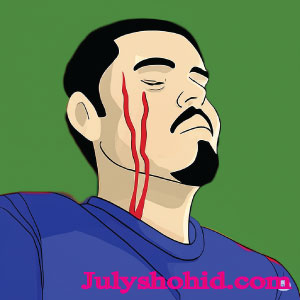
In the anti-discrimination student-public movement, Shaheed Bablu Faraji took position on August 5, 2024, in the alley of the high school grounds next to the Liakat sweet shop at the four-way intersection of Kushtia city. The police's Alpha team, led by SI Saheb Ali, unleashed by the oppressive murderous government, began firing indiscriminately at the positioned students and public. The entire area instantly turned into a battlefield. At that time, at approximately 3:00-3:15 PM, Bablu Faraji was shot. He immediately fell to the ground. A bullet entered the left side of his head and exited through the right side. The revolutionary Bablu's bloody lifeless body lay there. The road turned into a river of blood with the martyr's blood. In a difficult and adverse situation, the protesters rescued him at 3:20 PM and took him to the emergency department of Kushtia Sadar Hospital, where he was admitted to ward number 10. While undergoing treatment, at 4:20 PM, the on-duty doctor declared him dead. Indeed, Shaheed Bablu Faraji could not return home alive. He left his wife, son, daughter, and grandchildren and went to the court of Allah.
Along with the family members, the locals are also deeply saddened by the death of Bablu Faraji.
Funeral and Burial
The martyr's body was taken from the hospital to his area, Hatsh Haripur Union, Kushtia. After the Namaz-e-Janaza there, the voice of protest, Shaheed Md. Bablu Faraji, was laid to rest forever at the Hatsh Haripur Union Graveyard.
Neighbor's Statement about the Martyr
Neighbor and lecturer, Mr. Shamim, said, “Shaheed Bablu Faraji was a religious man. He was hardworking and courageous. Wherever he saw injustice, he would protest. I could not even imagine that he would die like this. We feel very sad to lose him.â€
Personal Information of the Shaheed at a Glance
Name: Md. Bablu Faraji
Birth: 04-07-1966
Father: Late Nowsher Ali
Mother: Late Mosammat Buri Khatun
Profession: Small Business Owner
Permanent Address: Village: Hatsh Haripur, Union: Haripur, Thana: Kushtia Sadar , District: Kushtia
Time of Injury: August 5, 2024; 3:30 PM
Place of Incident: Char Rastar Mor, High School Lane, Kushtia City
Date of Death and Place: August 5, 2024; 4:20 PM, Sadar Hospital, Kushtia
Attacker: Killer Police of the Autocratic Government, led by SI Saheb Ali
Graveyard: Hatsh Haripur Union Graveyard
Proposals
1. Arrange treatment of his sick son and wife.
2. Provide one-time financial grant and a regular monthly allowance for the family, as they have no source of income.
Quranic Verse
They rejoice in what Allah has bestowed upon them of His bounty, and they rejoice for those who have not yet joined them. (Surah Al-Imran 3:170)
Hadith Sharif
Abu Huraira (RA) reported: The Messenger of Allah (SAW) said, "Whoever sincerely asks Allah for martyrdom, Allah will grant him the status of martyrs." (Sahih Muslim 1888)