📱 Smart QR Code
Scan to view & share this memorial biography directly.
🌹 Prayers
Click to send your sincere respect and prayers for this hero
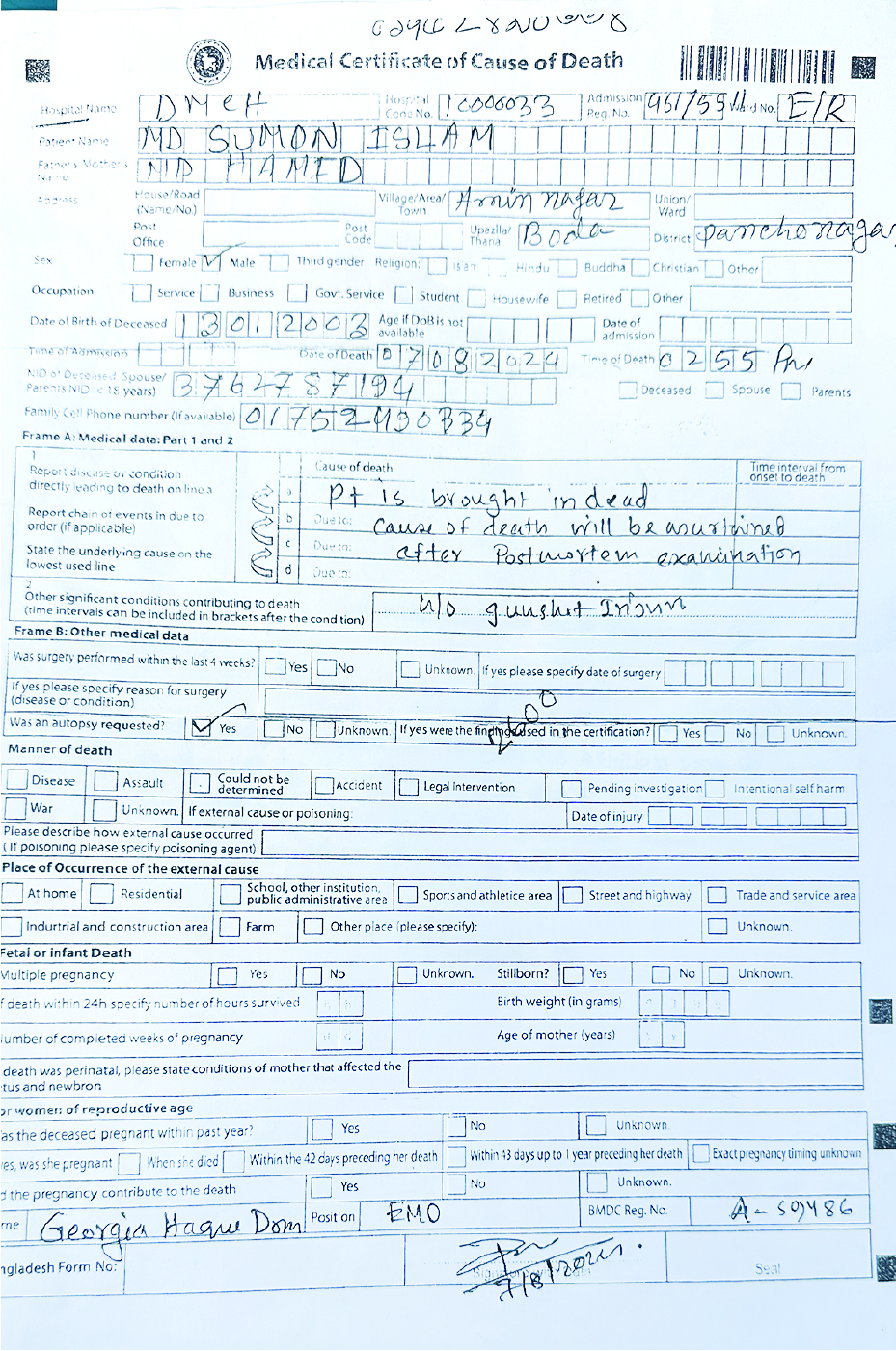
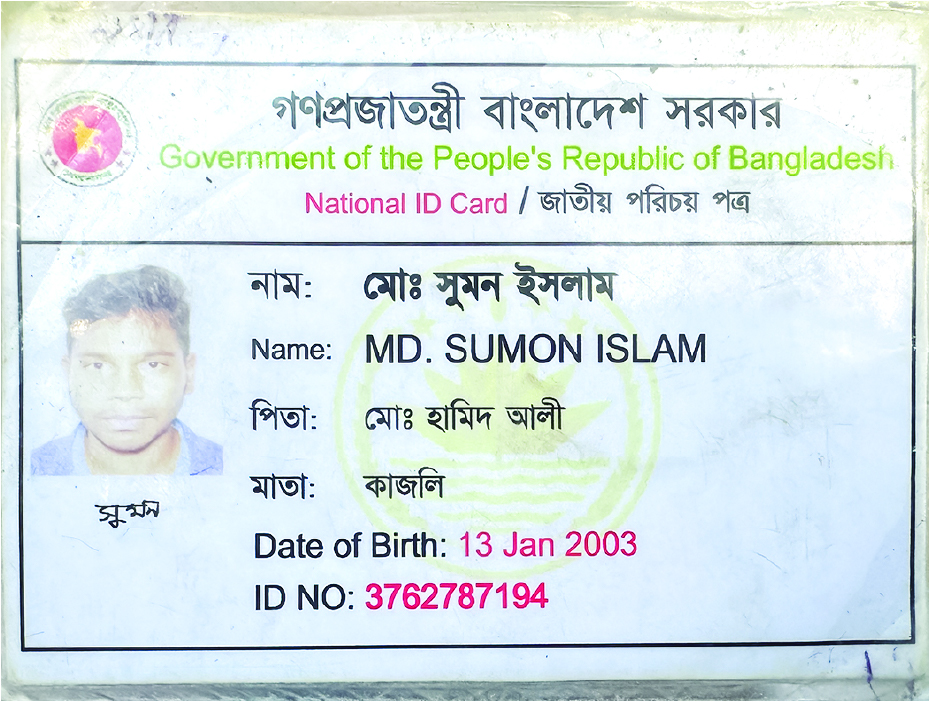
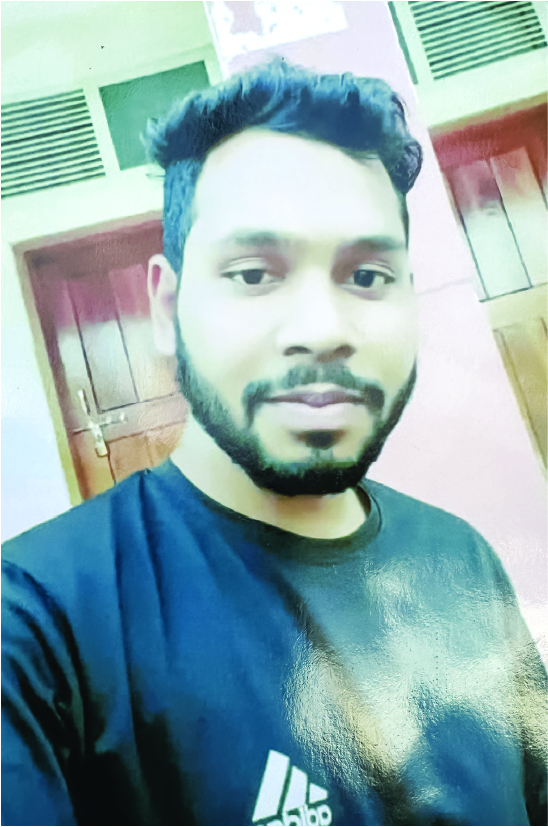
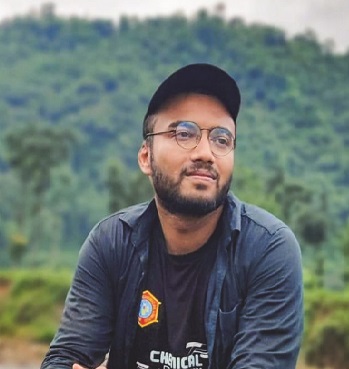
Md. Suman Islam
📅 Date of Birth
13 January, 2003
🕊️ Date of Martyrdom
5 August, 2024
🗺️ Division
Rangpur
📍 District
Panchagarh
👤 Short Biography
Profession: Student and Garments Worker
Place of Martyrdom: In front of Ashulia Police Station
Incident Details & Martyrdom Narrative
A Life of Struggles
Suman, a bright student, was studying at Jamilatunnesa Fazil Madrasa. Alongside his studies, he worked as a production supervisor in a garment factory to support his family. The only land they owned was their small 4-decimal homestead, leaving them with no cultivable land. Most of Suman's earnings were spent on medicines for his elderly and ailing parents, whom he loved more than his own life.
As a child, he watched his friends spend money at fairs while he simply looked on, knowing he couldn’t afford to buy anything. His parents had given him money for the fair by sacrificing part of their medicine budget. Seeing this, he made a solemn promise to himself—he had to become successful and take care of his parents. Determined to change their fate, he ignored his parents' objections and his elder sisters' warnings and took a job in a garment factory.
The Injustice That Pushed Him to Protest
Like many ordinary people, Suman, too, was a victim of the discrimination created by Sheikh Hasina's authoritarian government. So, when Bangladesh’s students called for an anti-quota movement, he fully supported it. He had no choice—if the quota system remained, he wouldn't get a job, and his dreams would be crushed.
Despite his busy schedule, he tried to attend as many rallies as possible. On July 15, after finishing work, he skipped his usual overtime shift and went to the Jahangirnagar University area, hoping to join the movement. But fate had something cruel in store. That very day, government-backed student goons launched a sudden attack on the protesters. In fear, Suman took shelter in a nearby tea stall, but not before being hit several times with batons.
Hiding inside, he witnessed something that shook him to the core—one of the government-backed thugs struck a female protester on the head with a cracked bamboo stick. She screamed, clutched her head, and collapsed to the ground. Trembling with fear and pain, Suman got on a rickshaw and headed home. The jolt of the ride mirrored the turmoil inside his mind. The girl's screams echoed in his ears. That night, he could barely sleep. He kept asking himself—how could humans be so cruel? How could a fellow student mercilessly beat another? The more he thought, the more his hatred grew for the fascist government, its student thugs, and its weaponized police force.
The Final Days
From the next day, the protests escalated. Suman followed the news on his phone, seething with anger as he saw the atrocities committed by the ruling party’s student wing. But work kept him from joining the protests for several days. The garment factory owners were making them work even harder, possibly fearing an indefinite shutdown due to the unrest.
Then, on July 19, the government shut down all internet services. The movement’s direction became unclear, with only vague reports appearing in newspapers. The situation was unbearable—Suman couldn’t sit at home any longer. Eventually, his fears came true—the factory shut down indefinitely.
On August 4, in Ashulia, he saw hundreds of school and college students protesting. He could no longer hold himself back and joined them. The power in their slogans sent shivers down his spine. He chanted along with them:
"In the flood of blood,
injustice will drown!"
"We have shed blood, we will shed more!"
"Who are you? Who am I? War criminals! War criminals!"
"Who says, who says, dictatorship?"
His voice grew stronger with each slogan.
Suddenly, he felt a sharp blow to his back. He screamed in pain. Everything went dark for a moment. When he opened his eyes, thick white smoke filled the air, making it hard to breathe. Deafening explosions rang out. People ran in all directions. Disoriented, Suman lost his sense of direction.
Two young men—likely around 20 or 22 years old—grabbed him, one by the hands and the other by the legs, and dragged him into a dimly lit alley. He lay there, dazed, listening to nearby voices discussing how the police had fired rubber bullets indiscriminately, along with tear gas and sound grenades.
After a long wait, he managed to hail a rickshaw. Climbing onto it was excruciating—he felt as if the flesh on his back was rotting. Somehow, he reached home, cleaned himself up, and collapsed into bed.
The Last Protest
On the morning of August 5, he woke up feeling slightly better. After a light meal, he lay in bed, staring at the sky through the window, wondering, Will Allah never bring down Sheikh Hasina’s tyrannical rule?
Suddenly, a scream from the street jolted him upright. Someone was shouting, "Murderer Sheikh Hasina has resigned! She’s trying to flee the country!"
His heart raced. He hurriedly changed his clothes. The streets were calling him. The protest was calling him. In his excitement, he forgot about his injuries—he felt no pain anymore.
As soon as he stepped outside, someone embraced him, saying, "Eid Mubarak! The country has been liberated for the second time!"
Tears streamed down his face. He ran toward the jubilant crowd. Some were celebrating, while others had launched a massive victory rally. His body trembled with excitement.
As they reached Ashulia police station, gunfire suddenly erupted. Out of nowhere, the tyrant Hasina’s ghostly police force began shooting at them. Something struck Suman’s chest. He looked down—his hand was covered in red. Something warm trickled down his body. Darkness swallowed his vision. Moments later, he collapsed onto the road. Suman never got to fully savor the taste of victory. He never got the chance to support his family.
Funeral and Burial
Hearing the arrival of a corpse-carrying vehicle, Suman’s mother, Kajoli, ran outside in terror. She watched in horror as men slowly lifted a shrouded body out of the vehicle and laid it in their yard. Trembling, she pulled back the cloth from the face—one look, and she let out a piercing scream before collapsing unconscious.
Neighbors rushed to her aid, pouring water on her head. His father, weeping uncontrollably, rushed from outside. His sisters arrived soon after, crying desperately to see their beloved younger brother one last time. Suman’s body was carefully washed with warm water and leaves. Rosewater was sprinkled over him. His funeral prayer was held near the local mosque in Amin Nagar, and he was buried in the same area.
His parents and three sisters were left utterly devastated. Overwhelmed with grief, his parents turned to stone—because the last light of their hopes had been extinguished forever.
Shaheed’s Personal Life at a Glance
Name: Md. Suman Islam
Date of Birth: January 13, 2003
Father's Name: Md. Hamid Ali
Mother's Name: Kajoli
Occupation: Student & Garment Worker
Current Address: Village: Amin Nagar, Union: 9 No. Sakoya, Thana: Boda, District: Panchagarh
Permanent Address: Same as above
Family Members: 3 (excluding 3 married sisters)
Assailant: Armed Police League
Time & Place of Injury: August 5, 2024, around 4 PM, in front of Ashulia Police Station
Time & Place of Death: Same as above
Quranic Verse
And do not say of those who are killed in the way of Allah, "They are dead." Rather, they are alive, but you perceive it not. (Surah Al-Baqarah 2:154)
Hadith Sharif
The Messenger of Allah (SAW) said, "A martyr will be able to intercede for seventy relatives in Paradise." (Sunan Abu Dawood 2520)
👥 Shaheeds from the Same Division
Rangpur
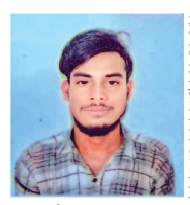
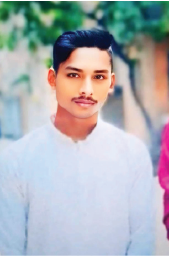
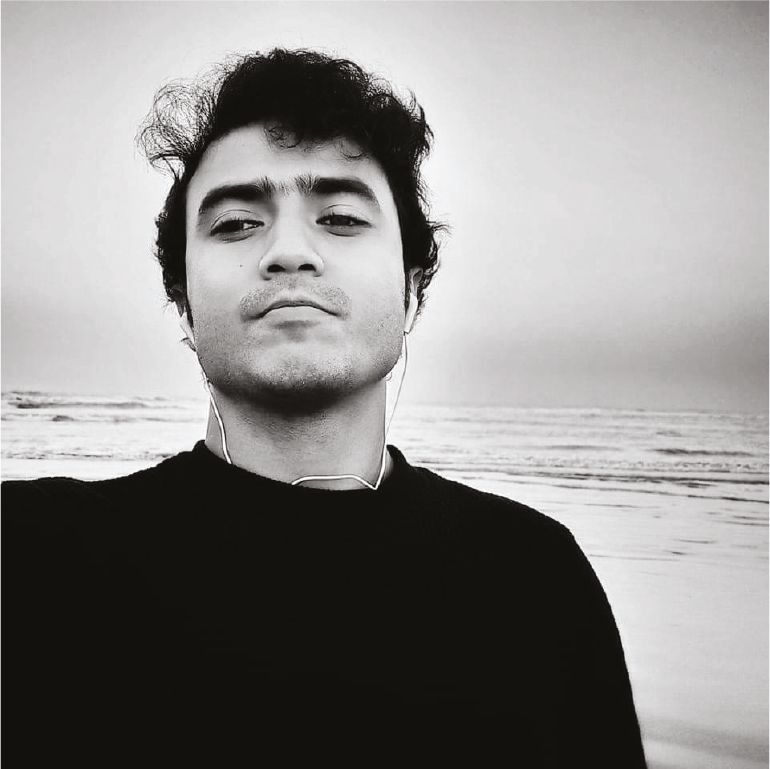
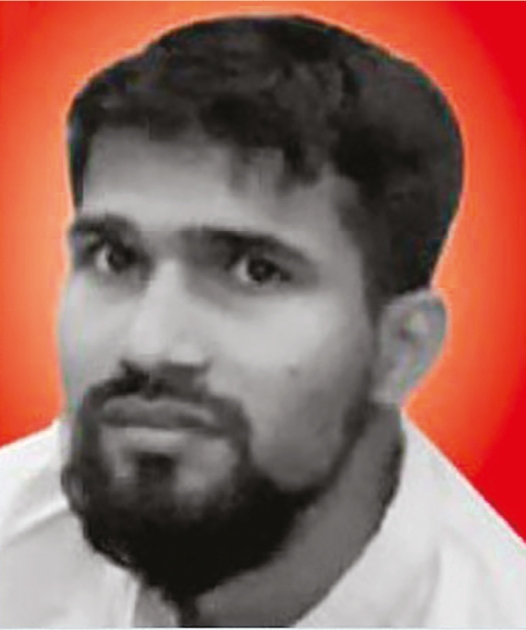
Memorial Photo Gallery