📱 Smart QR Code
Scan to view & share this memorial biography directly.
🌹 Prayers
Click to send your sincere respect and prayers for this hero
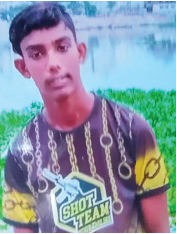
Ismail
📅 Date of Birth
1 January, 2008
🕊️ Date of Martyrdom
19 July, 2024
🗺️ Division
Mymensingh
📍 District
Kishoreganj
👤 Short Biography
Profession: Shoe Factory Worker
Place of Martyrdom: Dhaka Medical College Hospital (DMCH)
Incident Details & Martyrdom Narrative
Ismail had a seven-year-old younger sister named Roshni. The two siblings lived with their mother. To support the family, this brave young man worked at a shoe factory.
The mother of the martyr currently works as a domestic worker. Devastated by the loss of her only son, she is in a state of utter despair. She often breaks down into tears—nearly four months have passed, yet no solace has reached her. Her cries shake the earth, the sky, and the air. At the mere thought of her son, her tears begin to flow again. Neighbors, too, are left in tears while trying to console her. Relatives remain heartbroken and overwhelmed with grief.
Following Ismail's death, his mother Taslima and younger sister Roshni are now residing at Dhaka Udyan with Ismail’s maternal grandparents and two maternal uncles. Roshni has been admitted to Class One at the local Ful Kali School.
How Ismail Was Martyred
On July 19, 2024, during the anti-discrimination student and public movement, 17-year-old Ismail, a courageous young activist, was martyred by police gunfire near the ‘Allah Karim’ Mosque in Mohammadpur, one of the busiest neighborhoods of the capital. That morning, Ismail left home and went to work at a factory. Upon receiving his wages, he handed over the entire amount to his mother. After eating lunch prepared by his mother, he left again, telling her, “I’m going to Grandma’s house,†which is located adjacent to Dhaka Udyan in Mohammadpur.
Later that day, when Ismail’s mother returned home from work, she did not find her son and tried to call him. Despite several attempts, Ismail did not answer his phone, causing Taslima Akhter to grow increasingly anxious. She inquired among neighbors, but none had seen him return. Around 9 PM, one of Ismail’s friends called to inform her that Ismail had died from police gunfire. In a frantic search, his mother went to Mohammadpur but could not locate the body. Locals informed her that many of the wounded were taken to Dhaka Medical College Hospital. Desperate and grief-stricken, she rushed to the hospital and searched ward after ward. Finally, around 1 AM, she identified her son’s body.
Following a post-mortem examination, Ismail was laid to rest on July 20, 2024, after the Asr prayer at Azimpur Graveyard.
The Call of the Movement
Since the birth of the nation, students have led numerous movements. From 1947 to 2024, student leadership has been a consistent force. The first major movement involving the students martyred and wounded in the 2024 protests began in 2015, with the anti-VAT protest against the then-dictator Hasina. They later played a pivotal role in the 2018 Safe Roads Movement and were actively involved in the 2024 quota reform protests.
On July 2, 2024, the anti-discrimination student movement was launched from Dhaka University campus and quickly spread nationwide. From July 2 to August 5, students organized protests, human chains, and road blockades across the country. Despite announcing peaceful programs from the Dhaka University campus, the fascist regime attempted to crush the movement with tear gas, rubber bullets, birdshots, abductions, killings, torture, and lawsuits. Armed with local weapons and rifles, ruling party thugs attacked unarmed students. The prolonged protests prompted fear within the regime, and on August 5, 2024, then-dictator Sheikh Hasina declared a curfew.
Defying the curfew, masses of students and citizens took to the streets. Around 2 PM, media outlets reported that the bloodthirsty Hasina had resigned and fled the country. Upon hearing the news, students and citizens across Dhaka and beyond celebrated the victory with sweets and jubilations.
Family’s Sentiments
Ismail’s mother, Taslima Akhter, said:
“That day, I couldn’t even cry at the hospital because of the police. They forced me into silence after I saw my son’s lifeless body. They shot him in the neck, which is why he died. I couldn’t bear to look at his face. My heart was breaking. I had so many dreams for my son. He was supposed to work and support our family. He was our hope to overcome poverty. Who knew that such dreams would come to such a tragic end? Now who will I dream with? All my hopes have been shattered. How will I live now? I can’t even look at my daughter’s face. I demand justice for my son’s murder. He studied up to fifth grade, but due to financial hardship, he couldn’t continue. He started working at a shoe factory in Islampur. His father was indifferent toward the family and did not contribute financially. Even after the boy’s death, he didn’t come to the hospital. Since then, he has had no contact with us.â€
Ismail’s grandmother, Jharna, added:
“Ismail was a very good boy. We cannot accept that he died this way, shot by the police. When we heard of his death, we were devastated. There’s no one left to look after my daughter’s family. His little sister is still studying. Who will care for them now? There’s no one left. After his death, I brought my daughter and granddaughter to live in this area. I’ve rented them a one-room apartment. I can hardly afford to support my own family. How will I provide for the two of them? I have two young sons who work to support us. We struggle to feed ourselves—how can we take care of them too?â€
Current Situation
The martyr’s family currently resides in the Nabingar area of the capital, in a one-room apartment on the ground floor. The small room includes a cooking area and costs BDT 3,500 per month. There is little access to light or ventilation, and the room is damp and poorly furnished. One glance at their living condition reveals the immense hardship they are enduring.
Taslima Akhter said,
“My son used to give me all the money he earned from the factory. I earned a small amount from housework, and that’s how we managed our household. If the government supports us, I can live a bit better with my daughter. I want justice for those who murdered my son. He gave his life for the country. He should be honored as a martyr.â€
She further added that she has filed a case at Mohammadpur Police Station against 15 individuals for her son’s killing. When asked about the names on the case, she said,
“I don’t remember all the names. I don’t want to open those files again—they bring me unbearable pain.â€
Saying this, Taslima broke into tears. Her daughter Roshni ran to embrace her mother.
Recommendations
1. Monthly financial assistance should be provided to the martyr’s family.
2. Educational support must be extended to the martyr’s only sister.
3. Employment opportunities should be arranged for the martyr’s mother.
4. Either monthly or one-time financial support should be offered.
At a Glance: Information Regarding the Martyr
Name: Md. Ismail
Date of Birth: 2008
Age: 17 years
Occupation: Footwear factory worker
Permanent Address: Village: Jagannathpur, Upazila: Bhairab, District: Kishoreganj
Current Address: Village: Nabinagar, Dhaka
Father: Md. Jasim, Occupation: Vagabond, Age: 40 years
Mother: Taslima Akter, Age: 32 years, Occupation: Domestic worker
Sister: Ms. Roshni Akter, Age: 7 years, Occupation: Student, Grade: Class One
Assets: No ancestral land or property
Time of Injury: 19 July 2024, approximately 3:00 PM
Place of Incident: Adjacent to Allah Karim Mosque, Mohammadpur, Dhaka
Assailants: Police forces backed by the Awami regime
Hospital Where Treated: Dhaka Medical College Hospital (DMCH)
Date and Place of Martyrdom: 19 July 2024, Dhaka Medical College Hospital (DMCH)
Body Released: 19 July 2024 (Initially, the police attempted to withhold the body)
Location of Burial: Azimpur Graveyard, Dhaka
Quranic Verse
They rejoice in what Allah has bestowed upon them of His bounty, and they rejoice for those who have not yet joined them. (Surah Al-Imran 3:170)
Hadith Sharif
The Messenger of Allah (SAW) said, "A martyr will be able to intercede for seventy relatives in Paradise." (Sunan Abu Dawood 2520)
.png)