.jpg)
📱 Smart QR Code
Scan to view & share this memorial biography directly.
🌹 Prayers
Click to send your sincere respect and prayers for this hero
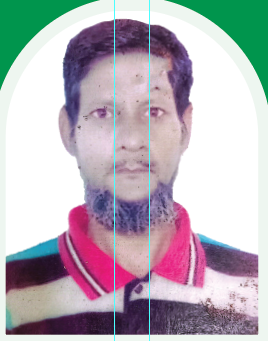
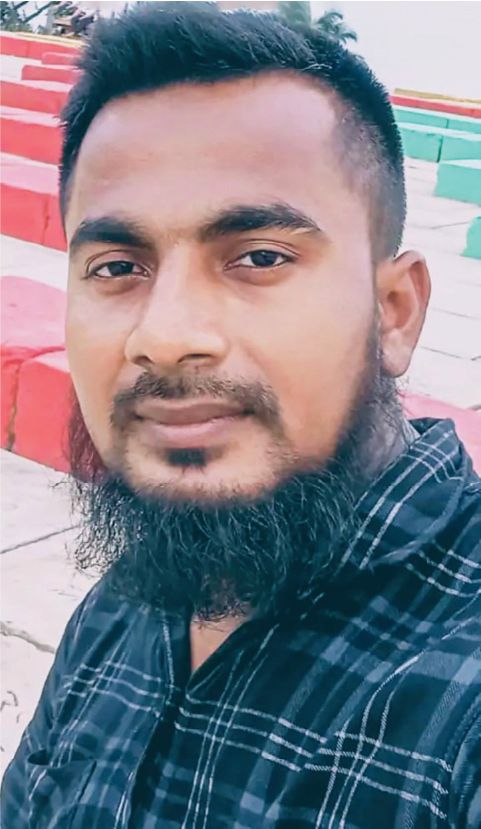
Mohammad Sabuj
📅 Date of Birth
21 October, 2004
🕊️ Date of Martyrdom
4 August, 2024
🗺️ Division
Chattogram
📍 District
Feni
👤 Short Biography
Profession: Auto-Rickshaw Driver,
Place of Martyrdom: Mohipal, Feni
Incident Details & Martyrdom Narrative
Description of the Incident
August 4, 2024. This day is a dark chapter for Bangladesh. At the call of the anti-discrimination student movement, students and the public of Mohipal in Feni took to the streets with a noble goal. But that day, the Awami League's killer forces launched a brutal attack on the innocent, unarmed students, in which Md. Sabuj and 9 others lost their lives. They were uncompromising fighters against injustice, who stood tall against fascist repression.
Sabuj was the child of a poor family in Feni. He drove a rickshaw for a living. But in his heart was an indomitable spirit of protest against injustice. On August 4, he went out on the street with his rickshaw. Even amidst the daily struggles of his own life, his dedication to the interests of the country was unwavering. That day, the rickshaw owner called him and asked him to return the rickshaw. Sabuj returned the rickshaw and went to Mohipal, where the students were vocal against injustice. They were protesting against the discriminatory policies of the Awami League government. No one thought then that the road of Mohipal would soon be awash with blood. That day, the armed forces of the Awami League and their allies, Jubo League and Chhatra League, arrived in Mohipal from Trunk Road. They attacked the unarmed students, started indiscriminately firing, as if their only aim was to silence the protesting voices forever. The students participating in the protest did not yet realize that the last moments of their lives were approaching.
Sabuj, standing with his friends, was trying to video record this horrific massacre by the gunmen. His intention was to collect evidence of this injustice and bring it to the public. But sadly, his life was extinguished before that evidence could be collected. The armed members of the Awami League-backed Jubo League and Chhatra League targeted him. Sabuj was first shot and injured, then brutally beaten to death. The life of such a brave young man was cut short prematurely, but the spirit of his struggle still lives on among us.
Sabuj's death was extremely heartbreaking. But this massacre did not stop there. The Awami League's terrorist forces attacked many more students in the same place on Circuit House Road where they shot him. This barbarity was like a planned genocide, carried out to silence the protesters' voices. The students were trying to resist by throwing bricks and stones to save themselves, but their small resistance was helpless in front of the Awami League terrorists' firearms. Until 5 pm, that area was turned into a battlefield, where the Awami League terrorists were repeatedly firing, terrorizing the people. In this attack that day, innocent students like Sabuj lost their lives, this incident is a great lesson not only for them, but for the entire nation. In the Awami League's armed attack, not only Sabuj's life stopped that day, but at least 9 more people were killed with him. Immediately after Sabuj's murder, his body was taken to Feni General Hospital. But there too, fearing further attacks by Awami League terrorists, his post-mortem could not be done. His body was quickly taken to his village home and buried for safety reasons.
Sabuj was a true patriot, who risked his life and stood up against injustice. He was not just a rickshaw puller; he was one of the struggling youths of Feni who led the movement against the Awami League's fascist rule. His poverty never deviated him from his principles. He never compromised, never backed down. The sacrifice of a brave young man like Md. Sabuj is an inspiration for today's generation. He fought till the last moment of his life, stood against fascist rule. The blood-soaked soil of Feni still bears witness to that protesting spirit. His death reminds us that the fight for freedom and justice can never stop.
After Sabuj's death, his family is immersed in grief, a deep darkness has descended on their lives. Despite being the child of a poor family, Sabuj's dream was to do something for the country, but Awami League-backed terrorists brutally stopped that dream. Sabuj's death reminds us that no matter how difficult the repression, the flame of resistance will one day ignite. Md. Sabuj is not physically among us today, but his sacrifice will live on in our minds, in our consciousness, and in every struggle. His contribution to the anti-fascist movement in Bangladesh will be remembered forever with respect.
Case Related Information
A case has been filed against 450 people, including the district Awami League general secretary and the recently former MP of Feni-2 constituency Nizam Uddin Hazari, in connection with the killing of Md. Sabuj in Mohipal, Feni. This case was filed after the auto-rickshaw driver Md. Sabuj was killed in the firing by Awami League leaders and activists in the anti-discrimination student-public movement in Mohipal, Feni on August 4, 2024. A total of four and a half hundred people has been made accused in the case, mentioning the names of 65 people. Sabuj's elder brother Yusuf filed the case.
The case details state that Sabuj participated in the student-public protest program on August 4. When Awami League activists opened fire from Trunk Road around 2 pm, Sabuj moved towards Circuit House Road. There he fell to the ground by the bullets of Swapan Miaji, Jane Alam, Mahbubul Haque Liton and Ornab. Then the other accused came forward and brutally beat Sabuj to death. When Sabuj's body was taken to Feni General Hospital, it was quickly taken to the village home and buried without a post-mortem examination due to fears of further attacks by Awami League terrorists.
Thirty-six days after the burial, on the orders of the court, Md. Sabuj's body was exhumed on Tuesday, September 10, 2024, at 1 pm from Chorgazi area of Ramgati Upazila, Lakshmipur. His body was then sent to the Lakshmipur Sadar Hospital morgue for autopsy. After the autopsy, he was buried again. This incident created a huge stir across the country and ignited a new flame of movement against the terrorist activities of the Awami League.
Statements of Close Relatives and Friends about the Martyr
Neighbor Shahjahan Manik said, "Sabuj was a very obedient son of the family. He would give his entire income to his father. He had no bad habits of any kind." Another neighbor, Panna Akhter, said, "Sabuj Bhai was a very polite person. He was very respectful to elders. He was an incomparable person."
Description of the Family's Economic Condition
They are financially very insolvent. The martyr's father is also an auto-rickshaw driver. Among the seven siblings, the martyr was the 3rd. Among the remaining three brothers, 1 is a rickshaw puller, 1 is a hotel boy, and 1 is mentally challenged.
Personal Information of the Shaheed at a Glance
Name: Mohammad Sabuj
Profession: Auto-rickshaw driver
Date of Birth: October 21, 2004
Place of Birth: Dakshin Tumchar, Ramgati, Lakshmipur
Native District: Lakshmipur
Date of Injury: August 4, 2024
Date and Time of Martyrdom: August 4, 2024, 1:45 PM
Place of Martyrdom: Mohipal, Feni
Place of Death: On the spot (Mohipal, Feni)
Place of Burial: Dakshin Tumchar, Ramgati, Lakshmipur
Grave's GPS Location: 22°36′09.4″N 91°03′18.2″E
Father: Abdul Malek (Rickshaw puller, Age 45)
Mother: Shahnaz Begum (Housewife, Age 34)
Proposals
Sabuj's family is currently going through extreme financial hardship. The family's income is low, but the needs are many. Therefore, the following steps can help them achieve stability and a dignified livelihood in their lives.
1. Cooperation is needed for constructing a house.
2. Employment can be arranged for martyr’s father.
3. Arrangements can be proceeded to send martyr’s elder brother abroad.
4. The expenses of the disabled brother can be provided.
Quranic Verse
And do not say of those who are killed in the way of Allah, "They are dead." Rather, they are alive, but you perceive it not. (Surah Al-Baqarah 2:154)
Hadith Sharif
Abdullah ibn Masud (RA) reported: The Messenger of Allah (SAW) said, "The souls of the martyrs are in the bodies of green birds." (Sahih Muslim 1887)
👥 Shaheeds from the Same Division
Chattogram.jpeg)



Memorial Photo Gallery
.jpg)
.jpg)
.jpg)
.jpg)