📱 Smart QR Code
Scan to view & share this memorial biography directly.
🌹 Prayers
Click to send your sincere respect and prayers for this hero
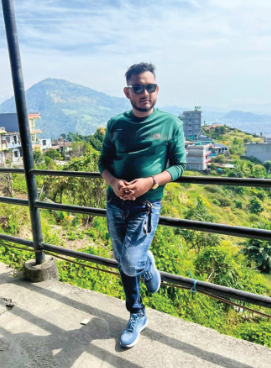
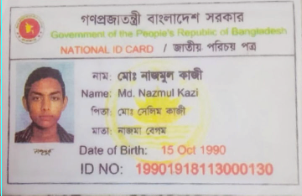
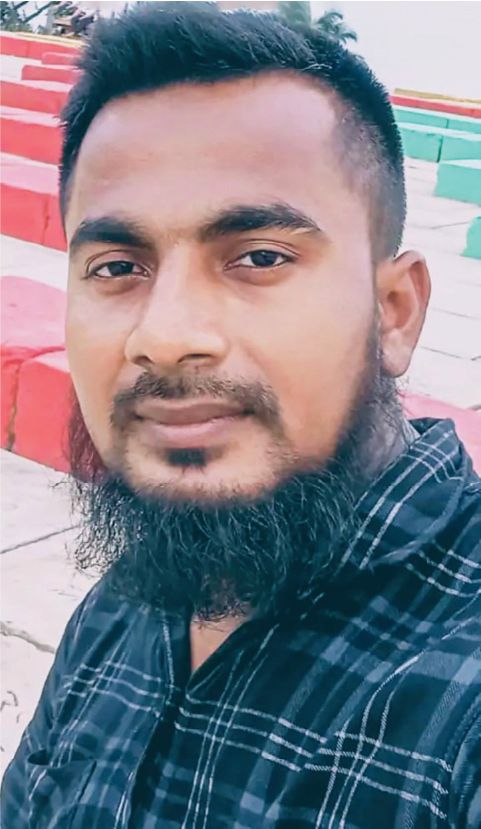
Md. Nazmul Kazi
📅 Date of Birth
1 January, 1995
🕊️ Date of Martyrdom
18 July, 2024
🗺️ Division
Chattogram
📍 District
Comilla
👤 Short Biography
Profession: Businessman
Place of Martyrdom: Sonia Khara, Kajla
Incident Details & Martyrdom Narrative
Martyr Nazmul Kazi
Serial: 774
ID: Chittagong Division: 115
Birth & Personal Life
The name Nazmul Kazi no longer belongs only to his family—it has spread into the hearts of every oppressed soul. When his name is spoken, the air grows heavy, homes become still, and one almost hears a whisper:
“He didn’t march. He didn’t do anything. He only gave… one drop of water.â€
Yes—Nazmul was not a political activist. He never held banners or shouted slogans. He was a simple businessman who believed family is the center of life, and truth and compassion are his religion.
He cherished a small world: his wife Maria Sultana and their infant daughter, Ariana Kazi Nuzaira. A humble entrepreneur, he was a quiet dreamer. His father, Selim Kazi, was a hardworking farmer. His mother, Nazma Begum, a devoted homemaker. Of three sons, one worked in Dubai, another in Saudi Arabia. Financially, the family was secure and content—Alhamdulillah.
Then came July of 2023—a time ignited by fire. The streets witnessed weeping students; mothers’ tears turned to fury. Nazmul realized that for many, even security had become a distant fantasy. Though ordinary by many standards, he refused to remain indifferent to injustice.
Act of Compassion & Martyrdom
One evening, as gunshots echoed and police boots pushed crowds, a wounded youth stumbled to Nazmul’s roadside shop and pleaded,
“Brother, please give me a drop of water.â€
In that moment, Nazmul met destiny. Who could have thought that offering a bottle of water would demand such courage—and draw such deadly wrath?
Before the water could reach the youth, a sniper’s bullet struck him. His infant daughter lost her only father; his wife lost her anchor. And the rest of us received an unspoken truth:
“Humanity never rests in neutrality.â€
This was no accident—it was a deliberate atrocity sanctioned by the state. His only crime? Quenching another’s thirst. That single drop of water now symbolizes the unspoken courage needed to face tyranny. Though that drop may not have saved a life, it exposed the ignominy of a system that kills the kindness it fears most.
Today, speaking his name isn’t just a tear—it flames a fire in our hearts. Nazmul stood without flags or speeches, yet now joins the martyrs as the most genuine voice of this movement. His death kindles both sorrow and rebellion. The July Revolution charts a new path with sacrifice like Nazmul’s, birthing a nation’s roadmap to freedom.
Context of the Uprising
July 2024 marks a unique season in Bangladesh’s history—there was no rain, only bloodshed. The air smelt of fire, and the soil soaked in the roots of long-standing injustice. It was no longer simply a quota-reform campaign—it ignited a silent uprising, a mass awakening of students, laborers, mothers, brothers, neighbors—all unified in their defiance of a system that had silenced them for years.
“Quota reform†opened the gateway to wounds long buried: deprivation, discrimination, impunity. By July, they spilled onto the streets, in blood, and in countless cries of “No more.†Rallies weren’t slogans; they were declarations of human identity.
Outside Dhaka Medical, the battlefield was brutal. Injured, exhausted youths lacked basic aid—a sip of water could save a life. That’s when Nazmul arrived—bottle in hand, heart full:
“One drop of water alone cannot slake the thirst.â€
But when the state treats compassion as a crime, offering water becomes an act of rebellion. Without political affiliation, without banners, Nazmul stood for humanity itself.
The Martyrdom
18 July 2024. A cloudy evening. The path near Jonas’s Crossroads had become a battleground—helmeted riot squads lined the streets. Students with placards, bleeding faces, gags around necks—they chanted for justice.
Nazmul arrived—not armed, not shouting—but with cold water to quench parched throats. He carried no emblem, just the age-old creed of human kindness.
To an authoritarian regime, that was the greatest offense. Before he could even lift the bottle, his head was struck with a heavy, metallic blow—not a rubber bullet or bat, but a brutal weapon. He collapsed. The earth that had just received his compassion now absorbed his blood.
He fell unconscious and was rushed to a hospital—where no bed awaited him. His name was lost in chaos and administrative failure. In the paperwork, he became just another entry:
“Nazmul Kazi, deceased.â€
Two words silenced a faith-filled life.
Denial of Justice & State’s Failure
No investigation was launched. No inquiry began—because this death evaded the legal system from its inception. It became a chilling warning:
“Give water… and you’ll drown in your own blood.â€
It wasn’t merely a death—it was the exposure of a state that murders mercifulness.
Nazmul didn’t die alone. He became the first casualty of a culture that fears kindness, that targets innocence.
Family’s Grief & Their Call
Nazmul’s death didn’t just extinguish a man—it erased his family’s sanctuary. He left behind a widow and infant daughter. Maria Sultana, no longer just a widow—she is now the living emblem of resistance. She does not ask for alms; she asks:
“If given a sewing machine, I won’t beg. I’ll stitch life anew.â€
Her dignity is not charity—it’s our moral responsibility.
His father, Selim Kazi, echoes around the village:
“He only gave water.â€
Neighbors recall him as humble, hardworking, a man of prayer and kindness.
Now he’s vanished into martyrdom.
This family doesn’t beg for sympathy—they ask the state:
“Is this the land where empathy becomes treason?
Where a bottle of water is a defiant weapon?
Where good people are killed first?â€
They breathe through their grief, but their hope is broken. A father haunts the doorsteps of silence. A widow carries an incomplete life. A daughter asks,
“Where is Papa?â€
No answer—neither from the state nor history.
Their Inheritance & Our Duty
Nazmul’s death is a testament to the moral dissolution of authority—and his family is its living witness. His daughter Ariana, barely able to speak “Abbu,†already understands absence. Her childhood is shaped by that void.
Her future education, nutrition, and dignity are not charity—they are owed. Because this nation honors martyrs with banners and slogans—must it also honor their children with justice?
Maria is not a victim—she is a partner in nation-building. Provide her a sewing machine, and she’ll sew her future—and ours.
Supporting this family isn’t compassion—it’s our responsibility. They mustn’t remain a footnote in history—they must become the continuing legacy of courage and humanity.
Nazmul was a humble man, water bottle in hand, courage in heart. Today, his legacy lies in his daughter, his wife, and the conscience of a nation. If we remain silent, who will these Ariana’s trust tomorrow? Whose story will they learn—and whose will they forget?
🔠At-a-Glance Martyr Profile
Field Detail
Name Nazmul Kazi
Occupation Small Businessman
Wife Maria Sultana
Child Ariana Kazi Nuzaira
Father Selim Kazi (Farmer)
Mother Nazma Begum
Current Address Mohammad Bagh Crossing, Kadamtali, Dhaka
Permanent Home Daulatpur, Muradnagar, Comilla
Place of Martyrdom Sonia Khara, Kazla (on the road leading from Kazla to the highway)
Date & Time 18 July 2024
Circumstance Struck while giving water
Burial Village, Daulatpur, Comilla
Quranic Verse
Indeed, Allah has purchased from the believers their lives and their properties for [that] they will have Paradise. They fight in the cause of Allah. (Surah At-Tawbah 9:111)
Hadith Sharif
The Messenger of Allah (SAW) said, "A martyr will be able to intercede for seventy relatives in Paradise." (Sunan Abu Dawood 2520)
👥 Shaheeds from the Same Division
Chattogram.jpeg)

Memorial Photo Gallery