📱 Smart QR Code
Scan to view & share this memorial biography directly.
🌹 Prayers
Click to send your sincere respect and prayers for this hero
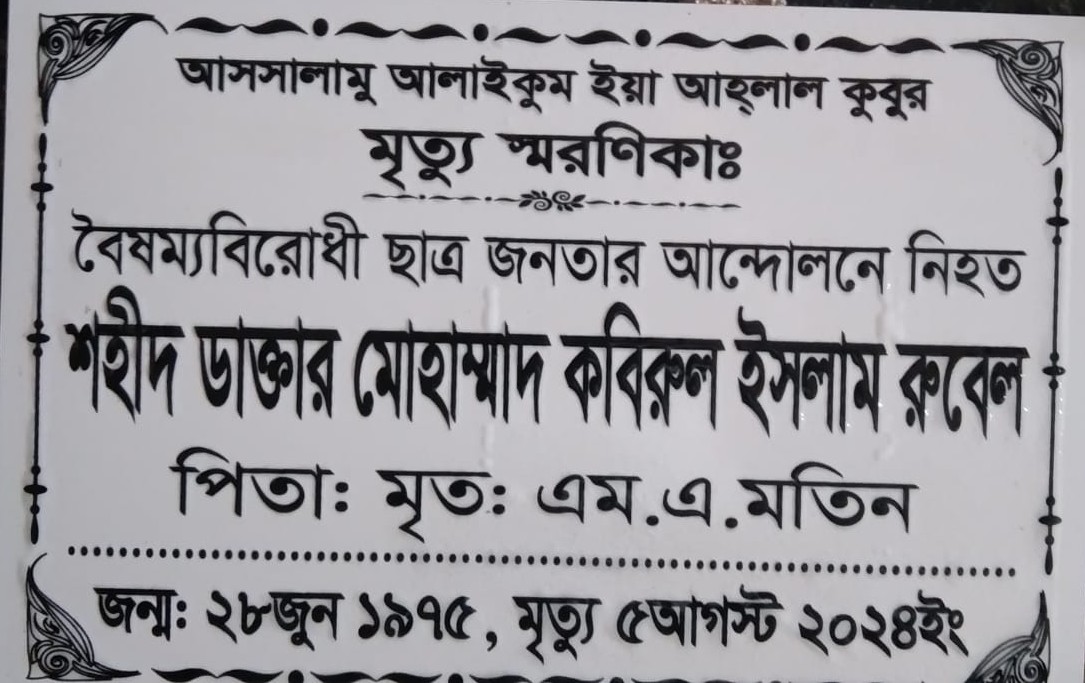
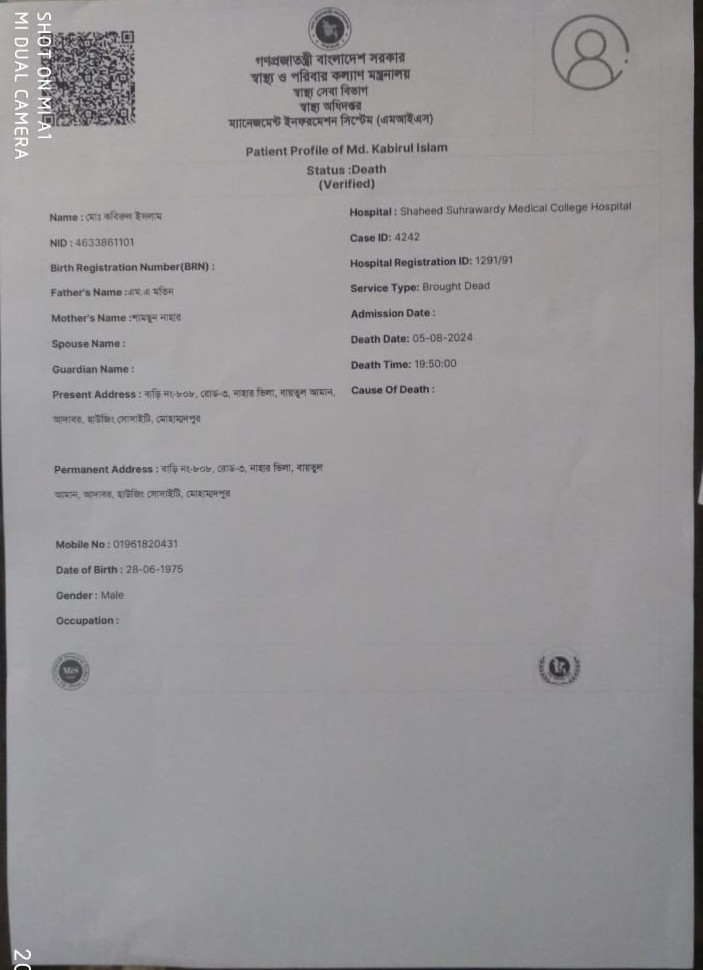
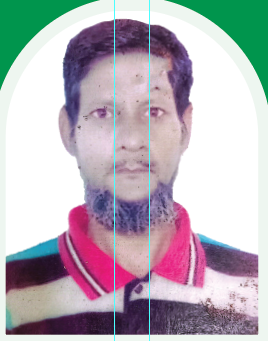
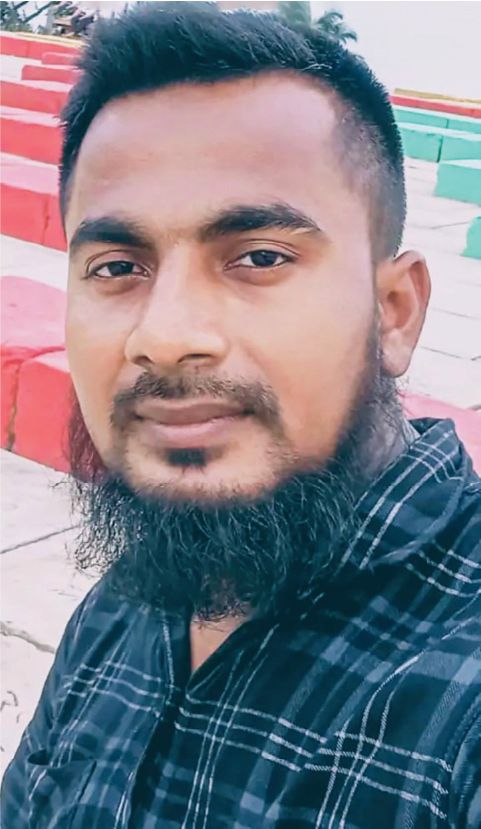
Md. Kabirul Islam
📅 Date of Birth
28 June, 1975
🕊️ Date of Martyrdom
5 August, 2024
🗺️ Division
Chattogram
👤 Short Biography
Profession: Doctor
Place of Martyrdom: Shaheed Suhrawardy Medical College Hospital, Dhaka
Incident Details & Martyrdom Narrative
Context of Martyrdom
Since the 2008 election, the Awami League has initiated a regime of injustice and oppression in Bangladesh. After taking power, in February 2009 on the 25th and 26th, the BDR mutiny was used as a pretext for the Pilkhana massacre with the assistance of India, brutally killing 74 people including 57 top military officers. Subsequently, witnesses to the massacre were also systematically eliminated and all evidence was destroyed.
On January 27, 2010, four revolutionaries who had overthrown the former dictator Sheikh Mujibur Rahman’s regime and liberated the country were wrongfully executed in Dhaka Central Jail. Among the revolutionaries, Bazlul Huda was a key figure, who was killed by Sheikh Hasina herself. Sheikh Hasina and the Awami League understood that to maintain long-term power, they had to weaken Jamaat-e-Islami and Islami Chhatra Shibir.
Sheikh Hasina’s authoritarian plan is to remain in power until 2041 and to do whatever is necessary to achieve this. After the 2009 BDR massacre, on December 12, 2013, Jamaat leader Quader Mollah was sentenced to death in a false case, and other party leaders were arrested, disappeared, or killed, creating chaos in the country.
Subsequently, many prominent religious scholars, intellectuals, and leaders from Jamaat and BNP were executed or eliminated under the regime, including Kamaruzzaman, Matiur Rahman Nizami, Ali Ahsan Muhammad Mujahid, and BNP’s Baga Islami leader Salauddin Quader Chowdhury.
In 2018, students protested against quotas in government jobs. After sustained protests, the government abolished the quota system for the first and second class government jobs, a system that had existed for 46 years. After this movement ended, on October 7, 2019, Abrar Fahad, the brightest student of BUET, was tortured and killed overnight by some leaders of the BUET branch of the student wing of Awami League because he posted on Facebook criticizing Sheikh Hasina for allowing India to use Mongla Port, extracting water from the Feni River, and importing LPG from India.
During Sheikh Hasina’s regime, numerous such killings occurred. In 2024, general students again began protesting quota reforms, leading to a nationwide anti-discrimination student movement known as the “July Revolution.†This movement, which began at Dhaka University, spread from villages to cities throughout Bangladesh.
In response, colleges and universities were closed, and students were ordered to vacate dormitories; students in turn demanded teachers vacate government residences. Students at universities across the country issued counter-notices to teachers and administrations, setting an unprecedented example.
To prevent protests, the government declared public holidays and shut down the internet, which halted online earnings and banking services, severely impacting the economy. Overseas Bangladeshis stopped remittances in protest against the Awami League’s arrests, disappearances, killings, and mass atrocities.
Due to the drop in foreign income, Sheikh Hasina was forced to restore internet services. Schools and courts resumed, and suspended HSC exams were reinstated. Students from prestigious institutions demanded implementation of a 9-point charter prepared under Islami Chhatra Shibir’s guidance.
In response, on August 1, the government banned Jamaat-e-Islami and Islami Chhatra Shibir, accusing them of inciting the student movement. Nationwide marches and repeated clashes occurred between police and student protesters. Thousands of students were arrested, disappeared, or killed.
Sheikh Hasina’s police and student league continued mass arrests and killings, ignoring the 9-point demands. Students held a massive protest rally at the Shaheed Minar. The Army Chief met with commanders and learned the military was unwilling to shoot protesters. Faced with millions, student leaders dropped the 9-point demands and demanded only Sheikh Hasina’s resignation.
Sheikh Hasina offered to negotiate and even promised ministerial resignations, but students rejected all talks. On August 4, the Awami League’s armed thugs and police attacked student protests in Dhaka and nationwide, shooting protesters.
The next day, student leaders called a long march towards Dhaka. On August 5, the regime fell. Sheikh Hasina secretly fled the country after shutting down the internet nationwide. News of her escape triggered nationwide celebrations.
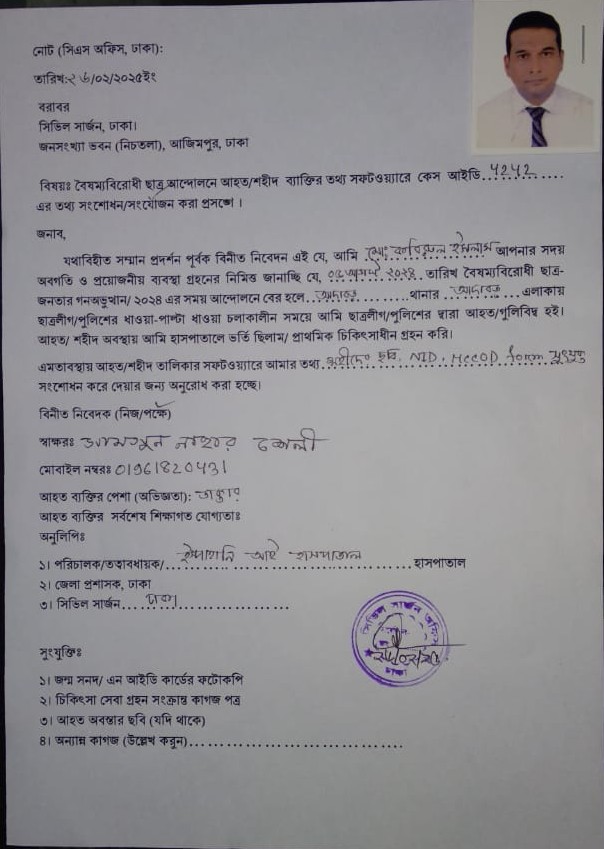
Md. Kabirul Islam, a resident of Adabor, Dhaka, went out to join one such celebratory procession. However, the joyous occasion was short-lived. Adabor was still tense and gunfire echoed all around.
When his wife, Shamsunnahar Sheli, called him, he could not be reached. As evening turned to night, she lost all contact. The next morning, Dr. Kabirul Islam was found dead at Shaheed Suhrawardy Medical College Hospital. He had been shot and killed by Sheikh Hasina’s police, who left his body there.
Later, his body was handed over to his family and he was buried in the family graveyard.
Economic Status
His wife Sheli manages the household through rental income. She also supports the expenses of a mosque and madrasa in their village.
News Link
https://youtu.be/7C1Ov_SlfDo?si=WAGiuUzYaXsHFFsE
At a Glance: Martyr’s Information
Name: Kabirul Islam
Father: M. A. Matin
Mother: Shamsur Nahar
Wife: Shamsunnahar Sheli
Daughter: Sthapana Islam Poushi
Current Address: 808, 3rd Road, Baitul Aman Housing Society, Adabor, Dhaka
Permanent Address: Noakhali
Place of Incident: In front of Adabor Police Station
Died at: Suhrawardy Hospital
Quranic Verse
Indeed, Allah has purchased from the believers their lives and their properties for [that] they will have Paradise. They fight in the cause of Allah. (Surah At-Tawbah 9:111)
Hadith Sharif
Abu Huraira (RA) reported: The Messenger of Allah (SAW) said, "Whoever sincerely asks Allah for martyrdom, Allah will grant him the status of martyrs." (Sahih Muslim 1888)
👥 Shaheeds from the Same Division
Chattogram.jpeg)



Memorial Photo Gallery