📱 Smart QR Code
Scan to view & share this memorial biography directly.
🌹 Prayers
Click to send your sincere respect and prayers for this hero
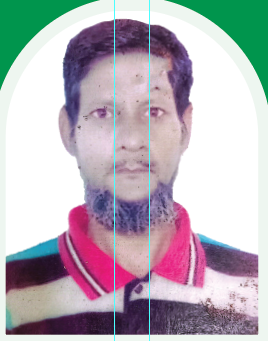
Md. Monirul Islam Opu
📅 Date of Birth
14 May, 1969
🕊️ Date of Martyrdom
5 August, 2024
🗺️ Division
Chattogram
📍 District
Chandpur
👤 Short Biography
Profession: Seasonal Fruit Vendor (Hawker)
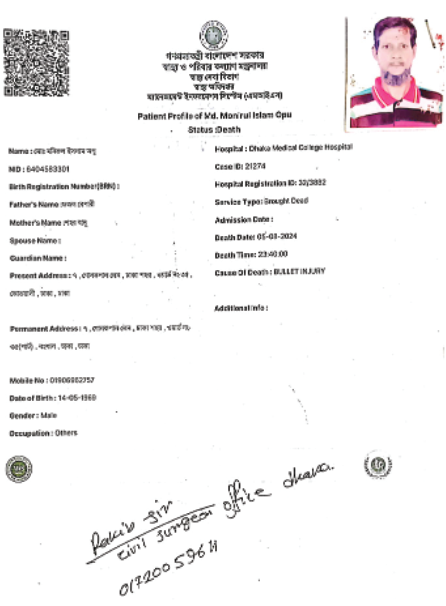
Place of Martyrdom: Dhaka Medical College Hospital
Incident Details & Martyrdom Narrative
Becomes the Target of State Bullets
Martyr Md. Monirul Islam Opu
Serial No.: 772
ID: Chittagong Division: 114
Martyr Profile
His name was Md. Monirul Islam Opu. No titles, no honors, yet his name is now etched in fire on the rough pages of history. Born in an unknown village in Chandpur district, his father Fazal Bepari had painstakingly built a fragile foundation through small-scale business, and his mother Shohor Banu hid all her life's exhaustion behind the drape of a sari. Opu represented those whose names never find a page in history—those with no home, no land, no future; only a shoulder burdened with a basket, a few seasonal fruits in hand, and eyes full of unspoken waiting.
Anyone who has ever walked through Dhaka’s Nawabpur area has surely seen Opu standing silently on the footpath, sweat-soaked towel on his head, softly calling out: “Mango… Jackfruit… Lychee, brother…â€
There was no revolution in that call, no proclamation to change the state, but there was an unpretentious love for people. A love for life, a quiet promise every day under the scorching sun while looking at his children’s faces. Opu was outside politics, but he stood against injustice. When bullets are fired, no one asks which party you belong to, what your profession is, or where you came from. They only see whether you stand or fall. Opu stood firm on that day of the July Revolution when under the clouds, a new generation lifted its head high. When the youth said, “This country will no longer tolerate one-sided rule.†Opugave no slogans, raised no flags, but he was there on the streets beside everyone, in the heart of a nation.
That day, Opu stood at a street corner. In his eyes was a question: “What will happen after this movement?†He received no answer. Only the harsh sound of a bullet—state violence—pierced his chest, as if telling him, “You have no right to question.†Thus disappeared a silent symbol in history. Opudied just as a nation’s conscience slowly dies. When a hawker dies, no one stands in parliament to propose condolences, no thirty-second breaking news flashes on television. Yet Opu remains in the city’s air, in the footsteps of people, in the bite of a mango fallen on the pavement.
He did not just lose a family; we lost one of the purest parts of our society—one good human being who taught us daily how to live even from nothing. His eldest son Shaon is unemployed; his younger son Munna has already passed away. His wife Amena Begum now cries every dawn while cooking because the one whose sweat used to earn their bread has drowned in blood.
This Opu, who was not a member of any force, not bound in uniform, still became a martyr. Because a state killed him when he dared to ask a question. Now the question is: Whose country is this? How many more Apus will die before every answer is met with a bullet?
The July Revolution is not just a change in political scenery. It is a rebellion giving voice to the nameless like Opu. As long as we speak their names, the revolution lives on. One day, someone may say, “A hawker, a father, a martyr—his name was Opu, the backbone of a nation.â€
Background of the Movement
July 2024. Beneath the bursting monsoon skies, a generation without resources roared suddenly—this blood-stained chapter carries the echo of slogans in every raindrop. The movement began centered on quota reform but quickly transformed into a struggle for the nation’s self-identity. Shattering the broken promises of six years ago, the ruling group schemed to reinstate quotas, sparking a renewed rebellion in 2018, now rising with new pain and a greater resolve.
This time it was not just about quotas; the protest demanded true equality, democracy, and fundamental human rights. The youth realized this fight was not political reform; it was about survival. The protests started on July 1, spreading rapidly to every city, university, and street corner across the country. Each day the movement grew into a continuous revolution driven by anger, hope, and a demand for life against a ruthless regime.
But after July 15, the situation changed drastically. Joint attacks by student leagues and police bloodied the streets. The violence escalated from tearing posters to gunfire, steel piercing flesh. In Dhaka, the footpaths wept, glass shattered, and mothers’ hearts broke.
On August 5, as crowds surged in Nawabpur, Motijheel, Banshal, and elsewhere, Md. Monirul Islam Apu stood silently. He was no political activist nor a frontline marcher. A seasonal fruit seller, to him the country meant earning dinner money by selling fruit under the afternoon sun. That day, he stood at the alleyway’s mouth, hands empty, eyes asking: “What will happen after this movement?â€
The Tragic Incident of Martyrdom
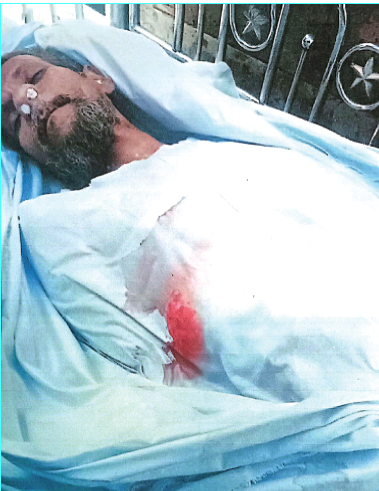
Around 11:30 pm on August 5, 2024, Opu stood in Nawabpur’s alleyway, exhausted, worried, and feeling a strange emptiness. Around him, there was no silence—only the sound of police batons, boots, and the brutal preparation of guns. Suddenly, without cinematic warning or war drums, a bullet pierced his chest. His body trembled and fell but had not yet fully collapsed. His faint breath still fluttered—he was alive, facing death but not defeated.
At that moment, a passerby ran to his family, shouting, “Your father has been shot!†The son Shaon, only 22 years old, felt his heart break against time. He ran, lifted his father, whose breath still lingered, blood on his face, terror in his eyes. Shaon stroked his father’s trembling body, saying, “Dad, it will be okay.â€
They took Opu home, where his wife looked into his eyes one last time. Holding back her tears, she tried to give him water, perhaps still hoping for a miracle. But Opu lay silent, no response. He was rushed to Dhaka Medical College Hospital, which had turned into a battlefield corridor—bodies arriving one after another, cries, shoving stretchers, tired doctors, and nurses weighed down by failing duty.
No one knew where to look first. It seemed even the country didn’t know who would live, who would die, who would be martyred, and who would vanish the next morning from the news. Death, in its eternal cruelty, settled upon his chest.
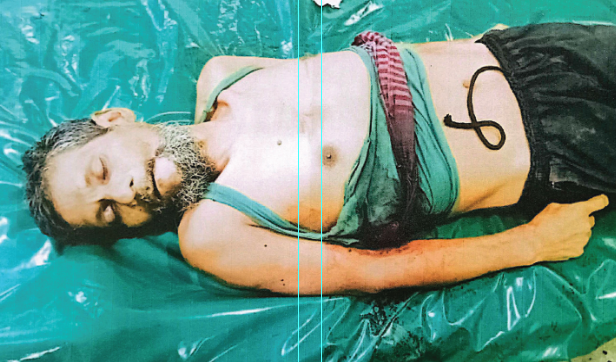
When his lifeless body returned home the next morning, a silent lament hung over the doorway. No words, no tears—only a heavy void. He was buried at Azimpur Cemetery beside his younger son. After death, his existence shrank to a grave and a child's voice: “In these nine months, I’ve understood what a family means without a father.â€
This death was not just one life lost—it is the shameless record of a nation’s lost conscience, the failure of state machinery, and the endless call of a movement. Opubecame a martyr because he was human. And in this country, being human has become the greatest crime.
Family's Grief, Pleas & Demands
With Opu’s death, not only did one life stop but the daily cooking smoke of a modest household vanished. The small moments of laughter that never made the news are gone. The future they once imagined—a safe home, a little security for the children—has fallen silent. Now, a destitute woman wanders every day seeking work in the neighborhood but finds no stability. Her livelihood is gone; only the burden of life remains.
His elder son Robiul Islam Shaon, just 22, carries deep silence on his face. He no longer cries. When tears run out, people stop wailing and become quiet. Shaon says, “Because of Dad, I never understood what deprivation meant.†Now deprivation is not just money—it is a lack of trust, security, and dependability. It is a thorn in the throat, a nightly reminder that no one is truly safe in this society unless their voice carries power.
As for Monan, Opu and Amena’s younger son who left this world earlier, he lies in eternal rest at Azimpur. Now, Opu rests beside him.
This family is not only income-less but stateless, for the state neither wants nor recognizes them. No medical expenses have been covered, no compensation paid, no recognition granted. Opuremains invisible, and the family an unwanted memory that history tries to erase. Yet, they are the mirror of our conscience reflecting the state’s cruelty and indifference.
If we truly are a state, if we love this flag, then the debt of this blood is not just a burdened history—it is a responsibility. We demand permanent monthly support for this family, a secure home, and guaranteed employment for one child.
Martyr Apu stood silently, yet today he lies in Azimpur, his quiet standing shaking our conscience, becoming more alive than a dead father—a rising demand of an awakened nation.
At a Glance: Martyr Profile
Detail Information
Full Name Md. Monirul Islam Opu
Date of Birth / Age 14 May 1969, 55 years
Occupation Seasonal Fruit Seller (Hawker)
Father’s Name Late Fazal Bepari
Mother’s Name Late Shohor Banu
Family Members Wife Amena Begum, two sons (one deceased)
Place of Birth Chandpur
Permanent Address Rahmatpur Colony, Chandpur New Market, Chandpur
Current Address 7, Golkopal Lane, Nawabpur/Banshal, Dhaka
Place of Injury Nawabpur Road, Banshal, Dhaka
Assailant Police
Date & Time of Shooting 5 August 2024, approx. 11:30 PM
Date & Time of Death 5 August 2024, 11:40 PM (Declared dead at Dhaka Medical College Hospital)
Burial Place Azimpur Cemetery, Dhaka
Blood Group A+
Quranic Verse
Never think of those who have been killed in the cause of Allah as dead. Rather, they are alive with their Lord, receiving provision. (Surah Al-Imran 3:169)
Hadith Sharif
The Messenger of Allah (SAW) said, "A martyr will be able to intercede for seventy relatives in Paradise." (Sunan Abu Dawood 2520)
👥 Shaheeds from the Same Division
Chattogram.jpeg)



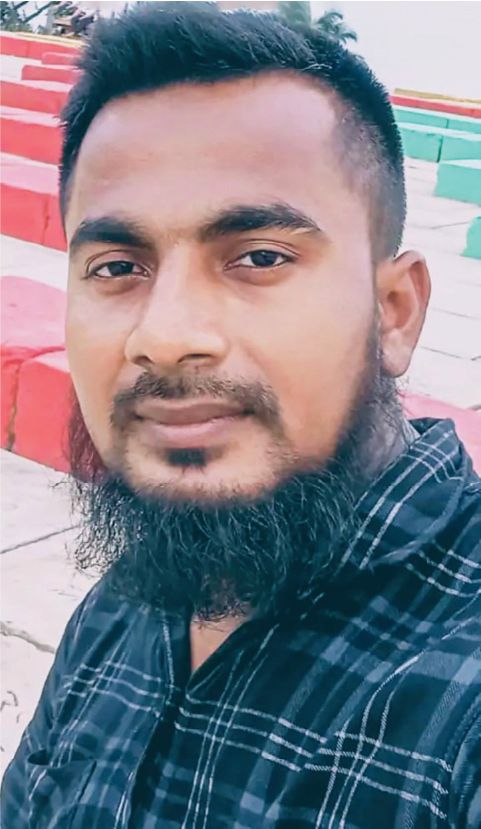
Memorial Photo Gallery